

Why The Animated Stargate Spin-Off Failed, According To The Writers
We may receive a commission on purchases made from links.
The "Stargate" franchise is something of a behemoth in the world of science fiction. 1994's "Stargate" movie was meant to kick off an entire trilogy. That didn't happen. Instead, MGM brought the property to TV, where it thrived for much of the 2000s thanks to shows like "Stargate SG-1" and "Stargate Atlantis." Unfortunately, the franchise's attempt to branch out into animation didn't go nearly as well.
Airing as part of the FoxBox Saturday morning cartoon lineup, "Stargate Infinity" premiered in 2002 and wound up running for a single, 26-episode season. Generally speaking, fans don't rank it highly among the "Stargate" spin-offs, and it's not even strictly considered part of the official canon. As "SG-1" co-creator Brad Wright once told GateWorld, "I don't have a problem with it. I'm just not involved."
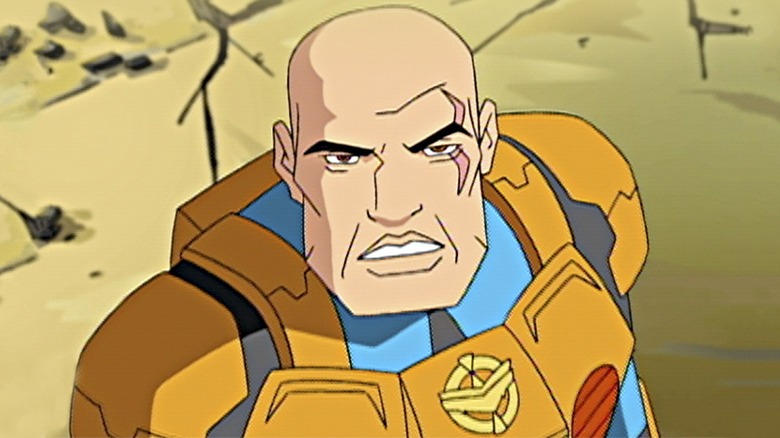
The show takes place in the distant future on the "Stargate" timeline and centers on a Stargate veteran, four cadets, and an alien who must navigate the gate network to return home after an impostor blocks their path to Earth. In a 2022 interview with The Companion, series co-creator Eric Lewald explained that the show's production company, the DIC Entertainment Corporation, targeted "Stargate" as a franchise because it was affordable (or, at least, more affordable that other major sci-fi properties):
"DIC, unlike major studios like Disney or Warner Brothers, didn't have a huge library or the money to pay for name brands like famous movies. MGM, the weakest major studio, didn't have much of an animation division, so they seemed open to selling rights to some of their hit properties — 'RoboCop,' 'Stargate,' etc. — for the very small price that [DIC President] Andy [Heyward] could afford."
Stargate Infinity wasn't taken seriously by MGM or its production companies
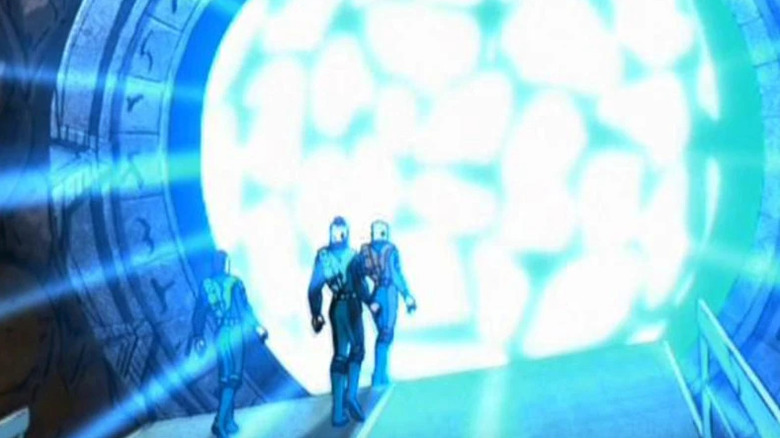
Indeed, "Stargate Infinity" and "RoboCop" are both examples of movies being turned into forgotten animated series. Eric Lewald and Michael Maliani were tasked with co-creating "Infinity," but it's worth remembering that this came at a time when franchises weren't guarded as preciously as they are now. This was seen as a way to appeal to kids and nothing more.
"Other than the one meeting with the MGM executives, where they discussed a couple of plotlines they were going to use in 'Stargate Atlantis,' which we were warned to stay away from, we didn't have much direction," Michael Edens, who helped develop the series, said in that same 2022 piece by The Companion. "Since we were set in the future of the 'Stargate' franchise, we were given free rein to do what we wanted."
Lewald had previously worked on "X-Men: The Animated Series," a show that had proven to be an outstanding expansion of the characters and lore from the "X-Men" comics (even though the series' creatives knew nothing about Marvel's mutants). But while Lewald and his collaborators had big ideas in mind for "Stargate Infinity," the animation budgets didn't match what was on the page. As Lewald recalled:
"While we wrote with an Imax screen image of action in our heads, what DIC paid to produce was something iPad-sized. The writing budget was fine — it was the production/animation budget that was a problem. We writers, in crafting the stories, were imagining 'Stargate'-like spectacle, or at least like animated series we'd done like 'X-Men.' But Mike [Maliani] and the overseas animators were given maybe 30 percent of the time and money to do it. If we'd known beforehand, we might have written simpler, smaller stories."
Stargate Infinity was a short-lived experiment
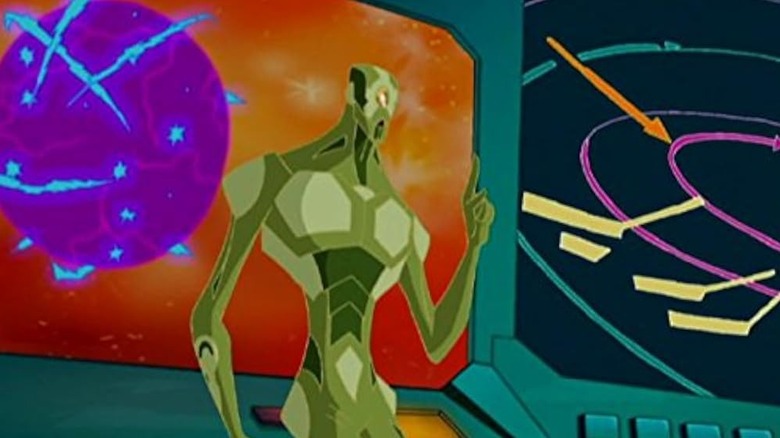
As a result, the ambitious storytelling that was scripted for "Stargate Infinity" didn't match the cheap, outsourced animation that ended up being used. The show, in turn, ended up disappointing hardcore fans and largely failed to drum up interest among a younger generation of viewers, serving as a one-and-done experiment.
Whereas production on "Stargate SG-1" was a nightmare on the first day, the show's cast and crew soon figured things out and enjoyed an incredible 10-season run. Unfortunately, "Infinity" didn't ever have the chance to sort itself out, between various behind-the-scenes issues and the cost-saving measures. "At this level of production, unless a series is a breakout hit, often the financing is only there for the initial order," Eric Lewald noted.
"One thing we showed with 'X-Men' is that you can do a show that satisfies fans of an original property and still appeals to kids seeing the franchise for the first time," added Mark Edward Edens, who also helped develop the series. "'Stargate Infinity' was kind of a lesson in how to waste a property's popularity by ignoring what fans liked about it."
George Lucas had a hard time selling "Star Wars: The Clone Wars," but that show ultimately proved to be crucial in building the next generation of "Star Wars" fans. It's easy to play Monday morning quarterback, but who knows what could have happened if "Stargate Infinity" had worked out. It could have helped turn "Stargate" into a multi-generational sci-fi staple. Instead, the property has been largely dormant for years now, with virtually no animated component to speak of since this show went off the air.
You can grab "Stargate Infinity: The Complete Series" on DVD from Amazon.