

Sidney Poitier Made His Directorial Debut With A Subversive Western That Needs More Love
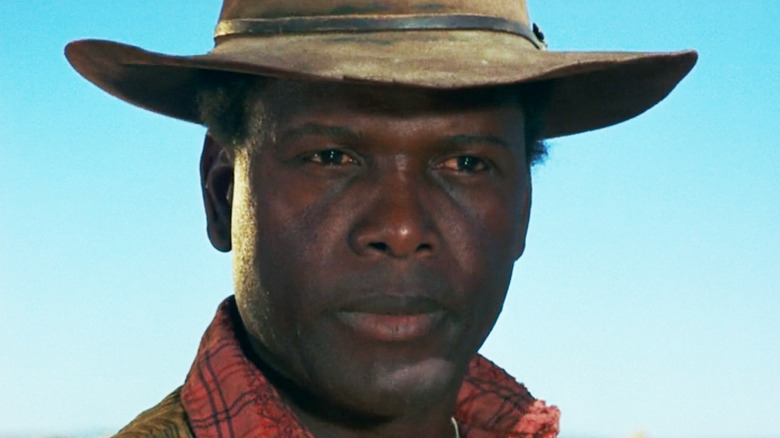
Revisionist Westerns subvert the classic white hat vs. black hat simplicity of the traditional Western. By depicting the archetypes of the Old West as flawed and often immoral characters and questioning rather than celebrating frontier violence, the revisionist Western upended the classic conception of the frontier as presented by movies of the early to mid-20th Century. But 1972's "Buck and Preacher" was even more subversive. While Clint Eastwood was busy planning the Western that would upset John Wayne enough for him to write an angry letter, Sidney Poitier was undermining years of Hollywood tradition by making a Western starring Black actors, directed by a Black filmmaker, and presenting a Black perspective on both the genre itself and modern day politics.
The best revisionist Westerns often transcend the genre to speak to wider truths. 2007's "The Assassination of Jesse James by the Coward Robert Ford," for example, interrogated not only the myth of the titular outlaw but the concept of hero worship more generally. Similarly, Poitier's 1972 Western, though set in the late 1860s, spoke to racial issues that still plagued the United States at the time of its release. By centering Black characters in a genre that had historically minimized their experience, and depicting their battle against white marauders, "Buck and the Preacher" embodied the spirit of the Civil Rights movement.
The film also depicted Black cowboys forming an alliance with Native Americans, which was yet another highly unorthodox thing to see in a Western. Add in the fact that Poitier fired and then stood in for Joseph Sargent, the white director originally hired to oversee production, and you have something arguably much more transgressive than any of Eastwood's films of the era.
Buck and the Preacher is truly subversive, seminal film
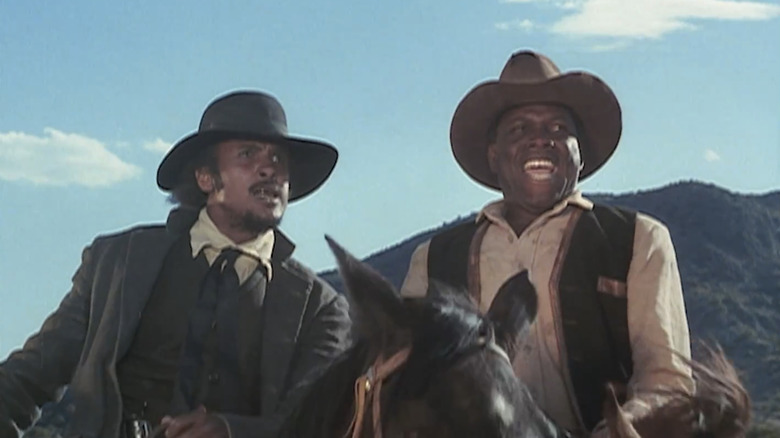
"Buck and the Preacher" embraced a revisionist Western ethos and elements of Blaxploitation cinema to create something truly subversive. Like other revisionist films of the time, it deconstructed the simplistic depiction of the American frontier as being occupied by noble white cowboys and savage native inhabitants. But while other revisionist Westerns undermined the longstanding representations of these two groups, "Buck and the Preacher" assailed the very idea that white cowboys and Native Americans were the only groups that needed representation.
Not that it was the first Western to depict Black cowboys. Black actors had appeared in Oaters since the 1920s when Bill Pickett starred in the silent films "The Bull-Dogger" and "The Crimson Skull." Films released during the 1930s, such as 1939's "Harlem Rides The Range," also depicted Black cowboys but were made for segregated audiences. Woody Strode starred as the titular soldier in John Ford's 1960 Western "Sergeant Rutledge" before famously appearing as a gunslinger in Sergio Leone's twist on the Western's greatest hits "Once Upon a Time in the West." Sidney Poitier pushed things even further with "Buck and the Preacher," becoming the first Black director of a Western for a major studio.
Released in 1972, the same year Pickett became the first Black man inducted into the National Rodeo Hall of Fame, "Buck and the Preacher" also stars Poitier — who passed away at the age of 94 in 2022 — as Buck, a wagon master who chaperones former slaves as they travel Westward from Louisiana after the Civil War. On their travels, the group encounter a charming con artist, the Preacher (Harry Belafonte), who joins their expedition and clashes with Buck. Soon, however, the pair are forced to come together when they face a much more serious threat.
Buck and the Preacher deserves more recognition
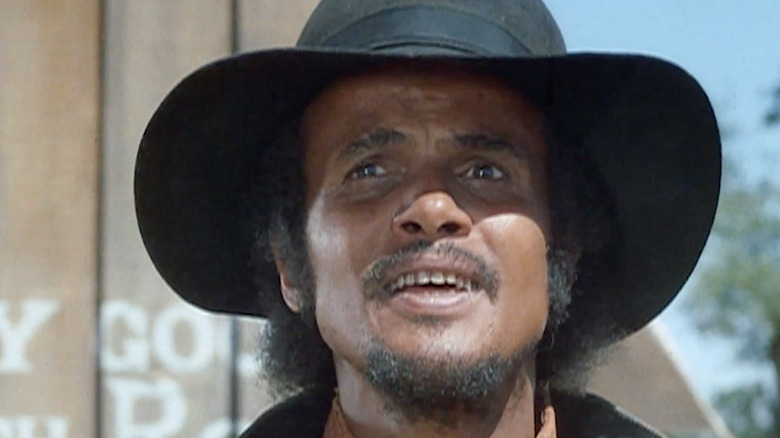
"Buck and the Preacher" sees the titular duo and their compatriots hunted by a gang of racists led by a nasty piece of work named Deshay (Cameron Mitchell). It seems Louisiana plantation owners weren't too happy about their former slaves embarking on a quest to build their own lives in the wake of the Civil War, and hired Deshay and his goons to bring them back to the Bayou State where they could be put back to work as sharecroppers. But Buck and the Preacher aren't willing to go quietly, and form an alliance with the Native Americans whose land they're travelling through to fight off their white attackers.
Considering Poitier had a reputation as being fairly passive when it came to expressing his political opinions, "Buck and the Preacher" was a surprisingly overt piece of pro-Black filmmaking. Spurred by Harry Belafonte, who was much more vocally supportive of the Civil Rights movement, Poitier delivered one of his best films with a feature that not only highlighted the Black experience of the Old West but made no secret of its pro-Civil Rights underpinnings.
Sadly, though it has since become recognized as an important revisionist Western, "Buck and the Preacher" debuted to mixed review and wasn't a big commercial success, though the director reportedly claimed it made enough to break even. What's more, the film was overshadowed by other Blaxploitation heroes of the time, who rather than traversing the Old West stalked the gritty environs of the inner city. But Buck as a character arguably pushed more boundaries. For that reason, and so many more, "Buck and the Preacher" deserves more recognition as one of the best Westerns of the 1970s, and arguably of the late 20th Century.