

You Never Got To See The Worst Spider-Man Movie Ever
We may receive a commission on purchases made from links.
Back in 1978, when Richard Donner's "Superman" established a template for the modern blockbuster, Marvel Comics, then overseen by Stan Lee, became intensely interested in adapting some of its own characters to film. As recounted in Jordan Raphael and Tom Spurgeon's 2004 book "Stan Lee and the Rise and Fall of the American Comic Book," Marvel began licensing its star characters for very little money, hoping to quickly get film projects off the ground. It's worth remembering that, at the time, Marvel had yet to establish a massive movie division, and its characters weren't fetching high prices.
Spider-Man, the company's most famous creation, was at the forefront of this effort. In the early 1980s, B-movie luminary Roger Corman optioned the web-slinger for a feature film, hoping to make it as a quick action cheapie. But that didn't pan out, paving the way for Menahem Golan and Yoram Globus — the cousin owners of the famed B-movie studio Cannon Films — to purchase the Spider-Man rights in 1985. By then, "Superman III" had misfired commercially, so superhero movies could only, as the industry would have dictated, be made on the cheap. Luckily, Cannon knew how to work with low budgets.
Having paid $225,000 for a multi-year option to the superhero, the studio intended to use Spider-Man as a way to break into the mainstream. Cannon, you see, was then best known for ninja flicks, Chuck Norris movies, and other types of low-budget action schlock. It eventually made 1987's "Masters of the Universe" and "Superman IV: The Quest for Peace," but both of which were notoriously cheap and bad, ruining the studio.
However, had Cannon gotten its Spider-Man movie off the ground, it might have started its late-stage chain of bombs even earlier — because some of its spider-ideas were awful.
Cannon originally tried to adapt the Spider-Man comics into a violent monster movie
Cannon's first pass at a Spider-Man film was slated to be directed by horror legend Tobe Hooper, who had already made "The Texas Chain Saw Massacre" and 1982's "Poltergeist." With Cannon set to release Hooper's next two movies at the time ("Invaders from Mars" and "The Texas Chainsaw Massacre 2"), the pair had a good working relationship. But why was Hooper hired for this particular project?
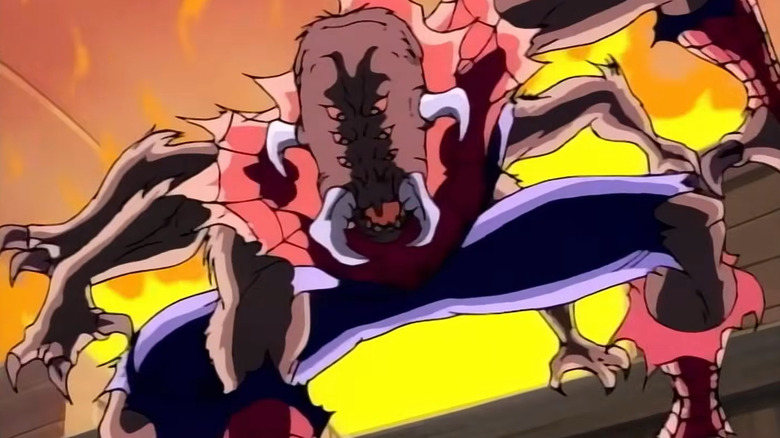
Menahem Golan and Yoram Globus, you see, had never read any Spider-Man comic books. Instead, they assumed Spider-Man was meant to evoke The Wolf Man and that Peter Parker was a monstrous man-spider who stalked and killed people. As such, Golan and Globus hired "The Outer Limits" creator Leslie Stevens to write the script for a horror-flavored Spider-Man film.
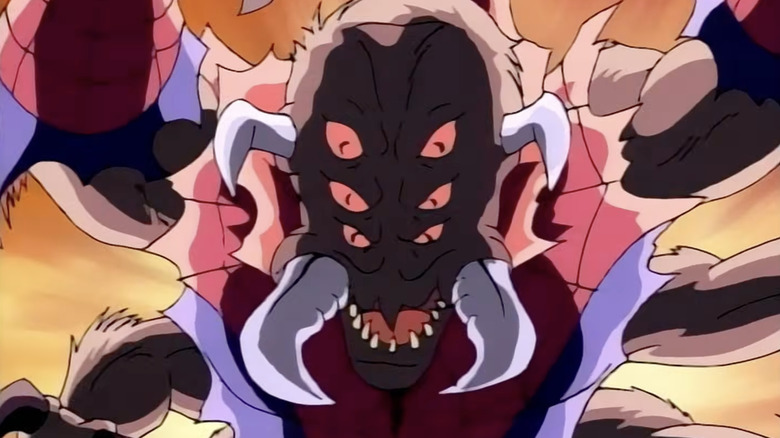
In Stevens' version of the character's origin story, Peter Parker works for a major corporate lab and takes ID photos for its employees. A wicked scientist named Dr. Zork then deliberately exposes Peter to radiation, mutating him into a massive, eight-armed spider monster. Dr. Zork's intention is for Peter to lead an army of animal hybrid creatures in taking over the world, but Peter still has shreds of his humanity and fights back. The film's climax, it seems, would have featured a mutant battle royale.
Stan Lee, as one might imagine, hated this idea. It didn't have anything to do with his vision of Peter as a beleaguered young man wrestling with the responsibilities of being a noble vigilante. Cannon had simply wanted to make a violent monster movie. Instead, Lee insisted they bother to read the actual comics, and Cannon listened. Meanwhile, Hooper left the project and moved on to bloodier pastures.
Cannon eventually developed a more traditional Spider-Man movie
Cannon soon found a new director for the project in the form of Joseph Zito. Though he, like Tobe Hooper, had a background in horror (having helmed 1984's "Friday the 13th: The Final Chapter"), Zito has also called the shots on Cannon's Chuck Norris vehicles "Missing in Action" and "Invasion U.S.A." (which released in 1984 and 1985, respectively). He was just the man for the job. As for Cannon, it had already tried to pre-sell "Spider-Man" to distributors before the movie had even been made, and one can watch the 18-second promo it produced on YouTube.
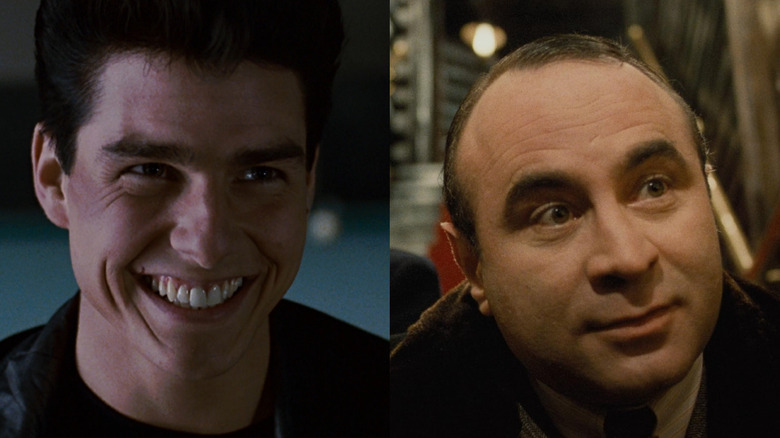
According to the short documentary "Cannon Spider-Man: The Greatest Movie Never Made," this iteration of the project (as written by Ted Newsom and John Brancato; you can read their script online) would've told a more traditional Spider-Man story involving the web-head battling Doctor Octopus as the latter tries to take over New York City. There were even some casting possibilities being floated. Bob Hoskins was eyed to play Doc Ock, while Tom Cruise (!) was Cannon's pick for Spider-Man. (This is why "Spider-Man: Into the Spider-Verse" nearly included a gag involving Cruise decades later.) In addition, Lauren Bacall was being considered for Peter Parker's Aunt May, whereas Stan Lee himself was in line to play Peter Parker's boss, J. Jonah Jameson.
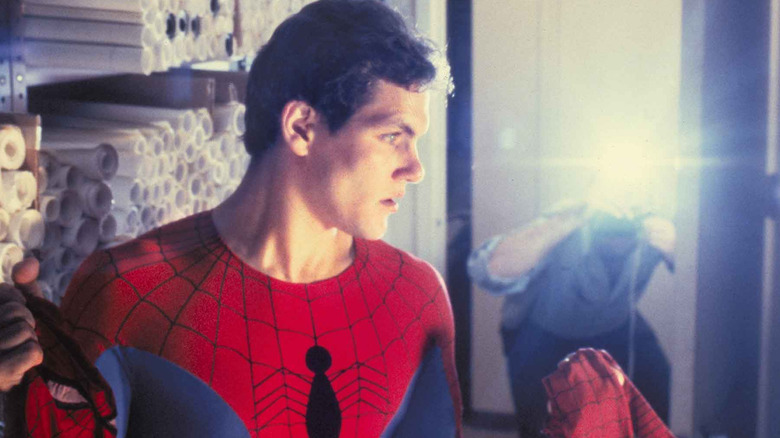
Cannon ultimately selected an actor named Scott Leva to play Spider-Man, which was, surprisingly, fun fan-casting. Leva was the live-action model who appeared in a Spider-Man costume on the cover of "The Amazing Spider-Man" #262. (You can check out a photo of the cover here.) The film was given a sizable (for Cannon) budget of upwards of $20 million and was meant to reach theaters during the 1986 winter holiday season.
Albert Pyun was briefly attached to direct Cannon's Spider-Man
So, why didn't the project move forward? It's worth noting that, in 1985, Cannon was failing terribly and losing money with every picture. (The studio's history is recapped in the documentary "Electric Boogaloo.") Since Spider-Man wasn't a big enough property at the time to be its last-ditch Hail Mary play, Cannon invested heavily in "Superman IV: The Quest for Peace," and "Masters of the Universe" instead. But again, both films became infamous bombs and pretty much ended Cannon as we knew it.
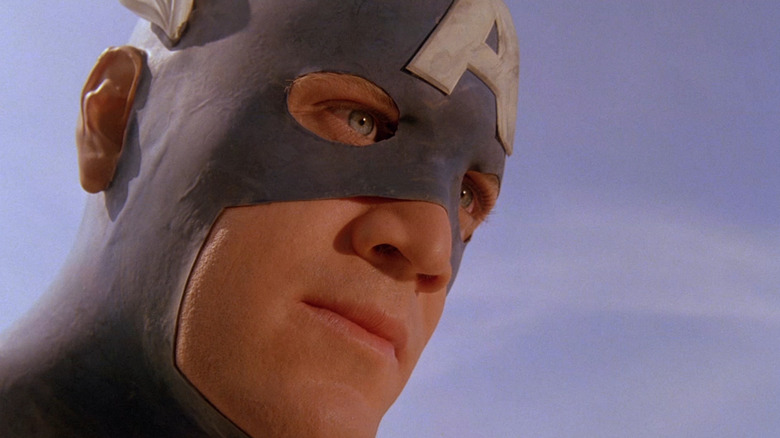
During this time, the budget for Cannon's "Spider-Man" was slashed to a tiny amount, and Joseph Zito dropped out. So, Cannon replaced him with Albert Pyun, who later helmed 1990's "Captain America" (not the even worse 1979 movie). One can see Pyun's name on some old promotional materials, and "Spider-Man" is even mentioned on his official website.
Screenwriter Don Michael Paul once talked about Pyun's unmade "Spider-Man" on the "Best Movies Never Made" podcast. Pyun's film was going to be cheap and quick. He had been hired to direct both "Spider-Man" and a "Masters of the Universe" sequel and planned to shoot both films at, essentially, the same time using the same sets and costumes. Specifically, he intended to shoot the Peter Parker intro scenes from "Spider-Man" first, then pause production so the movie's lead could develop a bulky, superhero physique. In the meantime, Pyun would've shot the entirety of "Masters of the Universe 2."
While one might admire the efficiency of Pyun's approach, it's hard to imagine that either of these movies would've been any good. When Cannon lost the film rights to both "Masters of the Universe" and "Spider-Man," Pyun repurposed the already-built sets into the movie "Cyborg" starring Jean-Claude Van Damme.
Why Cannon's Spider-Man fell apart for good
As Cannon kept failing and failing, it was eventually taken over by Pathé Communications. Menahem Golan and Yoram Globus split up after that, with Golan staying on board at Cannon for a short spell. Golan quickly left, though, and he took the rights to Spider-Man with him. (For more on their split, you should read Shirrel Rhoades' book "A Complete History of American Comic Books.")
Golan, however, remained involved in the Spider-Mess for another decade. New deals were later struck between the refurbished Cannon, James Cameron, and Carolco Pictures (among others), but Golan felt left out of these dealings. And yes, Cameron's unmade "Spider-Man" movie is a saga unto itself.
As Variety reported in 1998, there were also pieces of long-standing litigation over who properly owned Spider-Man. Five years earlier, it seems, Golan had sued Carolco, claiming the latter had disavowed its obligation to give Golan a producer credit on "Spider-Man." Carolco then counter-sued Golan, and everything became a mess that is, frankly, too boring to recount in detail. Basically, this was part of why a Spider-Man movie didn't finally get off the ground until 2002.
Still, if Cannon had gotten its way back in the mid-1980s, Marvel fans would probably still be reacting in embarrassment to the silly, Tobe Hooper-directed monster horror movie that would've been pushed into the public's eye. It might have become even more infamous than the gonzo stage musical "Spider-Man: Turn Off the Dark."
Alternatively, we might've enjoyed Tom Cruise playing the wall-crawler in a low-budget actioner for the ages. Who is to say? We can only imagine how bad (or good!) things could have turned out.