

This '90s Fantasy Movie From A Harry Potter Director Flew Under Everyone's Radar
Alfonso Cuarón is one of three Mexican directors, all born between 1961 and 1964, that have come to be known colloquially as the Three Amigos. He, Alejandro González Iñárritu, and Guillermo del Toro all entered into the public consciousness sometime in the early 2000s (although they had all been making movies in the 1990s), and each one of them became a major Oscar darling. Collectively, the Three Amigos' movies have been nominated for 107 Academy Awards, and that's not an exaggeration. Cuarón's movies have been nominated for 28 Oscars ("Gravity" and "Roma" got ten each), del Toro's for 34 (with "The Shape of Water" getting 13 unto itself); and Iñárritu has garnered a whopping 45 nominations.
Cuarón came into the mainstream in 2004 when he directed "Harry Potter and the Prisoner of Azkaban," the third film in the series. Unlike its predecessors, "Azkaban" featured its central magical school kids in street clothes, and envisioned their wizardly campus as a drab and muddy place, a contrast to the well-swept Oxfordian hallways of the previous movies. Many feel that Cuarón's is the best in the series. This was after Cuarón had gained a lot of attention on the indie circuit for his ultra-sexual coming-of-age drama "Y Tu Mamá También."
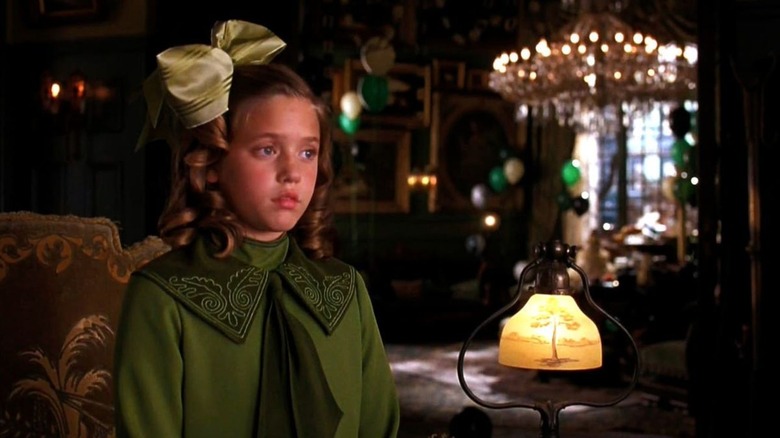
But some critics were already paying attention to Cuarón way back in 1995 when he made his Hollywood debut with "A Little Princess," a gentle, moving kid-drama based on the 1905 novel by Frances Hodgson Burnett. "A Little Princess" starred Liesel Matthews as a girl being raised in a boarding school and her battle of wits with the harsh schoolmistress Ms. Minchin (the excellent Eleanor Bron). It was only Cuarón's second movie, and it got two Oscar nominations.
Alfonso Cuarón's first Hollywood movie was the excellent 1995 film A Little Princess
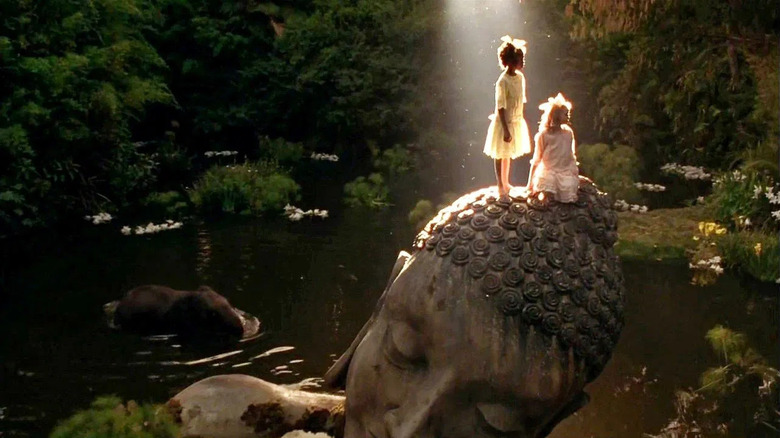
Alfonso Cuarón's first feature film came out in 1991 — "Sólo Con tu Pareja," an intense drama about love in the time of AIDS. "A Little Princess" is a thematic 180 for Cuarón, as it was a gentle fable about the magic and tenacity that young girls always carry in their hearts. All girls are princesses, the film openly and unashamedly declares. It's a moving and inspiring drama for little kids, and when I saw it as a teen in 1995, it moved me to tears.
Liesel Matthews plays Sara Crewe, a young girl who is being raised by her single father, Richard (Liam Cunningham), a British officer stationed in India in 1914. Sara has been raised on fairy tales and fables, and Richard is careful to keep her imagination constantly inflamed. When Richard is enlisted to fight in World War I, he has no recourse but to put Sara in a high-end boarding school in New York. The school is run by the pinched but human Ms. Minchin, who likes to instill rules and has no patience for giggles and play. Sara becomes popular among all the other girls, especially with Becky (Vanessa Lee Chester), the Black scullery maid.
Sadly for Sara, Ms. Minchin eventually receives word that Richard has been killed in the war, and that all of his assets have been seized. Sara is allowed to stay at the school, but only if she also becomes a scullery maid. The move then becomes a struggle of the will as Sara retains her sense of magic and wonderment, even as her life becomes colder and more lonely. /Film called the movie one of the 25 best kids' movies of all time.
I am a princess. All girls are.
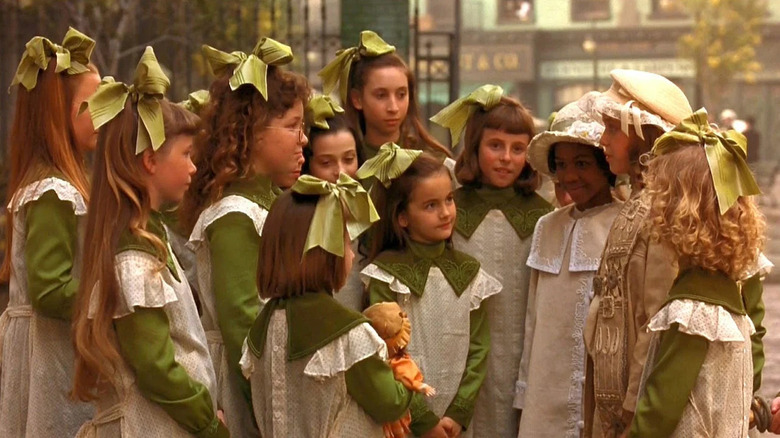
Ms. Minchin seems eager to break Sara's will, to have her admit that life is difficult, and that belief in magic, wonderment, and princesses is immature. One of the climactic moments comes when Sarah, at her wits end, still manages to stand up to Ms. Minchin and declare "I am a princess. All girls are." Alfonso Cuarón, working with cinematographer Emmanuel Lubezki, angles the cameras in such a way to make Sara look like she's growing, and Michin like she's shrinking. This was all emphasized by the excellent score by Patrick Doyle.
Lubezki was nominated for an Oscar for his work on this movie, as were the film's production designers Bo Welch and Cheryl Carasik. Critics loved the movie, praising its kid-friendly, emotional tone, and its rich, beautiful visuals. Roger Ebert gave the film three-and-a-half stars (out of four), praising its magical realism and its sense of wonder, something usually lacking in kid's entertainment.
"A Little Princess" wasn't a blockbuster, but it was beloved, and allowed Cuarón to move on to a more Hollywood project in the form of 1998's "Great Expectations," a modern-day, supra-stylized take on Charles Dickens' novel. That film starred Ethan Hawke, Gwyneth Paltrow, and Anne Bancroft. Robert De Niro was also in the film. Although ambitious, "Great Expectations" crumbled under its own weight (/Film called it his worst), as it was another limp MTV-style "re-envisioning" that was hip at the time (see also "Ever After" or "Romeo + Juliet"). The director returned three years later with "Y Tu Mamá También," and his career has continued to swing upward ever since. His last film, 2018's "Roma," was nominated for 10 Oscars and won three, including Best Director.