

Netflix's Avatar: The Last Airbender Season 2 Rightfully Reminds Us One Character Was A Villain
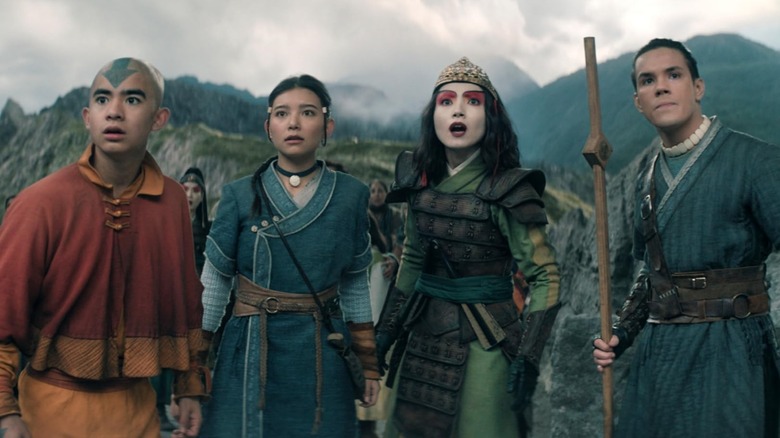
Spoilers ahead for Netflix's "Avatar: The Last Airbender" Season 2, Episode 4.
The animated "Avatar: The Last Airbender" changed TV forever. A TV series with a deep mythology, "The Last Airbender" is a fantasy epic in the vein of "Lord of the Rings" and features some of the best character arcs in the history of television. It's also a show that deals with some rather heavy themes, which is very unusual for a Nickelodeon cartoon. By its third episode, the series' main character has already discovered that his people and culture have been eradicated in a genocide, with the episodes that follow exploring topics such as war crimes, colonization, and imperialism. "The Last Airbender" might be a kids show, but it always has a lot on its mind.
Now, Netflix's live-action "The Last Airbender" remake series is turning the original animated show's subtext into text. As you might recall, Netflix's "Avatar: The Last Airbender" Season 1 struggled with how much of these implied horrors to show while still retaining the child-like wonder and silliness of its predecessor. Thankfully, though, Season 2 marks a significant improvement in this respect, as it manages to strike a better balance between its sillier elements and its darker and more serious story beats.
One need look no further than Uncle Iroh (Paul Sun-Hyung Lee) for the best example of this. Indeed, Netflix's "Avatar: The Last Airbender" Season 2 gives Iroh — who's still arguably the best character in this entire franchise – a subplot in which he is confronted for the war crimes he committed during his campaign against the Earth Kingdom. It's a phenomenal storyline that makes one thing very clear: Before he turned into the fun and wise old man we know and love, Uncle Iroh was the villain of this story.
Avatar: The Last Airbender's beloved Uncle Iroh was once the Dragon of the West
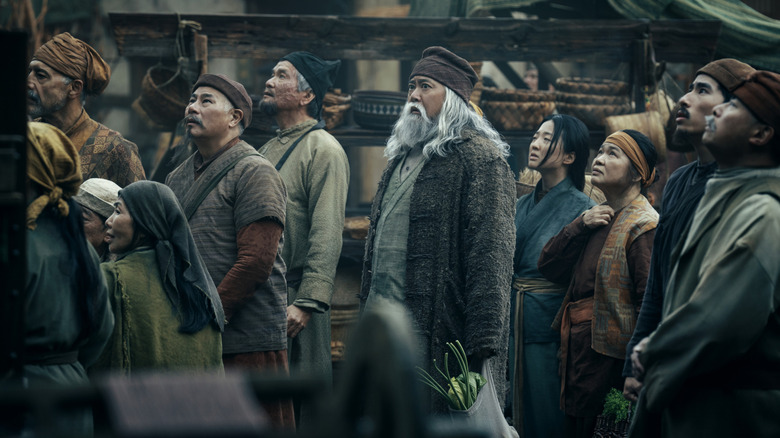
Season 2, Episode 4 of Netflix's "Avatar: The Last Airbender" (which is titled "The Water Falls, the Stones Emerge") finds Uncle Iroh walking through the streets of the Earth Kingdom's capital, Ba Sing Se, when suddenly he's stopped by a large crowd. A woman stands in front of them, protesting. She calls for the people to remember those who were lost during the Siege of Ba Sing Se, specifically calling out the atrocities committed by General Iroh, the Dragon of the West. Though the authorities of the Earth Kingdom work to ensure no mention of the war is uttered out loud, the protesters call for the thousands of dead to not be forgotten. We even see the protester using earthbending to carve the names of all the dead onto the massive wall that surrounds Ba Sing Se.
During the speech, Iroh is visibly distraught. Overwhelmed with emotions upon being confronted by the human cost of his war campaign, he looks around and notices that countless Ba Sing Se citizens burn marks on their faces — the result of his "accomplishments."
Later in the season, Iroh seeks the help of an ancient order called The White Lotus and meets with Jeong Jeong (Terry Chen), a former Fire Nation soldier. Jeong, however, shoots down Iroh, calling him a monster and reminding him that he ordered the burning of all those civilians who refused to bend the knee in the name of the Fire Nation's glory. Combined, these two moments make for an effective reminder of the life that Uncle Iroh used to lead before he renounced the Fire Nation's actions.
The live-action Avatar: The Last Airbender series improves Iroh's character arc
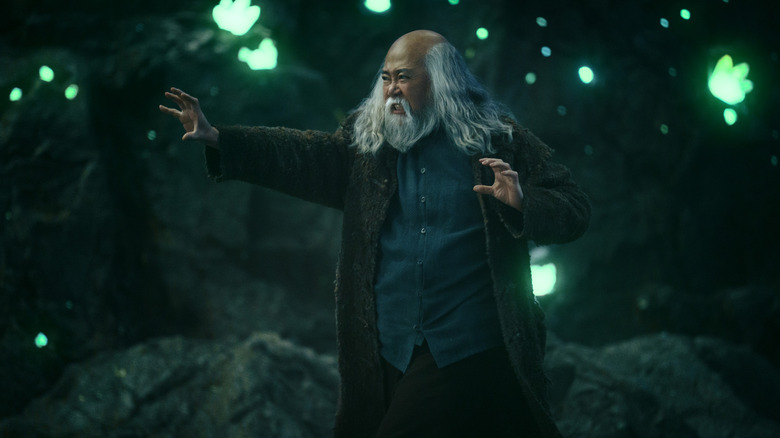
The animated "Avatar: The Last Airbender" also explores Iroh's past. Specifically, it touches on his war campaign in Ba Sing Se, as well as the huge battles he fought in and the armies he commanded (which led to him being feared throughout the Earth Kingdom).
Except, it's one thing for the "Last Airbender" cartoon series to reveal these things about Iroh, but it's quite another for Netflix's live-action remake to explicitly show the victims of his campaign like this. On the whole, this makes for a great addition to the story at hand. After all, we know that something changed in Iroh after the Fire Nation's relentless warring cost him the life of his only son, leading him to renounce the Kingdom prior to the series' events. But getting to see how he's emotionally affected when confronted with his past really drives that idea home.
Notably, the Fire Nation was the topic of most of the big standards and practices conversations during the development of the animated "Avatar: The Last Airbender," and that includes the question of how to depict firebending without encouraging little kids to play with fire. Similarly, although the cartoon wasn't prohibited from talking about war or genocide, its writers still had to figure out how to tackle these ideas without addressing them explicitly. Fortunately, the live-action remake series doesn't have to deal with such restrictions, and Iroh's character arc is all the better off for it.
You can stream the live-action "Avatar: The Last Airbender" series on Netflix right now.