

What J.R.R. Tolkien's Son Christopher Really Thought About The Lord Of The Rings Movies
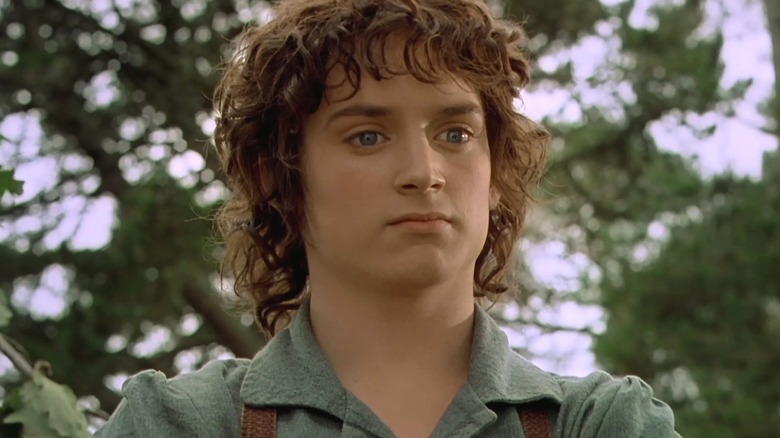
Peter Jackson's "The Lord of the Rings" movies are acclaimed and beloved for good reason. "The Fellowship of the Ring" is easily the most ambitious adaptation of J.R.R. Tolkien's epic high fantasy stories. The rest of the trilogy is similarly breathtaking, with Jackson's passion for the material clearly shining through. Amazon's franchise spin-off, "The Rings of Power," weaves a distinct interpretation with its own merits, but the streaming service ghosted Jackson after discussing his possible involvement with the prequel. Admittedly, this was a rather tricky situation due to the legal ownership of rights and what have you, further complicated by alleged reports that the Tolkien Estate didn't want Jackson to be associated with Amazon's rendition of the saga (via The A.V. Club).
Tolkien's son, the late Christopher Tolkien, was the custodian of his father's prestigious legacy, and his opinion of Jackson's trilogy was overwhelmingly negative. "They eviscerated the book by making it an action movie for young people aged 15 to 25," Tolkien stated in a 2012 interview with the French newspaper Le Monde. In the same interview, Tolkien lamented the "commercialization" of his father's literary legacy and the apparent dilution of what "The Lord of the Rings" stands for:
"Tolkien has become a monster, devoured by his own popularity and absorbed into the absurdity of our time. The chasm between the beauty and seriousness of the work and what it has become has overwhelmed me. The commercialization has reduced the aesthetic and philosophical impact of the creation to nothing. There is only one solution for me: to turn my head away."
This assessment, while understandable on some level, feels rather harsh. After all, the trilogy is accessible to a wide demographic, and its unique appeal to a younger audience should be a cause for celebration, not concern.
The Lord of the Rings movies are an indispensable part of Tolkien's legacy
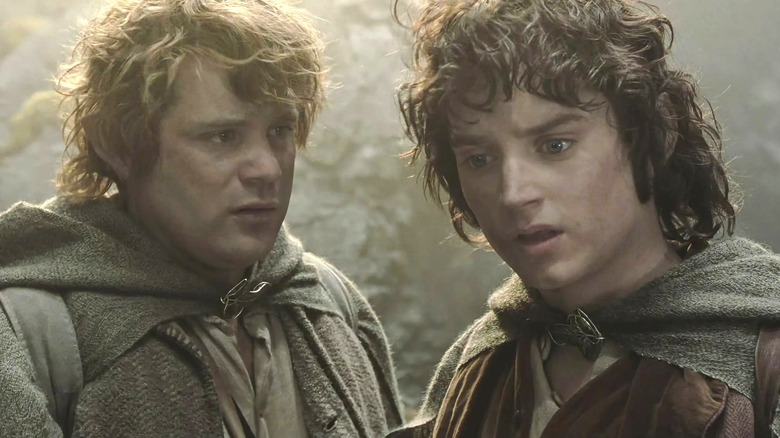
Christopher Tolkien's statement makes more sense when contextualized against the fact that he painstakingly edited 24 volumes of his father's work, including "The Silmarillion" and "The History of Middle-Earth." Intimately acquainted with "The Lord of the Rings," Tolkien also provided maps while conducting research to add crucial context to these fantastical settings. He seemed to think the overwhelming popularity of the movies overshadowed aspects of this preservation process — casual viewers (understandably) fueled their interest in Tolkien's world by checking out the books after watching the films, and not the other way around.
But the cinematic medium is inherently incapable of accommodating every literary nuance, especially ones that span such an astounding body of work. The act of condensing Tolkien's world into films that are entertaining and profitable is no walk in the park — so far, only Jackson has been able to effectively pull this off on such a grand scale. This also meant taking artistic liberties that served Jackson's epic retelling (which is steeped in Hollywood-style thrill/drama), no matter how blasphemous they might feel from a purist perspective.
But what does Christopher Tolkien's son, Simon, think about Jackson's films? Simon Tolkien (who serves as a key consultant for "The Rings of Power") shared a more cordial outlook in a 2001 interview. "It was my view that we take a much more positive line on the film, and that was overruled by my father," he told The Telegraph.
There's an argument to be made against the somewhat pulpy nature of Jackson's trilogy (taken to disappointing extremes in his "Hobbit" films), but the films' impact on popular culture cannot be overstated. Tolkien's saga will forever exist in all its brilliantly complex glory, which is why both versions can (and should) co-exist without friction.