

Ralph Bakshi's Lord Of The Rings Has A Live-Action Version You'll Never See
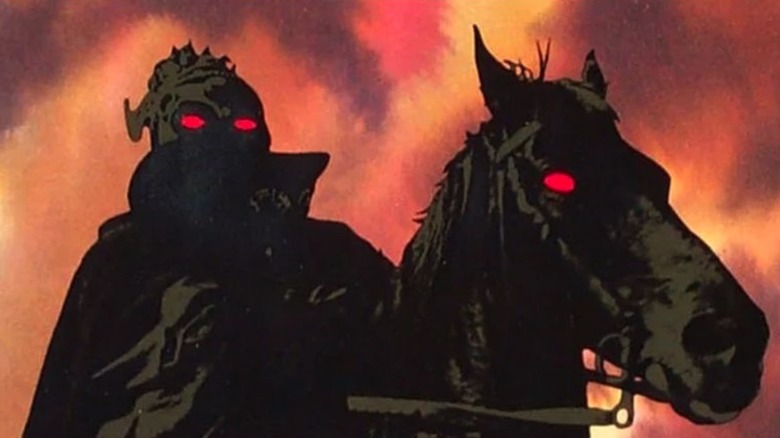
The early "Lord of the Rings" and "Hobbit" movies are animated classics, but live-action still had a role to play in their creation. Ralph Bakshi's "Lord of the Rings," released in 1978, used this technique as a visual guide before adding other elements to bring the movie to life. Here's what Bakshi had to say on the matter while speaking to It Came From:
"We didn't have motion control in those days; there were no computers. [Rotoscoping] was a tremendous way to get realism in a picture. ... When it came to Rings I was really trapped on the deadline. I came up with the technique of instead of tracing the photograph, I would put the actual photograph [in high-contrast] right on the animated cel and paint it."
Rotoscoping is a process where filmmakers trace over live-action footage to create animation. The technique was invented by Max Fleischer in the early 1900s, but it became more prominent when Disney used it for animated classics like "Snow White and the Seven Dwarfs" and "Sleeping Beauty." It was also used to give the lightsabers their glow in "Star Wars." However, "Lord of the Rings" was more ambitious with its rotoscoping, as Bakshi shot hundreds of live-action actors before animating them.
Bakshi adopted a similar approach for "Wizards," one of the best forgotten animated movies of the '70s, so he had some experience with rotoscoping heading into "Lord of the Rings." The director noted that the mixed-format technique allowed him to disguise the film's lack of budget and ensure the scenes were packed with emotion. This approach was unconventional at the time, but it proved to be an exceptional fit for the subject matter.
Ralph Bakshi's Lord of the Rings brought realism to animation
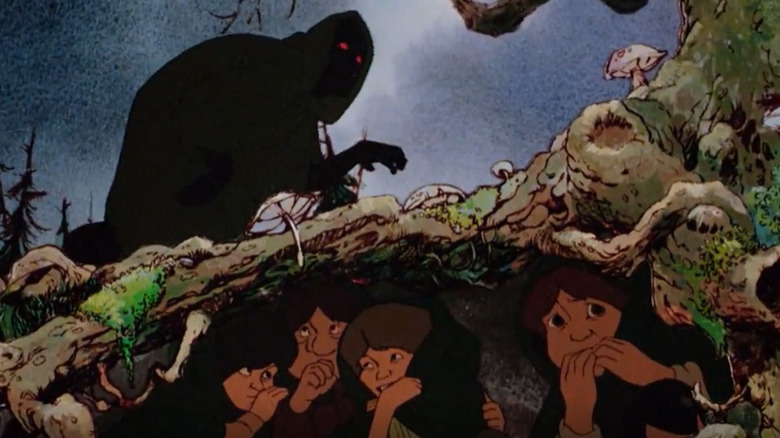
Despite its use of animation, Ralph Bakshi didn't want his "Lord of the Rings" movie to feel cartoonish. As documented by Cartoon Research, the director revealed he was going for a "rotoscope realism" that hadn't been accomplished in animation at the time. What's more, shooting the feature in live-action allowed the filmmakers to accomplish things that might not have been achievable using traditional animation methods. In his own words:
"One scene, some figures were standing on a hill and a big gust of wind came up and the shadows moved back and forth on the clothes and it was unbelievable in animation. I don't think I could get the feeling of cold on the screen without showing snow or an icicle on some guy's nose. The characters have weight and they move correctly."
While the live-action footage was instrumental in creating "Lord of the Rings," it was never intended to actually be seen by audiences in that form. Bakshi's goal from the outset was to elevate animation as a medium, and everything else was a means to accomplish that end. Seeing the original live-action cut might be interesting, but it wouldn't be nearly as entertaining; the animation is what gives "Lord of the Rings" its magic.
What's more, this particular iteration of the movie might not exist if it was a proper live-action feature. Bakshi ultimately saved "Lord of the Rings," as United Artists wanted to condense the three books into a single live-action movie from a script by John Boorman, before the studio ultimately lost interest. Bakshi didn't want to ruin J.R.R. Tolkien's story, so he acquired the rights with the intention of making two movies. Unfortunately, Bakshi didn't get to make the second installment, but his "Lord of the Rings" still holds up spectacularly.