

5 Forgotten '70s Fantasy Movies That Still Hold Up Today
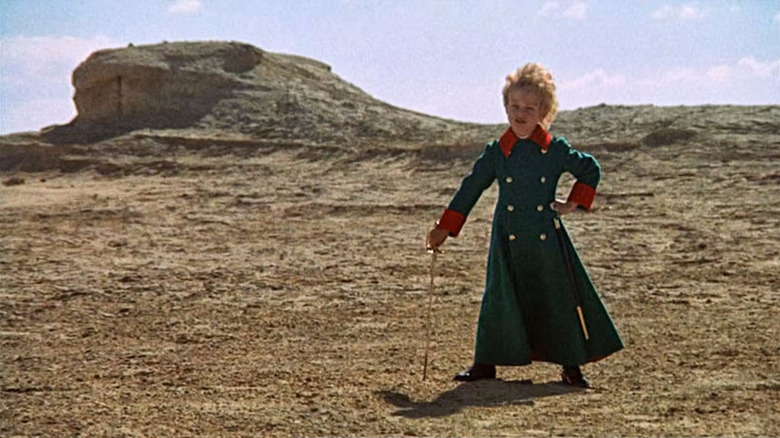
When today's audiences, particularly the kids who just don't know any better, think about fantasy films, they're probably picturing movies featuring hobbits, dragons, and enormous amounts of digital visual effects. That's fine, but one hopes that, whatever their age, they'll also look towards the past for fantasy movies that used old-school animation techniques and creative practical effects to bring their varied stories to life.
Fantasy films have existed since the start of cinema, and the genre arguably peaked in the 1980s (as evident in our look at the decade's best forgotten fantasies), but there's something to be said for the fantasies that graced the screens the decade prior. Carefree imagination, whimsy, and goodwill battled for market share with cynicism, narrative structure, and creations trademarked by the Walt Disney Corporation. Audiences were treated to unforgettable fantasies ranging from the innocent laughs of "Oh, God!" to the breathtaking horrors of "Suspiria," but plenty of films slipped through the cracks along the way.
Some were aimed at children, others were targeted towards adults, but the common thread running between the 5 films below is that they failed to make a noticeable mark on a pop culture hungry for fantastical entertainment. That lack of a cultural footprint shouldn't be confused with a lack of quality, though, as all 5 are distinctly memorable tales offering thrilling worlds and imaginative visuals. Now keep reading for 5 forgotten '70s fantasy films that still hold up today.
The Point (1971)
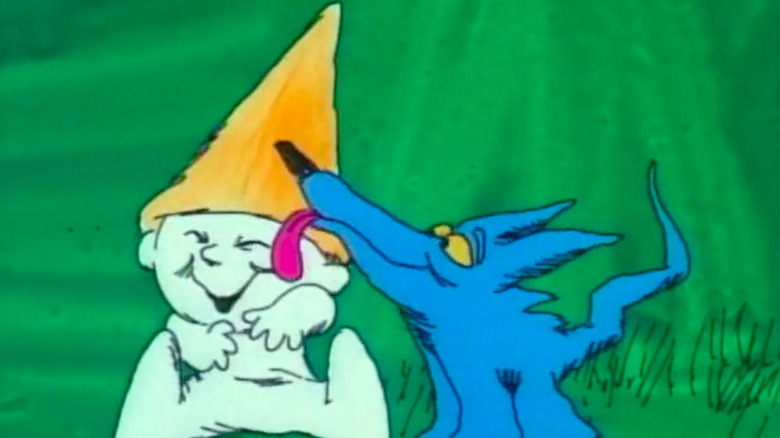
A legendarily wise man once said, "I know writers who use subtext, and they're all cowards." That man was Garth Marenghi — get a taste of his incredible mad television work here — and the odds seem pretty good that he is, was, or would be (if he was a real person) a fan of 1971's "The Point." Now, depending on how much subtext you're prepared to dig into, that might not seem like much of an endorsement, but it's also precisely the kind of absurd observation that would feel right at home in a family film about how everyone and everything has value regardless of their supposed purpose.
Oblio is a little, round-headed boy living in a world where everyone — and everything — has a point. The people have pointy heads, and all objects, both natural and manmade, feature equally pointed extremities. The boy and his dog run afoul of the village leaders and are banished, but as they roam the wild landscape, they discover a point and a purpose are like apples and oranges in that they're similar, different, and tasty. (I'm paraphrasing.)
The made-for-TV animated film is an adaptation of Harry Nilsson's concept album — an idea and story that he contributes to a particularly vivid acid trip — and it features several short songs alongside its traditional narrative. Dustin Hoffman actually narrated the original airing, but as his contract was for a one-time appearance, later showings (and the subsequent home video releases) feature Ringo Starr instead. Nilsson's songs are fun little numbers, and Oblio's journey delivers an entertaining adventure alongside its morals. It's arguably simplistic in its ultimate messaging, but the themes of acceptance and wonder are as important and relevant today as they ever were.
The Amazing Mr. Blunden (1972)
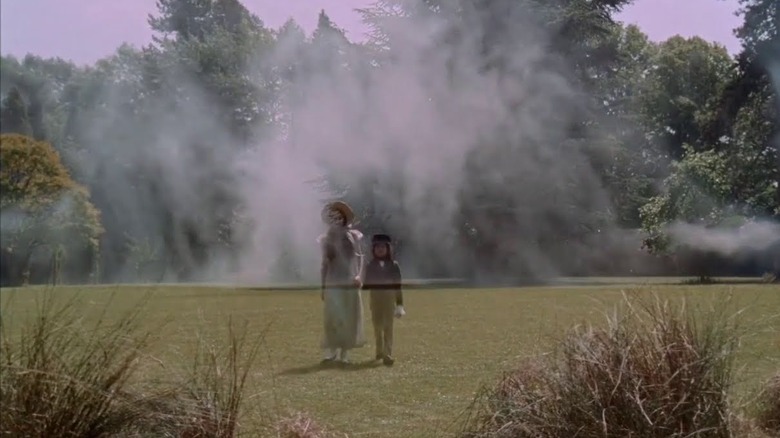
Can ghosts be an element in a fantasy film? They're a known entity in the horror genre, but I'd argue that they're every bit as welcome in fantasies as they are, by definition, fantastical beings. It's good that we're in agreement there as "The Amazing Mr. Blunden" is a family fantasy film focused on time travel and the supernatural, and it's from a time when movies for kids were allowed to get a little bit dark. This time is known as the good ol' days, and films from the era make up the bulk of the titles on our list of scary movies for kids.
A widow becomes caretaker for an old, abandoned estate, and she brings her two young children along to live there. The kids soon notice two ghostly children roaming the grounds, and further investigation reveals that the pair lived and died there a century prior. The opportunity arises to travel back one hundred years and hopefully prevent the fiery death of the two ghostly siblings.
Lionel Jeffries' 1972 feature might not knock your socks off, but it's an adventure that features death, a relatively twisty time travel plot, and kids risking their own well-being to help others in need. These are no small accomplishments in a kids film, and the result is an engaging and suspenseful fantasy that would make a solid double feature with Walt Disney's "Child of Glass" from 1978 for fans of stories about dead kids reaching out from beyond the grave to ask for help in righting the wrong of their own murders. Kids love this kind of thing, so consider adding into your next Halloween playlist
Ruslan and Ludmila (1972)
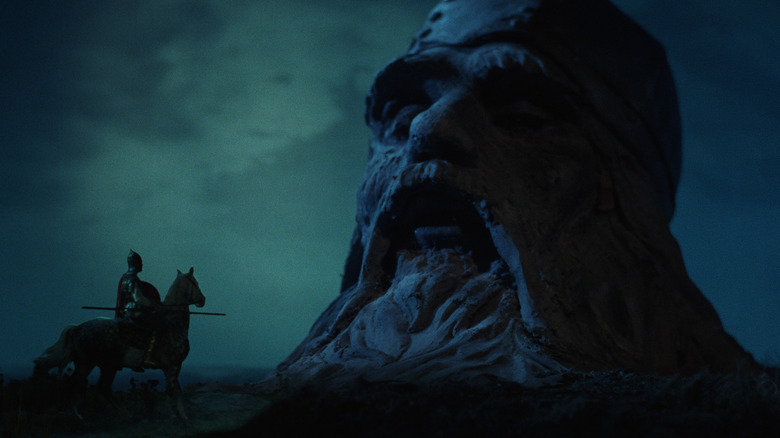
You've seen plenty of fairy tales over the years featuring beautiful princesses in distress, but have you ever seen one in Russian? Probably not, but that should change with your introduction to the works of Aleksandr Ptushko. The director made a dozen movies over the years, and his most memorable and beloved are epics adapting great works of literature (including an opera) from Russian and Finnish history. His final film before his death is "Ruslan and Ludmila," and it's the tale of a stolen princess and the prince who risks it all to find her.
Ludmila and Ruslan are young lovers whose nuptials are about to happen when she's abducted by a bearded sorcerer named Chernomor. Her father offers a reward for her safe return, and several suitors take up the challenge alongside Ruslan. The journey sees the men cross paths with magic, beasts, decapitated giants, and each other before finally coming face to face with the wicked Chernomor.
Ptushko's last gasp as a filmmaker is a lush, gorgeous adventure that immerses viewers into a fantastical landscape. The world is brought to life through elaborately detailed soundstages and immense natural landscapes, and the production design works beautifully to craft an experience that feels even older than it is. You'd be forgiven for thinking this was a grand Technicolor production from Hollywood in the late '50s instead of a Russian film from two decades later. Its use of color makes even the most mundane moments feel important, and it all comes together in the form of an epic tale of medieval magic.
Jabberwocky (1977)
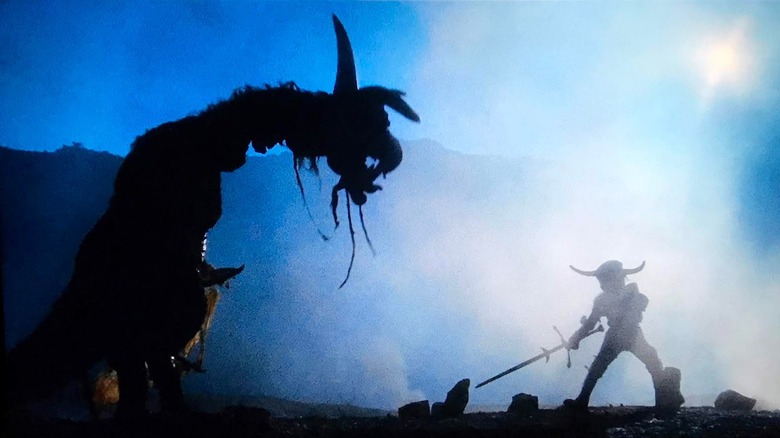
A filmmaker's career often moves through highs and lows, and it's a reality that Terry Gilliam knows all too well. Granted, his lows have encompassed the last two decades or so, but the sentiment remains in a career that saw some combination of critical and commercial ups and downs with films like "The Fisher King" and "The Brothers Grimm." It's his second feature we're here to discuss, though, and it's one with an unfair reputation as it arrived on the heels of the legendarily funny medieval comedy, "Monty Python and the Holy Grail." Sure, "Jabberwocky" can't touch that film's greatness, but it's still a fun little fantasy that delivers genuine entertainment (despite where it lands on our ranked list of Gilliam's films).
Dennis (Michael Palin) wants only to lead a normal life, or as close as one can get to normal in the Middle Ages without dying of the plague or some other daily trouble, but he's not having much luck. He is having rather great luck, though, when it comes to stumbling his way into an epic adventure involving knights, a princess in waiting, and a vicious monster that's been snacking on locals.
Gilliam's film carries over plenty of visual nods and atmospheric tones from his Monty Python days, but the story is simpler and arguably less focused on gags. The result is a simple comedy that finds laughs both high and low — a sign of a filmography to come, perhaps? — while also managing a smart commentary on the things we mistakenly entrust to make us happy. Forget Monty Python, forget the Lewis Carroll poem it's inspired by, and just enjoy the silliness that is "Jabberwocky."
Wizards (1977)
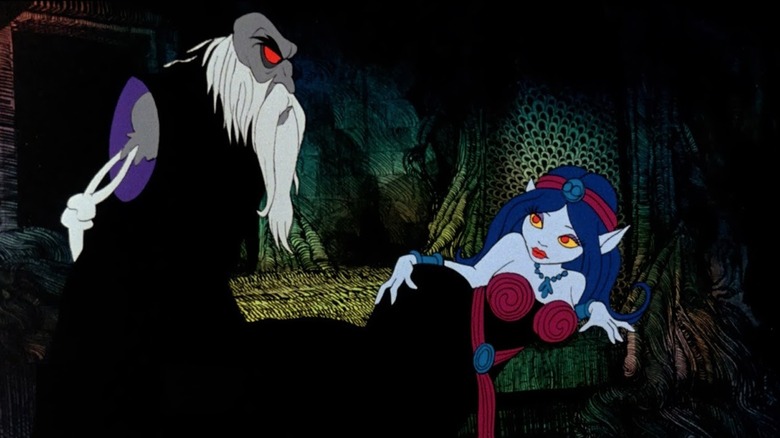
They say necessity is the mother of invention, and for Ralph Bakshi, that meant a major shift in his creative gears in the late 1970s. He made two very successful animated features for adults in "Fritz the Cat" and "Heavy Traffic," but his third effort, the eventually acclaimed "Coonskin," was denounced and disappeared quickly from theaters. He needed a change, and that change came in the form of a detour into the fantastical with the one-two punch of "Wizards" and "The Lord of the Rings." The latter was a massive success (despite the struggle to get it made), but the former is every bit as memorable.
Earth is a post-apocalyptic landscape, and from the remains crawls both mutated humans and legendary creatures like elves and fairies who had been hiding beneath the surface for millennia. Two wizards, twin brothers with morally opposed dispositions, find themselves at odds when one is banished only to build his own army with plans of dominating the planet.
Bakshi's J.R.R. Tolkien adaptation may have a tighter narrative, but "Wizards" still finds thrills in its animation style, characters, and battle scenes — some of which were created by rotoscoping existing footage from movies like "Zulu" and "Patton." It also succeeds with its commentary on technology's inevitable shift towards violence and the effective use of propaganda on a malleable, controllable populace. Its blend of military equipment like guns and tanks with magical beings like trolls and elves still feels fresh in its approach, and the result is a visual spectacle offering an atypical look at the end and rebirth of the world we call home.