

A Marvel TV Show Ripped Off One Of Steven Spielberg's Most Underrated Movies
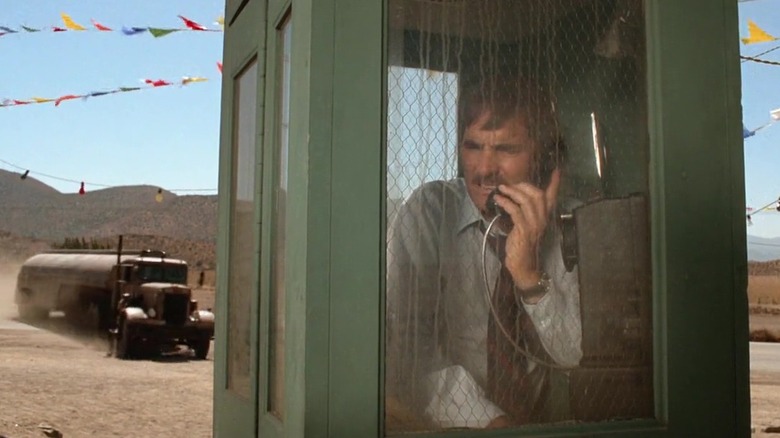
Before he became the big screen icon we know today, Steven Spielberg famously began his professional directing career via episodes of shows like "Night Gallery" and "Columbo" before tackling features. A key transitional work for him was 1971's "Duel," which began as an ABC movie of the week before getting a theatrical release after its broadcast. The film was successful enough to help Spielberg break out, as it proved what he could do with a camera and the simple premise of a man on the highway tormented by an eerie truck. To date, it remains one of his most underrated movies.
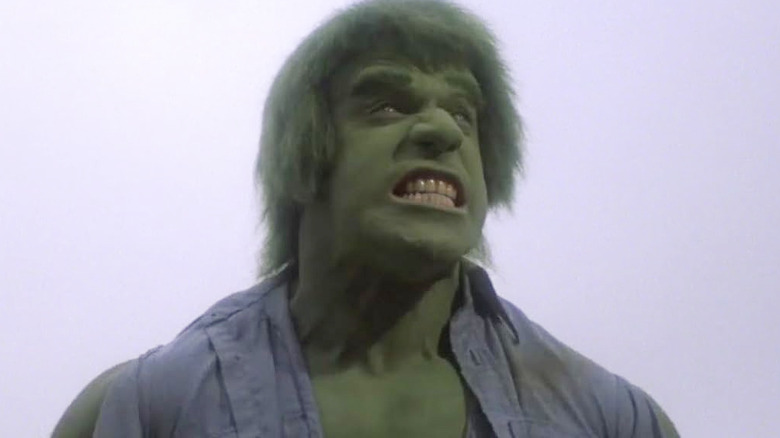
As it happens, what Spielberg managed to capture in "Duel" may have been a little too good. Several years after the film's release, Ken Johnson, the developer of CBS' "The Incredible Hulk" series (based loosely on the Marvel Comics character), decided to build an entire episode of the show around reused footage from "Duel." The episode, titled "Never Give a Trucker an Even Break," aired on April 28th, 1978, and it used approximately eight minutes of footage from Spielberg's film (according to "Duel" producer George Eckstein, who was interviewed by the New York Times in May of '78). Although Johnson claimed that the footage was used fairly as stock, it's clear that the episode was built around it. The incident is indicative of how attitudes toward filmed entertainment (especially TV) was beginning to change, and it inspired a particular contract clause for Spielberg's work going forward.
The Duel/Hulk incident demonstrated film's growing importance
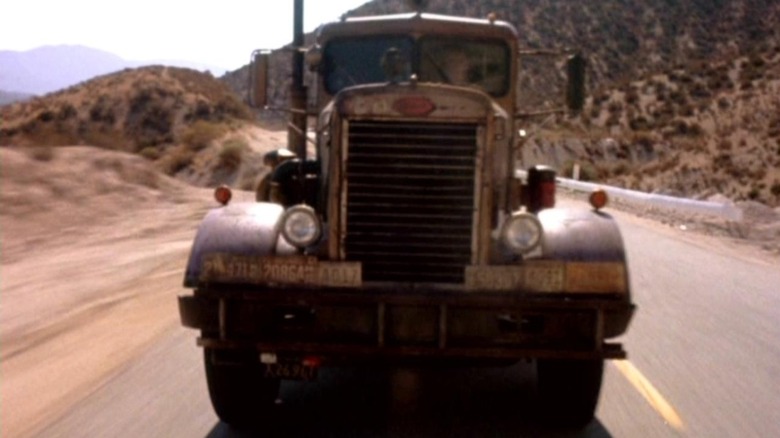
Anyone who watches "Never Give a Trucker an Even Break" can understand what Ken Johnson (who also wrote the episode) and director Kenneth Gilbert were doing by arranging an episode of "The Incredible Hulk" around footage from "Duel." They were doing what network television shows often did, which was to save costs on various aspects by reusing material. In most cases, reused material tended to be the show's own, resulting in the "clip show" type of episode. In the case of "Duel," however, Johnson (who was apparently thwarted from doing a railroad chase episode) learned that footage from Spielberg's film was available, which caused him to pivot to writing an episode with a truck chase instead. After George Eckstein and Steven Spielberg objected to the episode's use of "Duel" material, Johnson's defense (as seen in the NYT article) was especially indicative of not only his mindset but the general showbiz attitude toward old films and shows at the time:
"Certainly most of the audience would not remember a seven‐year‐old movie."
This concept of older films and television being disposable wasn't too unusual in the 1970s. However, it was the influx and influence of new, young filmmakers like Spielberg who were beginning to change all that, being so openly knowledgeable, reverent and celebratory of Hollywood's past. This respect made its way to audiences, too, especially as home video began to grow. The ironic cherry on top of the whole thing is that Spielberg, when making "Duel," had to fight to shoot it on location, as the movie's unit production manager believed it couldn't be done on time and on budget. Spielberg's ingenuity and preparation prevailed. Thus, that film's footage was hard won, and not to be trifled with.
Spielberg saw to it that what happened to Duel could never happen to him again
While the tiff between Steven Spielberg, George Eckstein, and "The Incredible Hulk" team was short-lived, the repercussions of it had a much greater effect. During the 1960s, Universal Pictures merged with the MCA corporation, and over the next couple decades, the company beefed up its television division in a big way. Universal/MCA became the largest provider of television programs to the various networks, and this success gave them the boldness to do some fairly unusual (if not shady) things with their material. One of these things was the editing of bizarre edited-for-television versions of theatrically released films. Several of these TV versions simply had awkward voiceovers and deleted scenes added in, while some rare cases saw brand new material edited into the film in a manner which feels dubious at best.
Given how such occurrences were happening in Universal/MCA's editorial department at the time, it's no wonder why Ken Johnson was taken aback at lifting sequences from "Duel" and using them in "The Incredible Hulk." While other, less influential filmmakers simply had to sit by and let things like this happen, Spielberg helpfully set an example by contractually stipulating that nothing of the sort could be done to the films he made for Universal again. As the director stated in the NYT article:
"...no one can cannibalize my films and regurgitate them into some other show. I'd hate to see the mother ship from 'Close Encounters' land on 'Laverne and Shirley' five years from now."
Fortunately, the practice of using huge chunks of films or TV for stock footage has significantly lessened. The powers that be are now all too aware that audiences remember old films and shows more than they ever used to.