

Leviticus Is One Of The Best Horror Movies Of 2026, And It'll Also Make You Cry
The first girl I ever kissed was taken out of public school by her parents and sent to a private Catholic school in an attempt to curb her budding lesbianism "before it was too late." We reconnected by chance over a decade later. She's still not straight, because conversion therapy is nothing more than costly, church-sanctioned child abuse. I am extremely privileged to have been born into an affirming family who never made me feel bad about being a lesbian, but it was hard not to internalize what had happened to her as being my fault. If there wasn't anything wrong with being gay as my parents had told me, why did my crush get sent away? Why were her parents so desperate to "fix" her? Those questions haunted me for years.
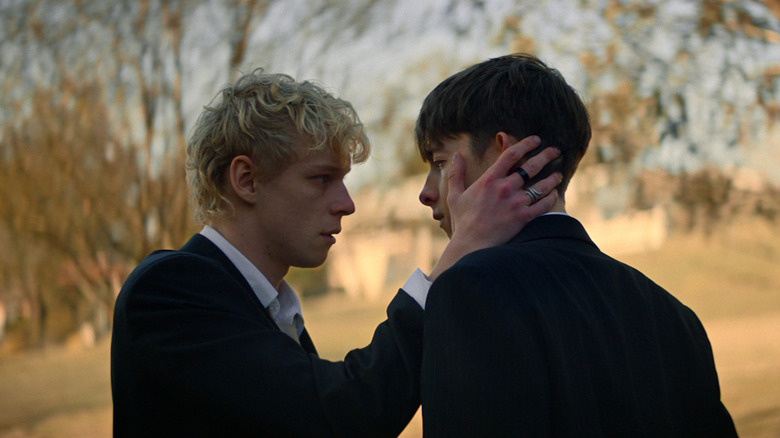
Adrian Chiarella's feature directorial debut "Leviticus" channels that turmoil into a supernatural horror story where two teenage boys — Naim (Joe Bird) and Ryan (Stacy Clausen) — are forced into an experimental form of conversion therapy "deliverance healing" that manifests a shape-shifting entity that exclusively appears as the person they most desire; each other. Comparisons to the equally terrifying "It Follows" are inevitable, but the queerness of "Leviticus" inherently raises the stakes because Naim and Ryan are living in fear long before the entity arrives. They are forced to steal kisses in an abandoned mill and spend one-on-one time together in the rural outskirts of their small Australian town away from the judgmental eye of their religious community, who view brutality as an acceptable way to "deal" with people like them.
And this entity's arrival has stripped them of the sanctuary and solace they found with one another. As the film declares textually, "This is what they wanted ... us to be scared of each other."
Leviticus is a violent surveillance state of desire
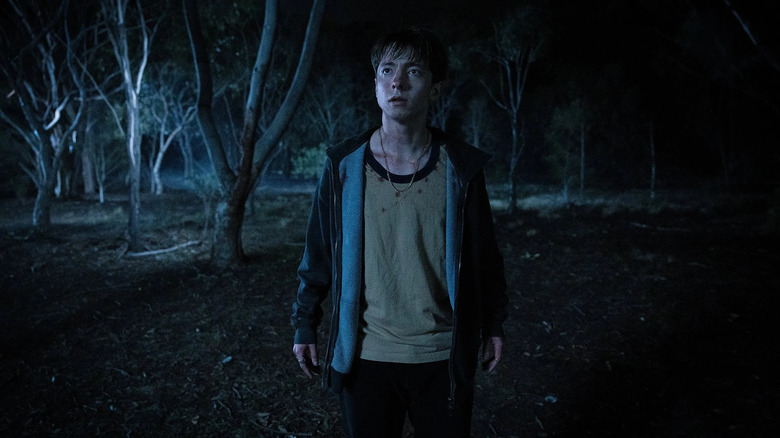
The terror of "Leviticus" isn't just that something is coming for them; it's that being true to who they are puts them in the inescapable crosshairs of danger. Desire is transformed into skin-crawling paranoia, and hungering for intimacy mutates into a yearning for something hazardous. Horror has always been a refuge for outsiders to process shame, fear, and self-discovery, and Chiarella taps into that tradition while crafting something intensely personal. Naim and Ryan's nightmare is palpable as we witness their developing relationship and the incomparable emotions that come with falling in love for the very first time as teenagers.
Every moment of the film is in conversation with another existing in contrast; a confident choice by Adrian Chiarella. Ryan playfully wrestles with Naim as foreplay, intertwining physical aggression and desire without a semblance of genuine harm. Niam's mother Arlene (the always phenomenal Mia Wasikowska) willingly signs her son up for conversion therapy, but she genuinely believes this is an act of love. The one person in town who understands the threat of the supernatural proves to be one of the biggest threats of their reality. And then there's the malevolent entity itself, presenting as someone they love with the goal of violently destroying them.
Chiarella breeds fervent anxiety with each passing scene, never showing his hand too soon on whether Naim is interacting with the Ryan he fell in love with or his deadly doppelgänger. "Leviticus" isn't overreliant on jump scares, instead rattling nerves with the continuous heartbeat of maliciousness pumping blood into the heart of this community long before the entity arrives. Its presence only exacerbates things; the rot was already there. All they have is each other.
Joe Bird and Stacy Clausen are transcendent in Leviticus
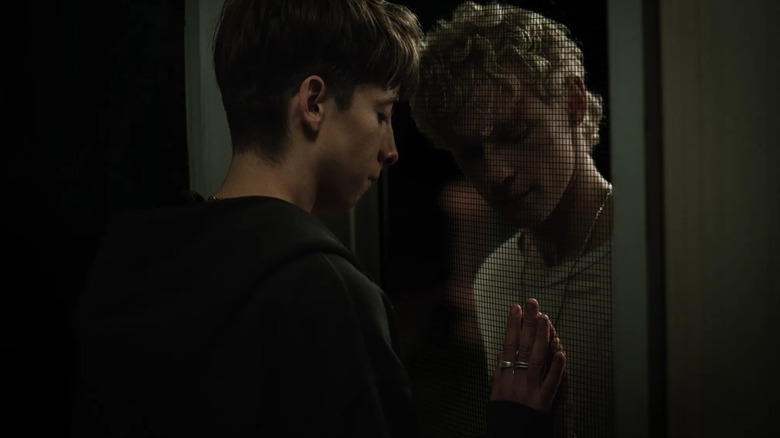
What makes "Leviticus" one of the best queer horror movies in recent memory is the emotional precision of Joe Bird and Stacy Clausen's performances. The pair navigates a minefield of conflicting impulses and meets the challenge with remarkable nuance. Their chemistry is infectious, and Bird (following his breakout performance in "Talk to Me") once again proves that he is one of horror's most promising young talents. Every stolen glance carries the weight of what's at stake, and as fear, mistrust, and anger seep in, the heartbreaking deterioration of their relationship is all too recognizable. We fall in love with their love with the same intensity as the pulse-pounding fear we experience when they're at risk of being killed.
The film's title comes from the biblical book that many evangelicals cite to justify their homophobia, despite the fact that many theological historians have noted that the passage wasn't used to disparage queer people until 1946, following a mistranslation. It's a perfect title for a film built around misunderstandings, misassumptions, and mistakes treated as gospel — and a reminder of the specter that looms over all queer people under the thumb of countries pursuing Christian nationalism.
"Leviticus" is one of the best horror movies of 2026 and a breathtaking encapsulation of the internal turmoil imprinted upon so many of us by external forces. The reality is that many of us don't need a supernatural entity coming after us to force us on high alert, because we already live in a world that wants us dead. Seeing that personified makes for a difficult watch, but it's one that affirms the truth we already know: in order to survive, we must love each other more than they hate us.
"Leviticus" is now playing in theaters.