

5 Sci-Fi Movie Remakes That Should Have Never Happened
The best sci-fi stories are novel. Science fiction, when operating at its peak, will invent a new, creative technology or a bizarre alien species and then speculate on humanity's potential reaction to those things. In so doing, a skilled author/screenwriter will force the readers/viewers to reflect on something deeply human within ourselves. Every alien is a speculative culture, every tech an exploration about what we think we need. Some stories look into the human heart and see something bleak. Others look to the future and see something beautiful; "Star Trek" is one of the most optimistic works of sci-fi currently in the pop canon.
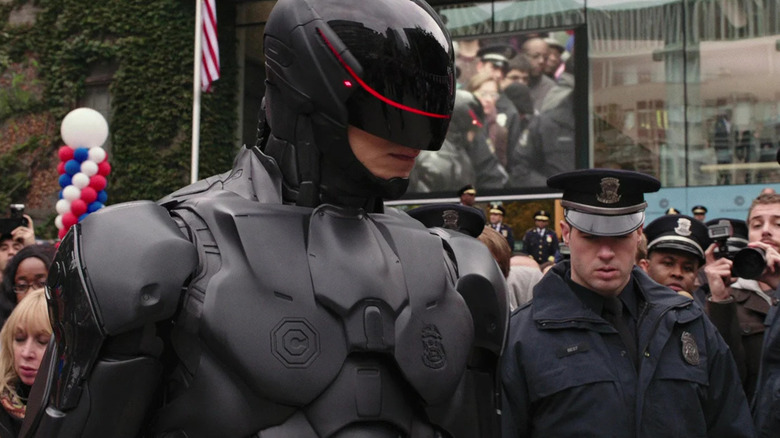
If one wants to remake a sci-fi classic, then, one really, really needs a good reason to do so. Yes, old sci-fi stories can still be relevant in the present, but they also would need to be rethought to match the politics of the day. "1984" might resonate with an audience in the 2020s, but one would have to update some of its language to match the real-life fascism seen outside our doors. One can similarly update "RoboCop," but they would have to, if they wanted to make a good movie, think of reasons why the story would apply to humanity in the present.
As we all know, there was a remake of "RoboCop," and it was bad, because its makers didn't think of interesting reasons why the "RoboCop" myth would appeal to an audience in 2014 when the film came out. Indeed, all of the movies below suffer from their lack of creativity and their blatant, thoughtless reuse of classic stories/franchises to communicate uninteresting or clumsy messages. The five sci-fi remakes on the list below added nothing to their myths of origin and, in some cases, even took away from them.
Planet of the Apes (2001)
Franklin J. Schaffner's 1968 film "Planet of the Apes," based on the 1963 novel by Pierre Boulle, knocked audiences for a loop. Thanks to its innovations in makeup technology (which the actors hated), human actors could convincingly play anthropomorphic chimpanzees, gorillas, and orangutans in a world where apes have supplanted humans. The twists in Schaffner's movie are well known to sci-fi fans (I shan't reveal them here), and the film was enough of a hit to spawn several sequels. It also serves as a powerful satire of human prejudice and animal rights, placing an intelligent human (Charlton Heston) in the thrall of talking apes who assume he's a simple-minded animal. The sequels (for the most part) similarly roll with the original movie's political parody and generally end on tragic notes.
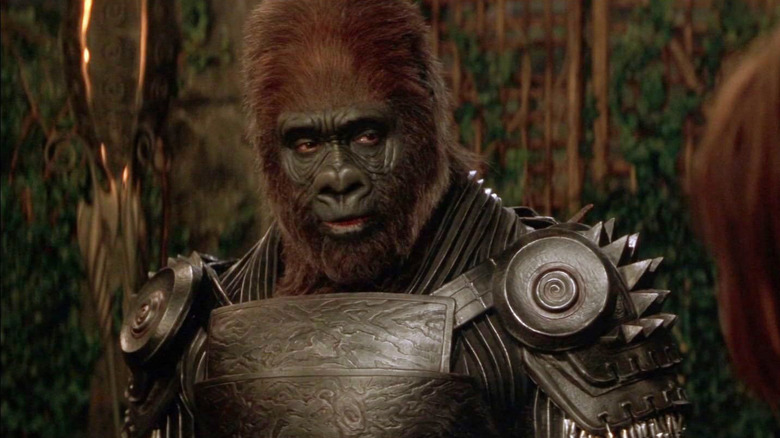
In 2001, a "Planet of the Apes" remake directed by Tim Burton hit theaters, but it's largely devoid of any sense of satire. Instead, Burtons draws from a bland, overwritten script to craft a pretty generic action thriller about warring ape factions and the humans they enslave. In addition, Mark Wahlberg plays the lead human character, and he's pretty weak, failing to bring any personality to his role other than the standard action movie "steely determination." Not to mention, the dialogue sucks, and the twist ending makes no sense.
At the very least, the film's visuals are first-rate. Rick Baker's ape makeup design is perfect, and the actors move around with real ape-like qualities. The sets are elaborate, too, and the music (by Danny Elfman) is equally strong. Paul Giamatti, in particular, gives a great performance as an orangutan who enslaves humans, while Tim Roth goes wild as a vicious chimp military leader. But that's not enough to cover for the movie's overall emptiness.
The Stepford Wives (2004)
The 1975 dystopian sexism fantasy "The Stepford Wives," based on Ira Levin's 1972 novel, is chilling in its premise. In the small town of Stepford, Connecticut, all the women look eerily alike and are focused only on housework, cooking, and pleasing their husbands. They all come across as archetypes from an issue of Better Homes & Gardens Magazine from 20 years earlier. Naturally, the wives of Stepford are viewed suspiciously by Joanna (Katharine Ross), a recent transplant from Manhattan. Through a series of plot machinations, she discovers that the husbands of Stepford have entered into a strange pact to kill their wives and replace them with obedient, housewife gynoids. The film at large explores the depths of postwar sexist fantasies, as well as the lengths that straight, cisgender men will go to cling to their masculine dominance.
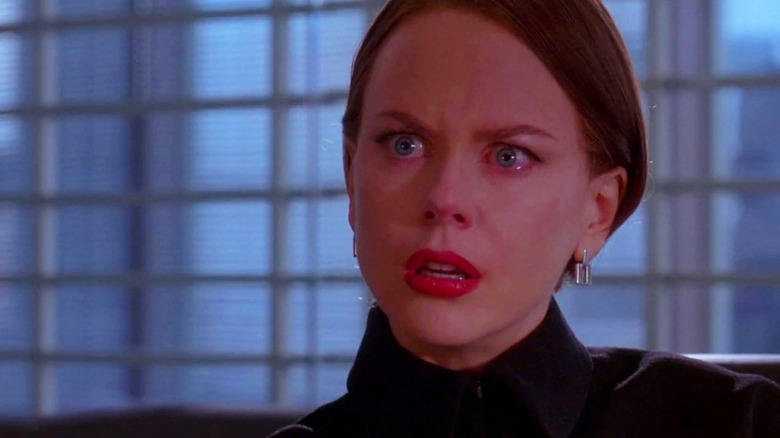
Frank Oz's 2004 "Stepford Wives" remake, however, turns this chilling cautionary tale into a slapstick farce, wringing all the fear and relevance out of it. In this version, Joanna (Nicole Kidman) girlbosses so hard in the big city that she nearly has a nervous breakdown. Her timid husband (Matthew Broderick) then moves them to Stepford, where he soon learns about the gynoid conspiracy. Some of the wives are replaced by robots, while others merely have their minds wiped like in "Severance." It's unclear how it's supposed to work, and the movie, in general, is kinda shallow.
The thematic sexism is still in there, of course, but the remake of "The Stepford Wives" would rather we chuckle at the campy premise than explore real themes of gender dynamics. The early 2000s saw a rise of sexist rhetoric on TV series like "The Man Show," but Oz's "Stepford Wives" treats sexism like it's already over and done with. It backs down.
Star Trek (2009)
Throughout the 1990s, the "Star Trek" franchise experienced a creative and financial high that seemed unending. It saw the release of several hit movies, while the show "Star Trek: Voyager" came to an end after seven respectable seasons in 2001. As the 2000s ground on, though, the property began to flounder. The series "Star Trek: Enterprise" wasn't a hit in a post-9/11 world, while the 2002 film "Star Trek: Nemesis" failed miserably. So, when "Enterprise" went off the air in 2005, it appeared that "Star Trek" was over.
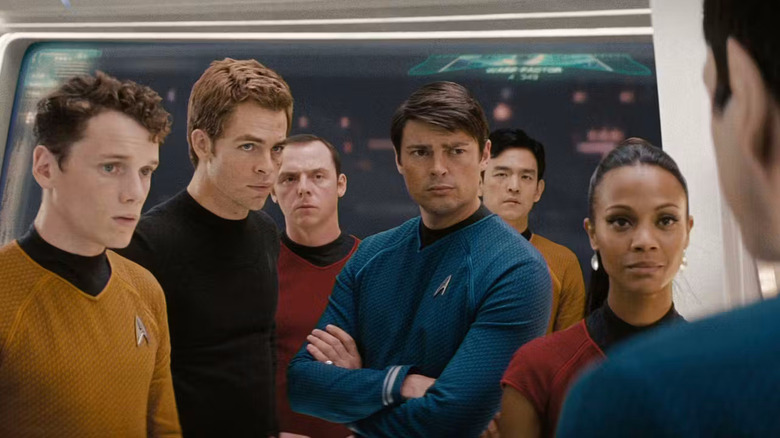
Then the franchise gained new life with director J.J. Abrams' 2009 movie "Star Trek." The film has a new cast of actors playing the same characters from the original "Star Trek" TV series, but they now engage in modern, high-octane action shenanigans. The cast is perfect, and the movie was a hit, the biggest the property had seen to date.
And it never should have been made. Abrams' take on "Star Trek" is the opposite of the judicious, cerebral, diplomatic storytelling that Trekkies love. Instead, it's all about shooting, punching, and 'splosions. One of the movie's writers, Alex Kurtzman, has since become the head creative on the various "Star Trek" shows made for Paramount+, and they're mostly salacious, violent, and action-packed. Basically, the 2009 "Star Trek" film changed the franchise's course away from a diplomatic utopia and toward blunt, crowd-pleasing adventure.
"Star Trek" has been at odds with itself ever since, handled by a man who doesn't seem to believe in the peaceful exploration and nerdy scientific rigor that undergirds everything "Star Trek" stands for. Maybe it would have been better if Abrams' movie hadn't been made, and this franchise had simply drifted away into the stars.
Total Recall (2012)
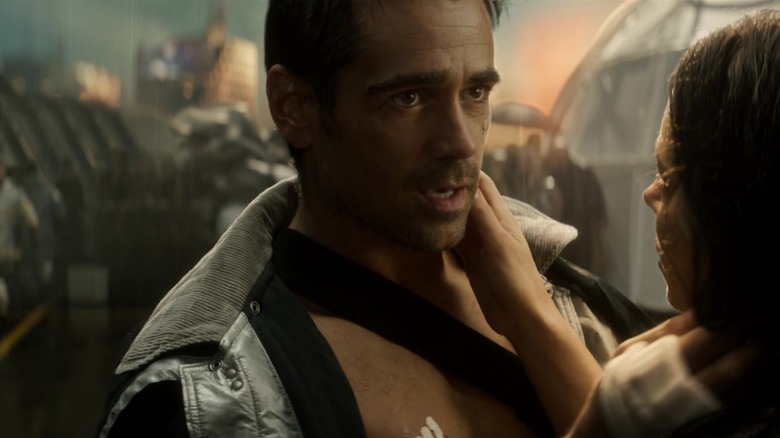
Paul Verhoeven's 1990 film "Total Recall," based on the 1966 Philip K. Dick story "We Can Remember It for You Wholesale," is a gloriously weird movie. Its premise is pretty great: A boring blue-collar worker named Quaid (Arnold Schwarzenegger) has access to a futuristic brain technology that can implant false memories into his head, allowing him to remember a fun vacation he never actually took. He elects to have a merry spy adventure implanted in his brain, and he chooses all the details of his James Bond fantasy, but everything goes wrong when the spy details he dictated prove to be (gasp!) true to his real life. It seems that Quaid might have been a spy this whole time and didn't know it. He gets his ass to Mars to uncover a conspiracy about the planet's artificial air supply.
Verhoeven's film is striking for its odd designs, Martian mutants, and extreme violence. The 2012 remake, on the other hand, was directed by Len Wiseman, and he took away all of the original film's zaniness. Instead, the 2012 "Total Recall" is set on a ruined Earth that is only habitable by its North and South Poles. Humans travel between the poles via an elevator that journeys through the center of the planet. That setting adds nothing.
Beyond that, the story is largely the same, with Quaid (Colin Farrell) moving to get a fake vacation implanted in his brain, only to learn that he might have been a memory-wiped spy in the first place. The remake has neither Verhoeven's bleak sense of humor nor his ironic twistiness. Instead, "Total Recall" (2012) is a bland and forgettable film that no one loves, not least of all Verhoeven. If it had never been made, nothing of value would have been lost.
RoboCop (2014)
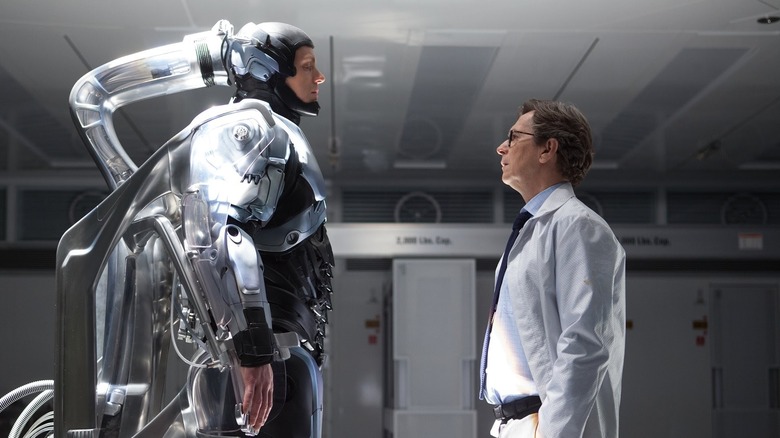
Following the failure of "Total Recall" (2012), Sony Pictures decided to take a crack at another Paul Verhoeven classic with director José Padilha's 2014 "RoboCop" remake. For the record, Verhoeven's 1987 version of "RoboCop" is one of the best sci-fi movies of its decade, if not of all time. A satire of the Reagan era, the original "RoboCop" envisions a future when the Detroit police department have been privatized. These corporate cops also repurpose military tech and own downed officers' bodies. So, when a cop named Murphy (Peter Weller) is brutally shot to death by a gang, the chunks of his shredded body are stuffed into a robot suit to realize his bosses' new marketing gimmick: RoboCop.
In contrast, "RoboCop" (2014) hardly even addresses the evils of corporate ownership. At most, the movie argues against corporations' need for aesthetics over function, with its human villain (Michael Keaton) seemingly being modeled after Steve Jobs. What's more, RoboCop (Joel Kinneman) recalls his life as a man in the film and still has his free will. Or so we think. The Keaton character has a literal free will knob on RoboCop's control panel that can make him believe he has free will when really he's being controlled.
The new "RoboCop" miiiiight be about how marketing and aesthetics serve to undermine our free will, but those themes are murky at best. The future is no longer a cartoonish hellscape, either, and the film's creatives can't seem to decide if they like or dislike the corporate ownership of everything. The "RoboCop" remake, in turn, cynically uses corporate IP to sell a message about how corporate IP might be bad, but it can still resurrect people and do good things. It's all just so self-defeating. The original "RoboCop" would hate the remake.