

The Forgotten Cost-Saving TV Show Trend That Needs To Come Back
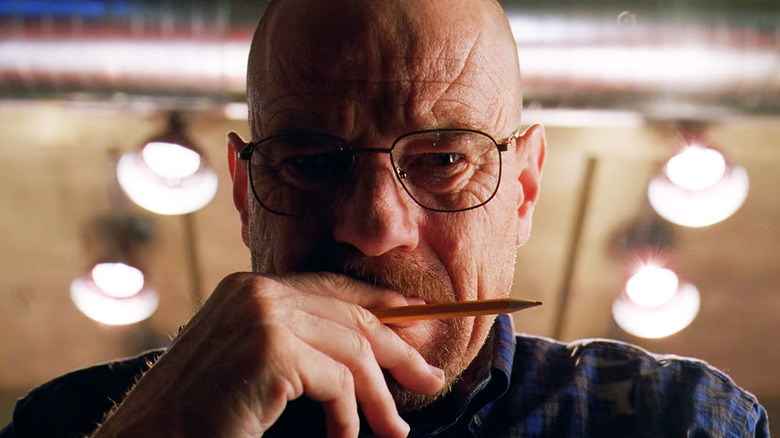
The rise of streaming not only transformed how we watch TV shows but also how those series are made. Take the bottle episode, for instance. To writers, producers, and network executives, bottle episodes were once a cost-saving measure allowing them to produce a chapter of their show without spending the usual budget. But over time, the budgetary restrictions that gave rise to the bottle episode actually bore interesting creative results — results that are now in danger of dying out in the streaming age.
Put simply, a bottle episode is one designed to save money by filming entirely on one existing set using only main cast members. But as TV has evolved, the exact definition of a bottle episode has become, believe it or not, somewhat contentious.Though there are differing accounts, in "The Outer Limits: The Official Companion," authors David J. Schow and Jeffrey Frentzen attribute the creation of the phrase to producer Leslie Stevens, who wrote the 1964 "Outer Limits" episode "Controlled Experiment." According to Schow and Frentzen, this installment became the cheapest in the show's history, with Stevens dubbing the technique "the bottle show," as in "pulling an episode right out of a bottle like a genie."
After this, bottle episodes became common, as production teams tried to save money while ensuring they met their episode quota. But the restricted structure ultimately became a storytelling tool in its own right, allowing for significant character development and leading to multiple TV triumphs, such as the all-time great "Doctor Who" episode "Heaven Sent." In the streaming age, however, the bottle episode is less common. That's mostly due to the fact that TV seasons are typically between eight to 10 episodes (as opposed to the 22-26-episode seasons of yesteryear), are less episodic than they once were, and have far higher budgets.
As TV has evolved, the bottle episode has transformed
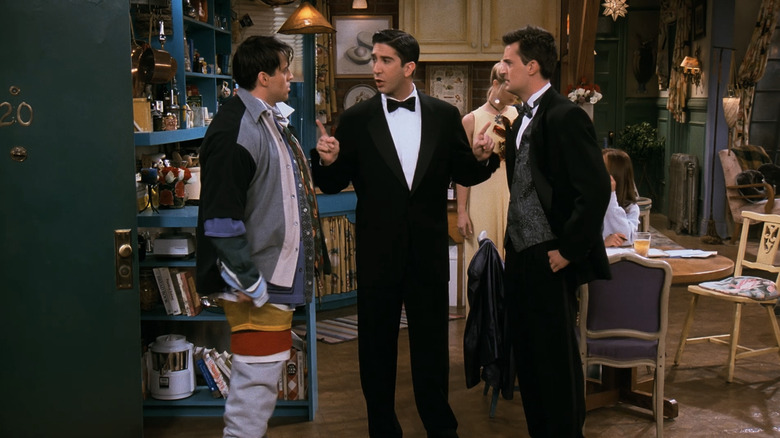
"The One Where No One's Ready" is my personal all-time favorite episode of "Friends." It distills the comforting purgatory of "Friends" down to its essence by having us spend a half-hour just hanging out with our TV buddies in their two apartments. The installment was successful enough that it ensured every season thereafter had a bottle episode. What's more, it was a true example of the format. "The One Where No One's Ready" was created to save money, took place entirely on the standing connected apartment set, and featured only the main cast.
Other memorable sitcom bottle episodes include the "Seinfeld" installment "The Chinese Restaurant," which saw Jerry (Jerry Seinfeld), George Costanza (Jason Alexander), and Elaine Benes (Julia Louis-Dreyfus) waiting for a table at the titular eatery. Elsewhere, the "Star Trek" bottle episodes are more important than you might realize and have produced some of the best moments in the history of the franchise, including the 1992 "Star Trek: The Next Generation" episode "Cause and Effect" (which had TV stations flooded with confused calls).
Bottle episodes have been a staple of TV since the mid-20th Century, then. Even today, the format remains, with "Heated Rivalry" delivering a quasi-bottle episode in its Season 1 installment "Hunter" and "The Bear" doing the same with Season 4's "Goodbye." What's changed is that the bottle episodes of today are less concerned with cost-saving than they are with using the format to explore characters and their relationships. As TV has evolved, so, too, has the bottle episode, from the product of economic necessity to a creative tool.
The bottle episode is endangered in the streaming age
As recently as 2010, "Breaking Bad" delivered one of the all-time great bottle episodes in "Fly," which saw Bryan Cranston's Walter White and Aaron Paul's Jesse Pinkman trapped inside their meth lab hunting the titular insect. Rian Johnson, who directed what is easily one of the best "Breaking Bad" episodes with "Ozymandias," even spoke to Vulture in 2023 about bottle episodes, which he stated were traditionally the result of networks and writers essentially saying, "Oh my God, we're over budget this season." He also confirmed that "Fly" wasn't an attempt to simply emulate the style of a bottle episode, but was, in fact, borne out of that very consideration: "They had a huge season, and they had to do one episode that used an existing set and that gave the other actors a few weeks off."
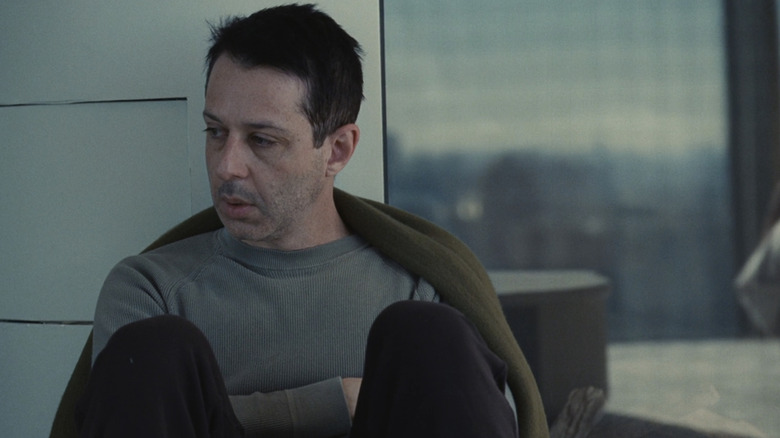
Today, the bottle episode hasn't quite died out, with the "Succession" installment "Honeymoon States," which unfolds almost entirely on a single existing set, being one example of the format. But that isn't quite what Leslie Stevens meant when he coined the term "bottle show." Instead, modern series more accurately produce what are sometimes called "departure" episodes, which serve a similar creative purpose in that they allow the shows' writers to explore characters more thoroughly within a confined environment.
But with culture in general transforming so rapidly in recent years, and streaming platforms eager to deliver the next binge-worthy season of interconnected episodes that tell one overarching story, the bottle episode could well fade as time goes on. Given that they have produced some of the best TV moments of all time, that would be a shame, to say the least.