

Disclosure Day Writer David Koepp Explains What It's Really Like To Work With Steven Spielberg [Exclusive Interview]
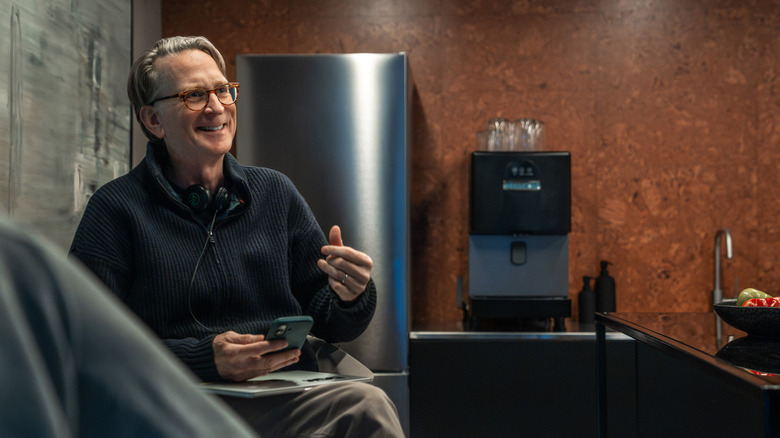
Steven Spielberg and screenwriter David Koepp have a long history together. Koepp wrote the scripts for Spielberg's 1990s films "Jurassic Park" and "The Lost World: Jurassic Park," as well as Spielberg's 21st century output "War of the Worlds" and "Indiana Jones and the Kingdom of the Crystal Skull," and he recently wrote the Spielberg-produced "Jurassic Park Rebirth."
Now, Spielberg and Koepp have reunited yet again for "Disclosure Day," an emotional sci-fi chase movie based on a story Spielberg crafted himself. We were able to speak with Koepp about the process of working with Spielberg, making "Disclosure Day" a sincere blockbuster, and how the real world might react if they learned about the existence of alien life.
Note: This interview has been lightly edited for clarity and brevity.
David Koepp talks about his collaboration with Steven Spielberg
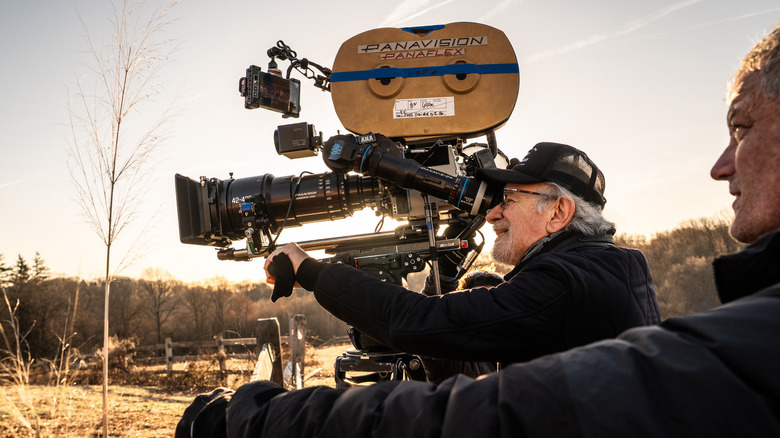
Could you tell me a little bit about what it's like to work with Steven Spielberg? Obviously you've worked with him a bunch of times at this point, so I'm guessing you have more insight into that process than most.
Look, it's great. I'm not going to lie. There are several things. First of all, Steven is I assume the same as he was when he was 20 years old in that his eyes truly light up when you talk about ideas. His favorite moment I think is still, "Hey, wouldn't it be cool if...", whether he's saying it or somebody else is saying it, and that's just genuine and sincere and I love that.
Another great thing is he's a great collaborator. He pushes you hard and expects a lot, but also he wants to listen to your ideas. He knows he will be better if he brings out the best in the people he's working with, and that's what he wants. Who doesn't want that kind of encouragement? Even when he's telling me ... I've had him tell me, paraphrasing, I've had him say, "This draft doesn't work at all. You need to start over." But he doesn't use those words, and he says it in such a way that somehow I come out feeling energized and I want to go work on it. Even when I know he's working his magic trick on me and it's like hypnosis, it still works. He's a very encouraging collaborator. It's great.
Steven Spielberg crafted the entire story for Disclosure Day before David Koepp wrote the script
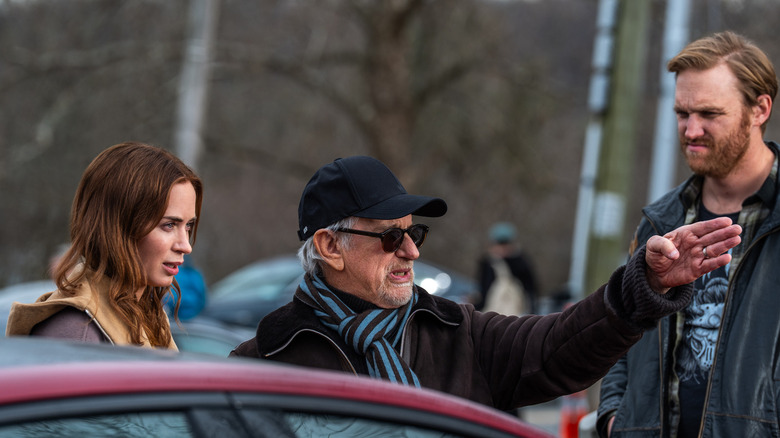
Spielberg has a story credit here. How detailed was the story he gave to you before you took it and ran with it?
It was pretty darn detailed. It was about 40 pages long and it was the beginning, middle, and end of the movie you saw and the characters you saw sketched out rather than fully fleshed out [...] It was a complete story, and I saw the movie. My job was then — he asked for comments first on it, and I sent him all my comments and said, "This part was confusing. This takes too long. I love this part. I wonder if these two characters can combine." I pointed out everything that I thought needed work.
Then he worked on it a little more, and then when he asked me to write it and I said, "I'd love to," as soon as we'd agreed, he sent me back my e-mail with all my notes on his treatment and wrote only, "They're your problem now" [laughs], which was really a bummer. I had handed off the problems and said, "Here. Here's all your problems," which is a very know-it-all thing to do, and then they came back and they were my problems.
Disclosure Day is a sincere and earnest blockbuster
This movie is very earnest in a way that I feel like modern moves, especially modern summer blockbusters, aren't. They're very cynical and there's this irony to them. It's almost like everything's sort of like a joke. It's like they're almost ashamed of being a movie, and this movie is very earnest in a way that feels almost like a throwback.
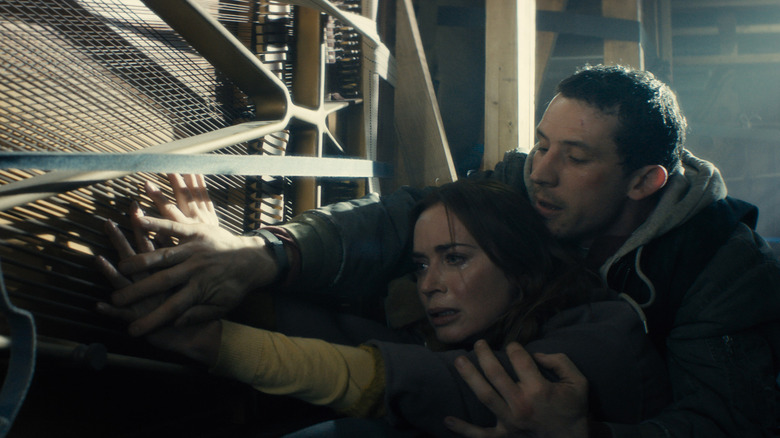
You're talking about tone, and content, to an extent, and that all flows from the top. That's from — the person who's directing the movie will dictate the tone. Steven [...] is a great believer in sincerity. Earnestness is another good word for it. We are making this movie because we mean it, and we're not trying to be glib in any way. I think there's a version of a film like this — that train sequence in the movie, right? Thrilling. Great action sequence. Heroes narrowly escape. I hope I'm not giving anything away, but they don't die on the train.
Most movies, some movies, would then have one of them say something funny, like, "Next time, we'll take the bus." Ha ha ha, right? It takes all the life out of it and it's what no human being would say in that situation. Steven said, "I'd like to continue the sequence inside the train car afterwards, because I think they've just had the most frightening and emotional experience of their lives and I want to see the fallout." He has an emotional scene rather than a laugh that punctures the tension. I think that's the difference between the kind of movie he was trying to make and maybe some of the sorts of the movies you're talking about.
Making a unified theory of everything alien
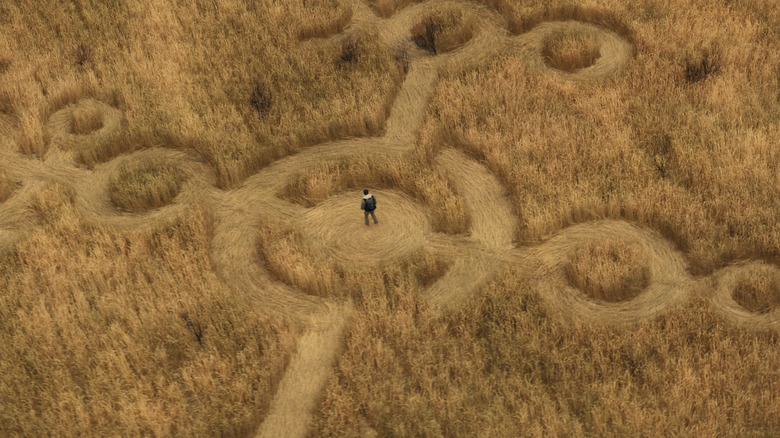
Another thing I really liked was that it almost feels like every story about a "historical UFO" encounter, or urban legend, is sort of referenced in the movie. I think the example that really struck me is there's a moment early in the film where [the main characters are] watching footage of Richard Nixon and Jackie Gleason going to see alien bodies, and that's been a long-standing urban legend I had actually heard before.
It was a definite choice, and the thinking there is the movie's called "Disclosure Day," right? It's about the revelation of this information. What we're looking to do is not invent a whole new mythology or try to create new cultural memories through our thing. We wanted to say not "everything you thought before is wrong," as some stories do. We wanted to say "everything you thought before is right — everything — and here's a credible theory of how it all pieces together and why." Steven said, "We want to honor all that lore, and we want to draw on people's ... there's a collective cultural memory of maybe what the aliens might look like and what these experiences were like and what they've been covering up. Let's make a credible theory that explains all of that." It was sort of like a unified theory of everything for UAPs was our idea.
What if a Disclosure Day really happened? David Koepp isn't as optimistic as Spielberg

This might be just too big of a question to answer, but how do you think the real world would react if a "Disclosure Day" scenario really happened? I mean on a grand scale like in the movie; how do you think we would react, honestly?
Well, my own worldview is a little bit darker than maybe Steven's is. I think that eventually it would be a great thing for the human race and we would take huge strides forward. But getting to "eventually" I think would be a painful and violent period. We do not do well with sudden dramatic change. We never have. I think that Jane's character, Eve Hewson's character, is quite right, that the established world order and the systems that are put in place to keep a lid on things would collapse, and in its place would be chaos. I think that there would be a real period of turmoil, which would eventually lead to a greater step forward. But holy smokes, that middle ground? Not so nice.
"Disclosure Day" is in theaters now.