

15 Best Satire Movies Of All Time, Ranked
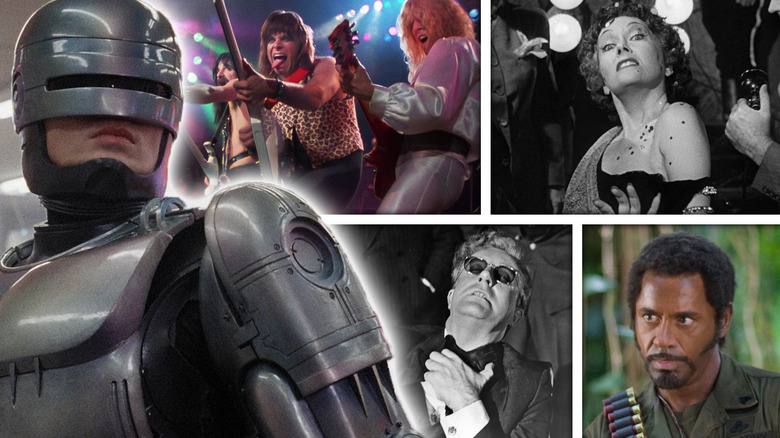
Some comedy movies are solely interested in making audiences laugh. There's not some higher goal other than to put a smile on your face, and that's perfectly okay. But some movies want to move beyond the simple label of "comedy" or even "parody." These are satire films, or stories that use humor to poke fun at personal or societal follies.
Ideally, you'll laugh at satire movies, but that's not their sole purpose. They're designed to get you to think about the shortcomings in institutions, individuals, and ideas, especially if they're political or religious. Some of the best satire movies of all time focus on Hollywood itself, exposing the foibles of actors and what audiences perceive is a "good" movie.
Satire is difficult to pull off. All satire should be comedic, but that doesn't mean all comedy is satire. There's a fine line and plenty of overlap with other genres. But as far as satirical films that make you laugh and think, these are the best of the best.
15. The Cabin in the Woods
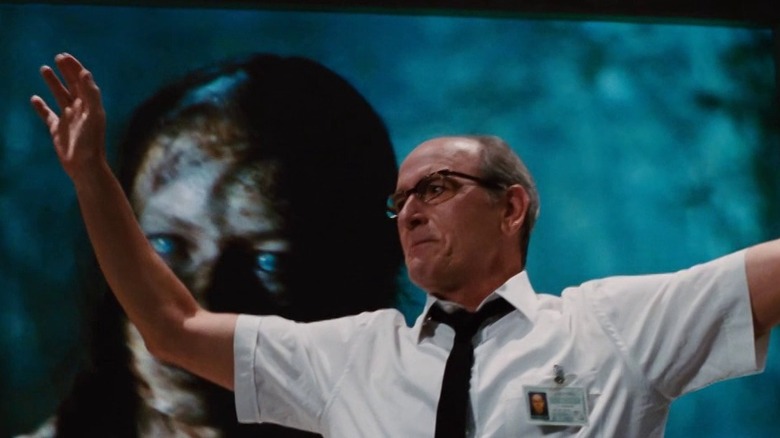
Movies poking fun at how formulaic horror films are had been done before "The Cabin in the Woods." Just look at "Scream" (and we will shortly).) But Drew Goddard's movie took the concept of deconstructing horror tropes to the next level. The film sees five friends who embody typical horror film archetypes (the virgin, fool, jock, etc.) and shows them go through the motions of a standard horror flick, all orchestrated by bureaucrats who require sacrifices to appease an old god.
Drew Goddard and Joss Whedon wrote "The Cabin in the Woods" in just three days, a perfect demonstration of how well they understand the horror genre. "The Cabin in the Woods" excels over other meta horror flicks by focusing on the scientists, who act as surrogates for the audience. The film's not just saying that horror has become boring but that the audience is complicit in its boringness. We demand the same thing to happen repeatedly to satiate our bloodlust.
Of course, the key is breaking out of the cycle. Given how much great horror that defied tropes came out in the 2010s and 2020s, it's safe to say many filmmakers took the message to heart.
14. Tropic Thunder
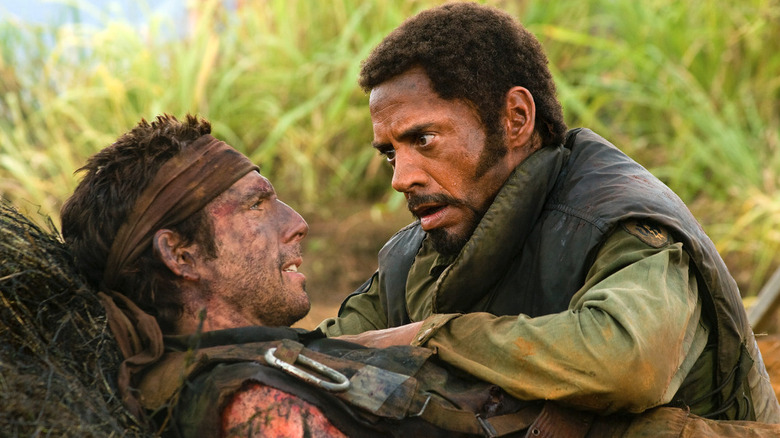
Hollywood has rarely been sent up the way it has with "Tropic Thunder." The comedy sees actors making a movie in the heart of the jungle, only to get caught up with actual life-and-death stakes. In the process, it skewers many self-righteous Hollywood types and ideas, like how playing someone who's mentally handicapped in a movie often leads to Oscar gold or how method actors will take things too far, exemplified by Kirk Lazarus (Robert Downey Jr.) wearing blackface to embody a Black character.
Ben Stiller won't apologize for Downey wearing blackface in "Tropic Thunder," and he's absolutely right in his stance. The thing about good satire is that if you have an actual point to make, you can get away with certain offensive materials. "Tropic Thunder" isn't endorsing blackface. Instead, it's poking fun at how a method actor like Lazarus could believe he could play a Black person in the first place and how delusional that is.
Of course, "Tropic Thunder" also descends into parody, directly ripping off "Platoon" and "Apocalypse Now." But all of it has one goal: to show how actors think too highly of themselves and need to be taken down a notch.
13. Fight Club
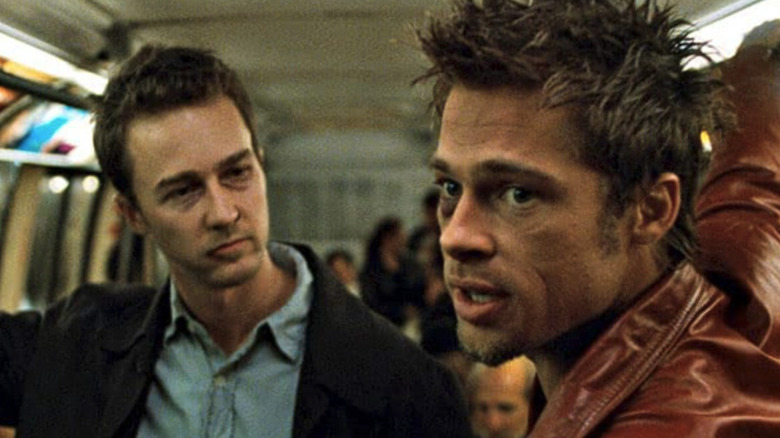
The thing about satire is that others can misconstrue its message. Nowhere is that more apparent than how "Fight Club" is often perceived in the zeitgeist. The film sees a white-collar schlub wit no name (Edward Norton) start a fight club with the charismatic Tyler Durden (Brad Pitt), only to see it warp into a terrorist organization.
"Fight Club" was a warning, not a call to arms. The movie directly highlights Tyler's hypocrisy when he critiques male Gucci models, even though he literally looks like Brad Pitt. He obviously cares about his looks and physique as well, demonstrating how those espousing toxic ideologies don't even follow their own rules.
"Fight Club" is more relevant today than ever. The idea that people mindlessly consume because they have no greater purpose in life is a good message. But that listlessness can lead people to violent ideologies, and that's where society needs to watch out. All it takes is one charismatic leader to convince men to work against their own self-interest.
12. Heathers

If you came of age in the 1980s, you probably grew up with feel-good John Hughes movies like "The Breakfast Club" and "Sixteen Candles." Of course, high school problems rarely resolve themselves as neatly as in those movies, and that's where "Heathers" pokes a festering wound into these idyllic realities.
High school is tough. Rarely do people from different cliques come together in harmony like they do in a lot of films. "Heathers" dismantles those high school archetypes by focusing on four high school girls. Then you have J.D. (Christian Slater), who initially comes across as a typical bad boy, a la John Bender (Judd Nelson) from "The Breakfast Club." But then "Heathers" reveals that he's a straight-up sociopath.
"Heathers" goes into dark territory. In fact, the original "Heathers" ending was way too dark for Hollywood and had to be changed. Even with certain changes, the film still tackles ideas like bullying in a much harsher light than what you would get in a more mainstream production at the time.
11. Ace in the Hole
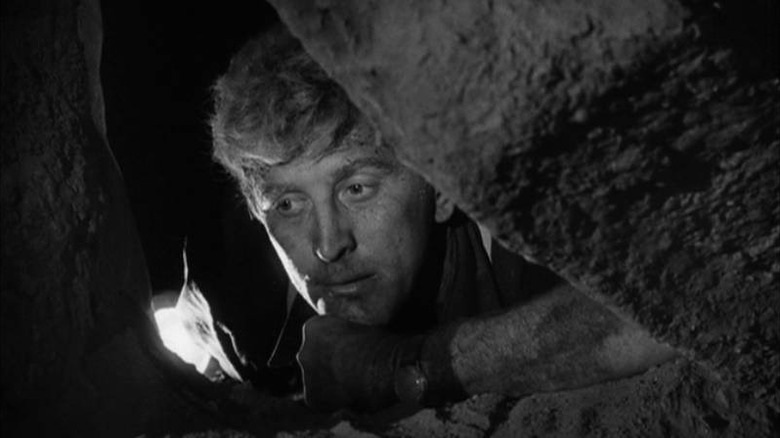
The great thing about satire movies is that their messages can have a timeless quality to them. 1951's "Ace in the Hole," one of Billy Wilder's best films, wouldn't feel out of place if it came out today, due to what it has to say about the media's obsession with tragedy and spectacle.
Chuck Tatum (Kirk Douglas) is a down-on-his-luck reporter covering small stories for a New Mexico paper. But then he sees his chance for a big break when a man gets trapped in a cave, garnering widespread attention and raising his own profile. To keep the good times rolling, he actively hinders efforts to rescue the man so that he can keep covering the story.
Long before social media, Wilder put out a film that somehow encapsulates a lot that's gone wrong with how people cover stories. It's less about the humans at the heart of it and more about how those in positions of power can capitalize on it.
10. Scream
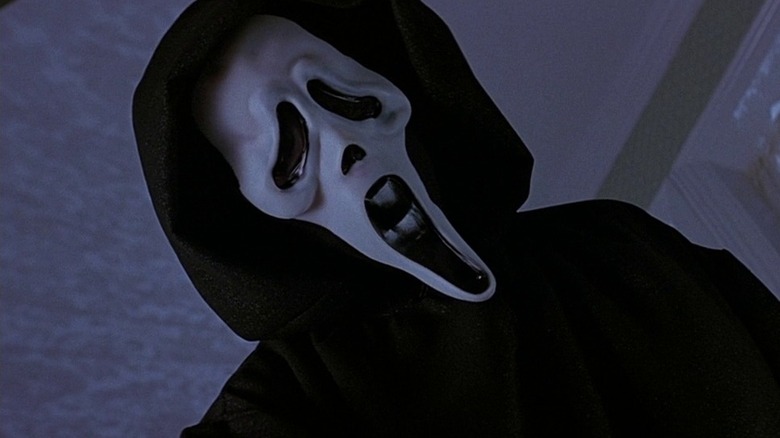
"Scream" and "Scary Movie" are perfect case studies for examining the difference between satire and parody. "Scary Movie" exists almost purely for silly jokes. It skewers famous horror movie scenes with an emphasis on making them as funny as possible. On the other hand, "Scream" aims to analyze horror tropes. It's funny, but it also provides commentary on how formulaic horror films, particularly '80s slashers, had become.
"Scream" created a new iconic slasher, Ghostface, who's terrorizing a small town. But the difference is that the kids he's targeting have seen horror movies and know to avoid the tropes. In the end, the villain isn't a supernatural force. It's two teenagers who wanted an excuse to act out their favorite horror film tropes.
"Scream" takes its satire to the next level with the character of Gale Weathers (Courteney Cox), a reporter covering and sensationalizing the murders. Wes Craven helped popularize the slasher genre with "A Nightmare on Elm Street," and he demanded better, more inventive horror movies going forward after "Scream."
9. The Truman Show
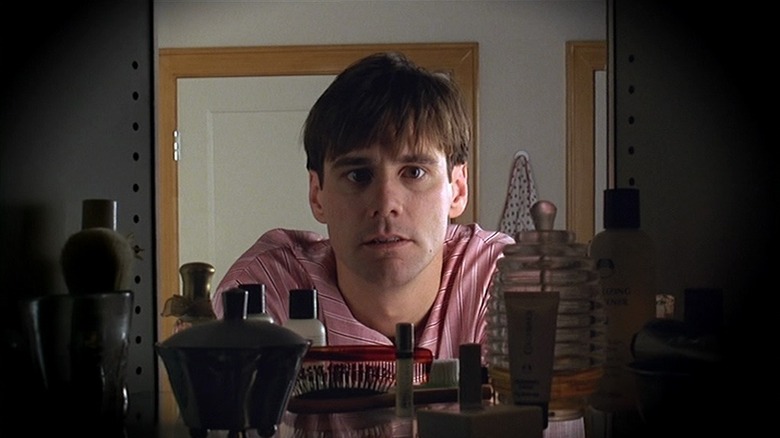
The best satire movies can almost feel prescient in how they predict more widespread societal issues. Reality television was rising in popularity by 1998, when "The Truman Show" came out. The film sees the titular Truman (Jim Carrey) as the star of the most popular TV show in the world, as people watch him live out his day-to-day life. But then, he begins suspecting that not everything is as it seems and discovers all of his life is a lie.
Of course, "The Truman Show" pokes fun at media consumption and how TV is structured. Truman's wife, Hannah (Laura Linney), breaks the fourth wall to sell products to viewers, but the ads make absolutely no sense in the context of Truman's life.
But in the era of social media, "The Truman Show" resonates more than ever before. Many people vlog their lives and function 24/7 as characters on Instagram, TikTok, or Twitch. We all exist to perform, and what's even more haunting is that people chose to live that way. The ending of "The Truman Show" shows us that the only way to break free is to stop living for others.
8. Monty Python's Life of Brian
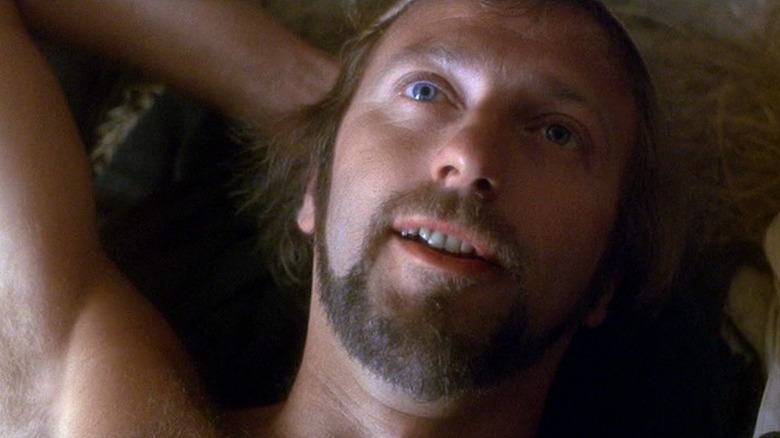
There's no easier way to court controversy than by skewing religion, so it's no surprise "Monty Python's Life of Brian" ruffled some feathers when it first came out. The movie follows Brian (Graham Chapman), a Judean man who's born on the same day as Jesus Christ right next door, confusing the three wise men who assume he's the messiah.
What makes "Life of Brian" work as a brilliant piece of religious satire is that it's not making fun of religion itself. Rather, it targets blind obedience that forfeits rational thinking. This is highlighted when Brian tells his followers that they're all individuals, and they begin chanting, "Yes, we're all individuals."
"Life of Brian" also has something to say about politics, as if it didn't anger enough people. There's a great scene where different factions are too busy bickering about petty differences amongst themselves rather than focusing on the common enemy, the Romans. Monty Python had many targets for their satire and managed to craft numerous scenes that crack you up while making you realize how little society has come in matters of petty squabbles.
7. They Live
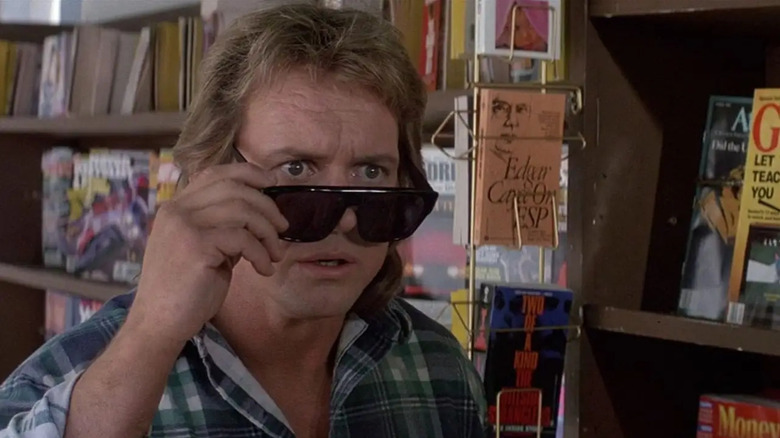
"They Live" isn't really a comedy, although that absurdly long alleyway fight is pretty hilarious. Instead, the film uses the tropes of sci-fi B-movies to skewer its target: late-stage capitalism.
Nada (Roddy Piper) is a drifter who comes into possession of sunglasses that allow him to see the world for what it is. Namely, Earth has been taken over by aliens who walk amongst us, disguised as regular people. They use their positions of power to infect marketing with subliminal messaging to tell everyone to "Obey" and "Consume."
While aliens don't exist on Earth (that we know of), the message is clear: Those with power use marketing to make us complicit in the destruction of the planet. You're not just being sold a new phone or outfit; you're being told to focus solely on making money to buy a new phone or outfit so that you're not aware of everything else happening.
6. This Is Spinal Tap

Sometimes, satire and parody get packaged together. On the surface, "This Is Spinal Tap" is a straightforward parody of rock n' roll documentaries, following the fictional rock outfit Spinal Tap, as they embark on an American tour.
But the film goes further than merely parodying rock docs. It perfectly captures the narcissistic excess of the music scene in the 1980s. With songs like "Stonehenge" and "Big Bottom," the music isn't just parodying heavy metal at the time. It points to the absurdity and downright laziness of some of these bands that would resort to very explicit lyrics at the expense of true artistry.
Even though the members of Spinal Tap consider themselves rock gods, they actually have very fragile egos. Touring in smaller venues is a slap in the face and they think they deserve better. "This Is Spinal Tap" extends beyond mere parody to show how vapid a lot of music in the 1980s had become.
5. RoboCop
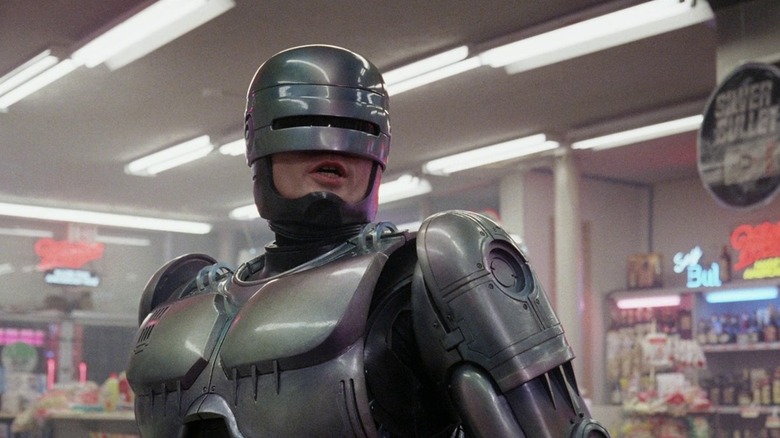
Paul Verhoeven was going to pass on directing "RoboCop," and thank God he changed his mind, because it's hard to imagine the film having its satirical edge without his distinct style. You hear a title like "RoboCop" and assume its a dumb action movie, but the final product is anything but.
It's brilliant in its portrayal of how society can become desensitized to excessive violence. The media is constantly showing depravity over the air, and violence has taken over the streets. "RoboCop" also brilliantly parodies 1980s-era consumerism like "They Live" by featuring fake commercials for something like a car security system that shocks any intruders to death.
In the world of "RoboCop," everyday citizens aren't just consumers. They're disposable expenditures, where it's okay if some people die if a corporation makes a profit. Verhoeven saw where the world was heading, and sadly, "RoboCop" is still all too relevant to this day. And it's still a better watch than the 2014 remake.
4. Sunset Boulevard
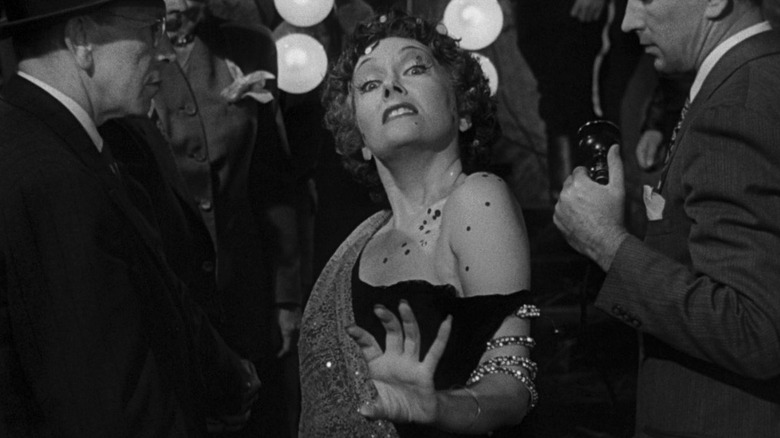
No film has captured the darkness of the entertainment industry quite as well as 1950's "Sunset Boulevard." All these decades later, nothing comes close to the film noir that examines the quest for relevancy in an industry that is all too happy to discard anyone if they get too old or cumbersome.
Screenwriter Joe Gillis (William Holden) is hired by fading starlet Norma Desmond (Gloria Swanson) to work a script she wrote to star in and bring herself back to relevancy. The film doesn't just highlight the inherent cruelty within Hollywood but also how fame can warp one's perception. Norma still believes herself a big star but just needs the right comeback vehicle to prove it.
Additionally, Norma could be seen as a stand-in for Hollywood itself. She spends her days rewatching old movies, obsessed with the past. Even today, with Hollywood obsessed with remaking movies from decades earlier, it feels like actors and the industry as a whole can't seem to move on from better days.
3. Parasite

"Parasite" blends horror, thriller, and, yes, comedy to offer a satirical take on the state of capitalism in the modern world. The Kim family lie their way into comfy positions with a much wealthier family, showcasing signs of parasitism within both groups. The wealthy leech off the labor of their poorer employees, but the Kims aren't innocent, as they've also manipulated their way into positions they shouldn't have gotten.
No one is entirely guilty or entirely innocent. Instead, the main target of the film's disdain is capitalism as a whole, which shows that everyone's quest to make as much money as possible forces us into these morally questionable scenarios.
But it's not even a matter of rich versus poor. The only way the Kims get their jobs is by forcing the previous housekeeper out. When it comes to having a better life, someone getting a leg up often comes at the expensive of someone else suffering. We're all just fighting for crumbs, and director Bong Joon Ho walked a tonal highwire to deliver one of the defining films of the century.
2. Network
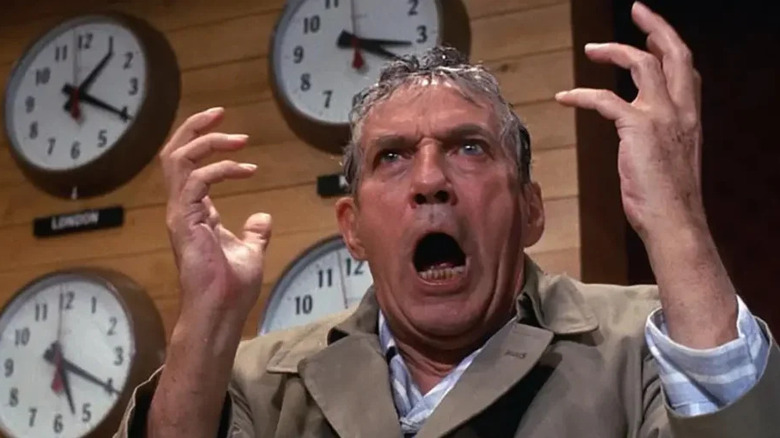
Few films have managed to be as prescient as 1976's "Network." A news anchor, Howard Beale (Peter Finch), with declining ratings is at risk of losing his job until he has a breakdown while on the air, proclaiming that he'll take his own life while the camera's are rolling. The network commodifies his mania as ratings soar, offering a poignant look at how news organizations would soon stop caring about delivering the truth and focus more on delivering sensationalism.
The network is more than happy to allow Howard to rant against "the system" on air, but eventually, his rants actually threaten corporate interests. Corporations are more than happy to have revolutionary programming, as long as it doesn't go too far.
Disney will host "Andor" and Amazon airs "The Boys." Companies profit off anti-capitalist statements as long as they can be contained. "Network" offered a stark look at where media was heading, and even with all the warning signs going back to 1976, nothing was done to stop the decline from transpiring.
1. Dr. Strangelove or: How I Learned To Stop Worrying and Love the Bomb
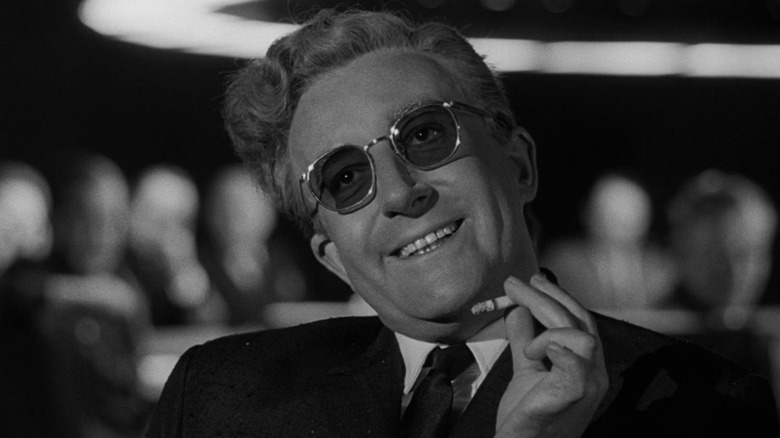
The year is 1964. The United States and the Soviet Union are in the midst of a Cold War within a state of mutually assured destruction where neither country can take the other out without the other retaliating in kind. It was a scary time, and if you're Stanley Kubrick, the only way to respond to the world potentially going up in flames is with laughter.
"Dr. Strangelove" remains the pinnacle of satirical cinema. A B-52 bomber carrying a nuclear payload is on its way to the Soviet Union, and the president and his cavalcade of associates meet in the war room to discuss strategies. It's darkly hilarious that the fate of the world is in the hands of people who are utterly incompetent and idiotic. However, given the political powers that be today, it's a sobering look at what kind of people hold the fate of the world in their hands.
It's one of the best movies about the end of the world for how it knows when to pull back and get serious about what's at stake. But at the same time, it recognizes there's very little you and I can do to stop nuclear annihilation if some idiot deems it the best course of action. We'll all die, maybe sooner rather than later, so we might as well have a good laugh in the meantime.