

15 Best Neo-Western Movies, Ranked
We may receive a commission on purchases made from links.
The Western may be the most definitive American film genre ever. It encompasses the ambitious, aspiring, hungry, often contradictory, and violent ideas behind our history of building the nation. The journey through the expanse of the West is marked by elemental hardship, frontier towns, brigandism, and massacres — often of native peoples, representing a hurdle to the territories we had allegedly earned.
Just as the Western charts the outsized, volatile dreams of Americana, so too has the genre itself been subject to fickle waves of demand throughout cinematic history. The traditional Western once defined the popular consciousness of moviegoing (for a list of more of those orthodox entries of the genre, you can see our list of the 35 best Western movies of all time). Here, we've assembled the best of the neo-Westerns: updated, more modern renditions of the genre, often defined by how they subvert and reckon with the traditionalist ideas of those original films. They go to show that the unyielding codes of the Western are actually just as malleable as you want them to be.
Here are the 15 best neo-Westerns, ranked.
15. The Good, The Bad, The Weird
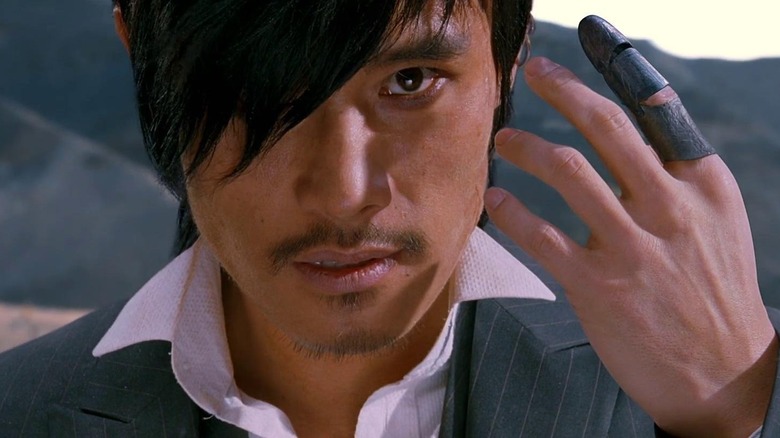
This high-octane Korean Western pays tribute to a movie that was something of a neo-Western upon its own release in 1966. "The Good, the Bad, the Weird" recalls Sergio Leone's electrifying, Clint Eastwood-starring trilogy-capper "The Good, the Bad and the Ugly" in its plot about three rivals racing for a treasure map hidden in the desert — but injects it with the over-the-top absurdity and stuntwork characteristic of Korean action cinema.
A must for fans of lost-treasure movies, director Kim Jee-woon guides stars Song Kang-ho, Lee Byung-hun, and Jung Woo-sung through an inventive, kinetic adventure that leaves the viewer breathless. This is a Western unafraid of pure bombast and spectacle, inverting what viewers might expect from Leone's more patient, towering masterpiece. In recalling the subversive Westerns of yore, "The Good, the Bad, the Weird" continues to overhaul the genre for a new generation and a different culture, finding fresh ways to expand on its traditional ideas.
14. Sicario
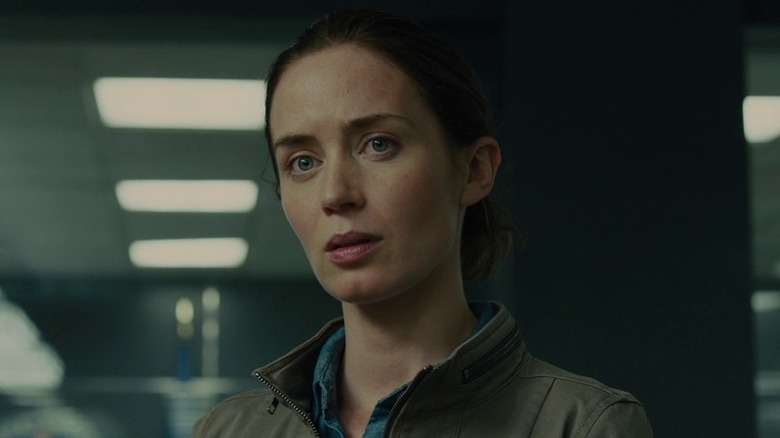
Surely the happiest and most fun movie on this list, "Sicario" earns its reputation by just how ruthlessly director Denis Villeneuve suffocates audiences with a despairing, foreboding mood. The film follows unseasoned FBI agent Kate Macer (Emily Blunt), who is pulled into a dangerous operation at the U.S.-Mexico border to curb cartel operations as the nation pursues its breathless, reckless war on drugs.
Things go about as terribly as you'd expect in "Sicario," but the film's unflinching exposure of the grisly and the vicious works in its favor. It's that precise tonal control that elevates the blunt-force Western mechanics of Taylor Sheridan's script, aided by the intense performances from Blunt, Josh Brolin, and Benicio del Toro, the beautifully grimy cinematography from Roger Deakins, and an overbearing score from Jóhann Jóhannsson. It all just works — there's a reason we consider "Sicario" Villeneuve's best film.
13. Bacurau
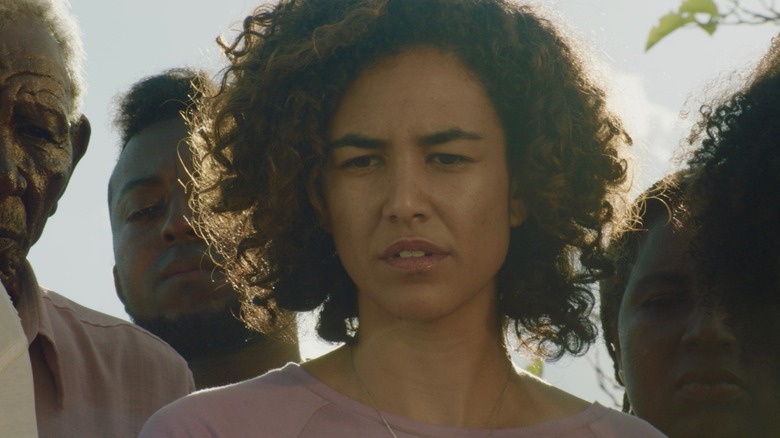
You may slot this genre-bending film from Brazilian directors Kleber Mendonça Filho and Juliano Dornelles into the weirdo Western bracket. The narrative film preceding Filho's Oscar-nominated "The Secret Agent," "Bacurau" centers on the titular fictional remote town, where the death of the local matriarch leaves residents reeling. Things soon get strange as the residents realize the town has disappeared from any available GPS devices, they lose their water supply, and a claustrophobic sense of being hunted sets in.
"Bacurau" is memorable for how it invites you into its world just to pull the rug out from under you. Filho and Fornelles, who also co-wrote, set up a heavy social drama with elements of mystery. The film capitalizes on that intrigue by introducing sci-fi elements that give way to bloodthirsty grindhouse mayhem. It's a weird, layered mix of genres and influences that makes "Bacurau" something completely singular and unlike any other film you'll ever see, let alone any other Western.
12. Hell or High Water
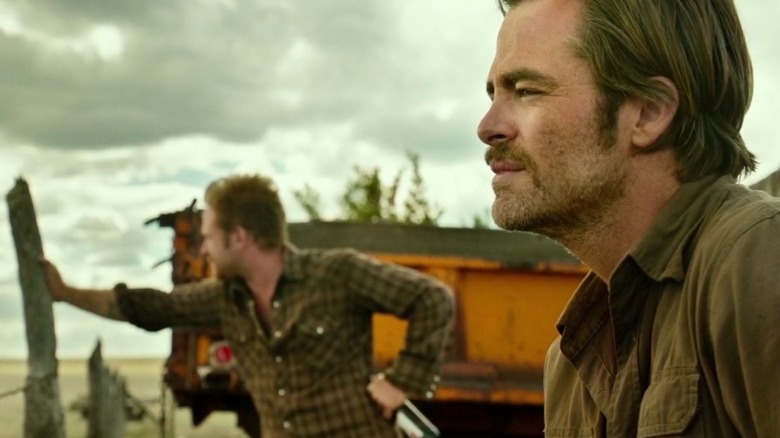
Another Taylor Sheridan script, "Hell or High Water" is one of the best true-blue Western-feeling films on this list. It engages with the history of the genre enough to scratch the itch of traditionalism, but pokes and prods at the historical ideas of it so that it still feels fresh. Chris Pine and Ben Foster star as brothers Toby and Tanner, residents of rural West Texas who conduct low-level bank heists to pay off land debts. It wouldn't be much of a Western if the law wasn't in pursuit, and that role is filled by Jeff Bridges as Texas Ranger Marcus Hamilton, making for a tense cat-and-mouse hunt with plenty of moral ambiguity to spare.
"Hell or High Water" gets a lot of mileage out of its expansive, arid Texas setting and the committed performances of its central trio — Foster was so devoted to his character that he broke off a piece of his own tooth. Method bodily alteration doth not a great performance make, but it speaks to how lived-in all three leads feel, aided by dusty cinematography from Giles Nuttgens and an evocative score from Nick Cave and Warren Ellis.
11. Lone Star
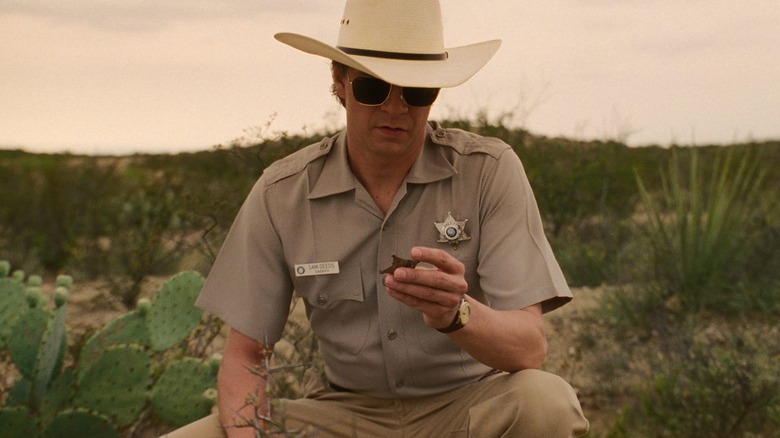
One of the most underrated and underseen movies on this list, "Lone Star" is directed by John Sayles, whose work in general does not get the credit it rightly deserves. He takes the paperback Western mystery structure and uses it as an anchor for a much more somber, grounded neo-Western than you might expect from its pulpy trappings — with a story centered on the generational consequences of complex sociopolitical relationships within a small Texas town.
It picks up with Sam Deeds (Chris Cooper, a performer who deserved the spotlight as a leading man far more often), the sheriff of Rio County in Texas, as he uncovers the long-buried remains of his sheriff father's predecessor. This leads to an investigation that interrogates the town's past, yielding new revelations about the community's forefathers and how they paved the way for the dissension within the community today. "Lone Star" tackles its poignant melodrama with tact and a keen sense of how interpersonal relationships are tied to politics and history. It's also carried by an excellent, deep bench of ensemble character actors, including Elizabeth Peña, Kris Kristofferson, Clifton James, Joe Morton, and Matthew McConaughey.
10. Brokeback Mountain
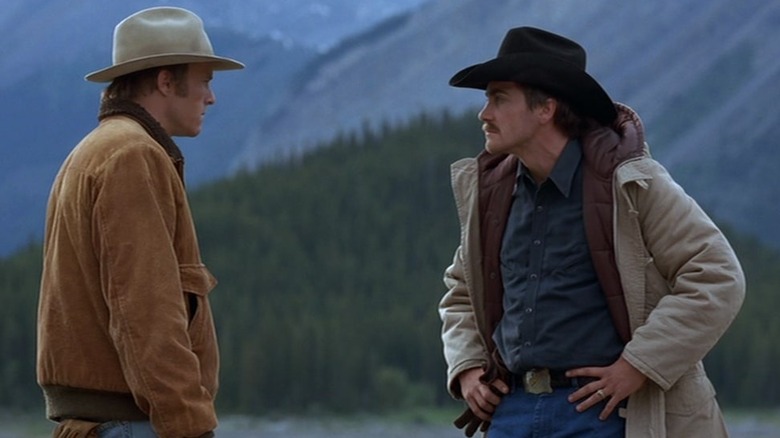
Ang Lee charted new territory with this queer Western, which became a sensation, netting three Oscar wins: Best Director for Ang Lee, Best Adapted Screenplay for Larry McMurtry and Diana Ossana, and Best Original Score for Gustavo Santaolalla. Stars Jake Gyllenhaal, Heath Ledger, and Michelle Williams also each received an acting nomination for their roles. The film explores the tragic romantic affair of two cowboys, Ennis Del Mar (Ledger) and Jack Twist (Gyllenhaal), which is further complicated after Ennis marries and starts a family with his longtime fiancée, Alma (Williams).
Lee sensitively depicts the heartbreaking reality of two gay men who yearn only to be together, but are hamstrung by societal expectations and prejudice. In adapting the original short story by Annie Proulx, McMurtry, Ossana, and Lee locate the richness of placing a queer narrative within the visual signifiers of the Western genre. It may have become an unfortunate punchline upon release in the more regressive years of the mid-2000s, but the power of "Brokeback Mountain" has outlasted any juvenile mockery. Indeed, we consider it one of the 15 best romance movies ever made.
9. The Hateful Eight
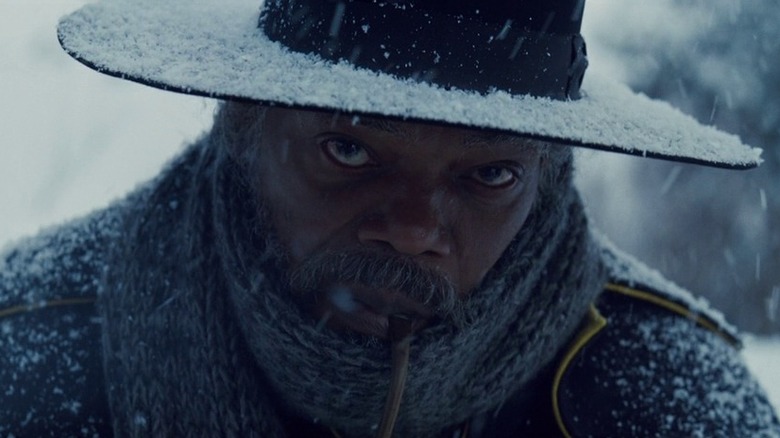
You can find Western influences throughout Quentin Tarantino's career — after all, most of his movies are indulgent cocktails that encompass the whole of his cinematic fandom. However, "The Hateful Eight" is his second "true" Western, following the revisionist glee of "Django Unchained." "Django" has its merits, but for my money, the pure, unadulterated nastiness of "The Hateful Eight" makes for the most interesting and sticky movie, one that raises pricklier ideas to probe about American history, as well as gender and race relations.
Tarantino didn't mean for "The Hateful Eight" to become such a serious film, but him wrestling full-throttle with the historic ugliness that has blackened the heart of America for generations fits perfectly with the bombast of his dialogue and filmmaking. "The Hateful Eight" delivers on all the exaggerated mania you would expect from him as a director and screenwriter, as a group of strangers in the post-Civil War era huddle in a remote cabin during a wintry blizzard and slowly turn on each other as hidden motives and hostilities creep into the trigger-happy group. "The Hateful Eight" is formally impeccable and written with a novelistic grandeur that amplifies the maliciousness of its violence. It's one of Tarantino's best.
8. The Three Burials of Melquiades Estrada
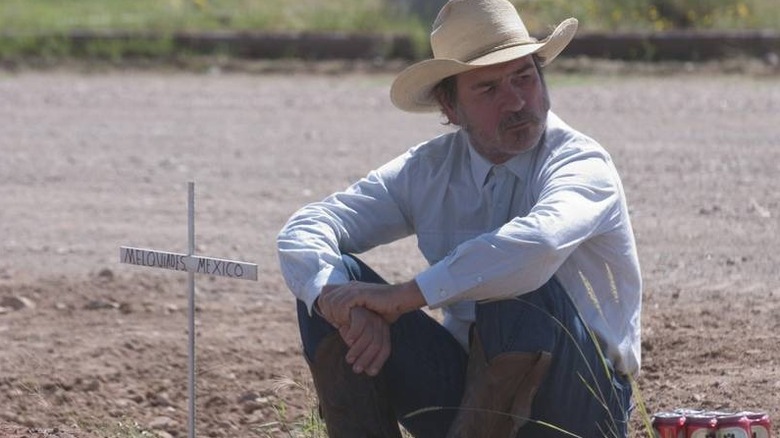
Tommy Lee Jones's debut feature film, "The Three Burials of Melquiades Estrada," is one of the most quietly shattering Westerns ever made and is overdue for a popular reevaluation. Written by Guillermo Arriaga — the screenwriter behind Alejandro G. Iñárritu's early work — the film focuses on Pete Perkins (Jones), a Texas rancher who forces border officer Mike Norton (Barry Pepper) to travel with him to Mexico to properly bury the body of a man, Melquiades Estrada (Julio Cesar Cedillo), whom Mike unjustly killed.
"The Three Burials of Melquiades Estrada" is undeniable in how it employs its Western tropes and atmosphere to deliver a film of potent emotional force — famed film critic Roger Ebert even gave it a perfect score. It's a mournful, deeply humane road movie that reckons with the fraught realities of life along the U.S.-Mexico border by placing those realities within a story built on a bedrock of loyalty and justice in the face of violence. Jones affords his character the type of weathered, gruff gravitas you'd expect, and the performance earned him the Best Actor award at Cannes.
7. Bone Tomahawk
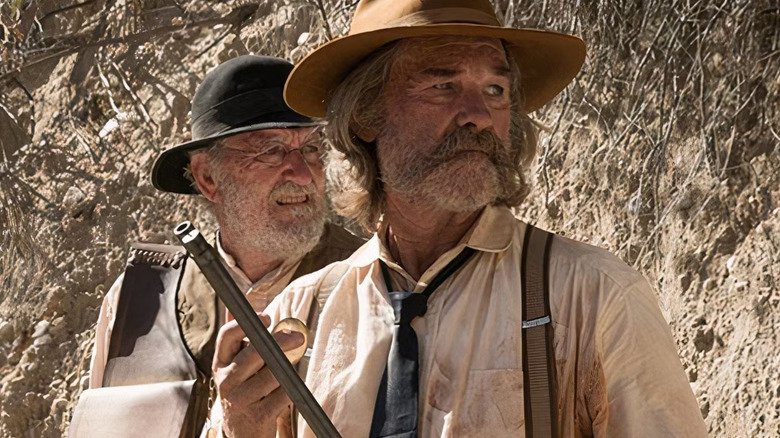
Few films on this list commit to a tonal pivot as audacious — or as unnerving — as "Bone Tomahawk." The conceit of this Kurt Russell project may remind you of a standard, easy-to-please, low-budget Western star vehicle for an aging A-lister, or it may intentionally recall big hits from Russell's past. Indeed, even Russell himself was reminded of "Tombstone" while filming "Bone Tomahawk," which makes it all the more shocking when the film turns to bleak, gory cannibal horror.
Nonetheless, writer-director S. Craig Zahler spends the better part of two hours delivering a patient, dialogue-rich Western in the classic mold, as Sheriff Franklin Hunt (Russell) convenes a small posse to track down a group of kidnapped townsfolk. It's unhurried, character-driven stuff until the third act, which makes a sharp pivot to hopeless, unflinchingly brutal savagery that earns the film its reputation as one of the more authentically upsetting genre hybrids in recent memory. It's not for the faint of heart, but it's unassailably great filmmaking that leaves you with the kind of pit in your stomach that only a filmmaker who knows what they're doing can produce.
6. Meek's Cutoff
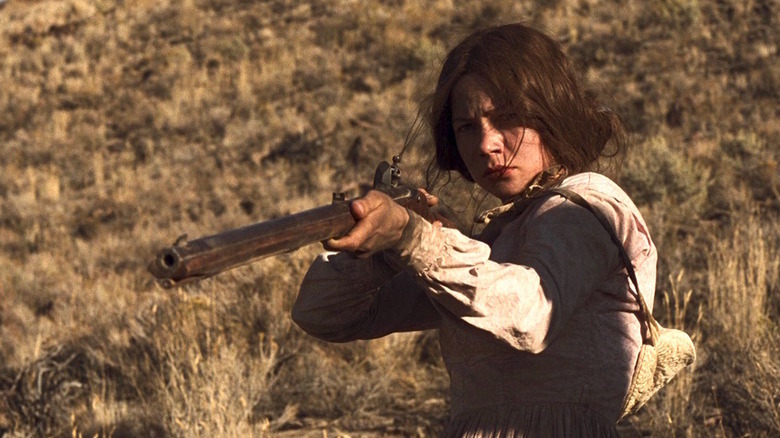
Kelly Reichardt is one of contemporary cinema's quietly most uncompromising directors, as proven by the understated richness of her ponderous neo-Western "Meek's Cutoff." This tense, minimalist rendition of the genre homes in on an Oregon Trail wagon party in 1845. The travelers find themselves at the headstrong whim of Stephen Meek (Bruce Greenwood), who slowly reveals his ineptitude at properly guiding the journey. Inspired by the real-life Meek Cutoff disaster of 1845, Reichardt works from a script by regular collaborator Jon Raymond, which focuses on the tense, often gendered and race-based power dynamics of the old West, as well as the general disquiet that comes with a perpetual struggle to survive.
But it's Reichardt's unyieldingly patient sense of filmmaking that makes the film sing. The picture is framed in a boxy 1.33:1 aspect ratio that confines the viewer to the setting's realities, and the plotting is pared to the bare minimum. You won't find the grand gun-slinging showdown or sensational reckoning of the good and evil of the West that you're apt to see in more traditional entries of the genre. Reichardt's version is something more uncomfortably, brutally realistic, and honest: a Western stripped of all mythmaking, bearing the uneasy truth of history without embellishment.
5. The Assassination of Jesse James by the Coward Robert Ford
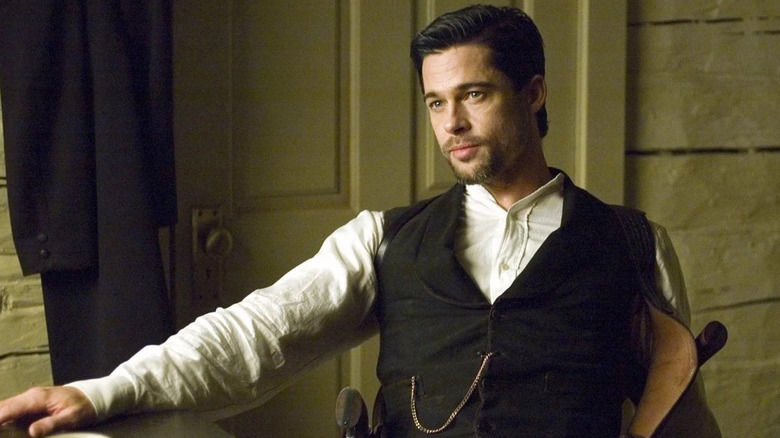
The epic scope of American myth meets the rigor of arthouse formalism in director Andrew Dominik's excavation of the ghosts of Western legend. Dominik's film arrives with one of cinema's greatest titles and then spends nearly three hours living up to it, unfurling with the unhurried pace and literary grandeur of a 19th-century novel. "The Assassination of Jesse James by the Coward Robert Ford" rejects the romanticization of the outlaw myth of Jesse James, instead interrogating his place in history and focusing on Robert Ford's (Casey Affleck) idolization of him. James is a stand-in for our cultural understanding of history writ large, and Dominik spends the length of his film deconstructing our idealized image of the outlaws of the Old West. (He seems to have fooled Warner Bros., who thought the film would be a shoot-em-up.)
Pitt's star power is used commandingly here, the actor himself a celebrity of overpowering proportions whose presence haunts the extended stretches of the runtime during which he doesn't physically appear. It is immaculately crafted, lit with painterly melancholy by Roger Deakins, and scored with aching beauty by Nick Cave and Warren Ellis — a duo who, as fans of "Hell or High Water" will note, have a particular gift for this kind of elegiac, wide-open-spaces sorrow. It's poetic and enigmatic, full of beguiling interpretations of Western archetypes amid a disenchanted understanding of the foundations of our own history.
4. Paris, Texas
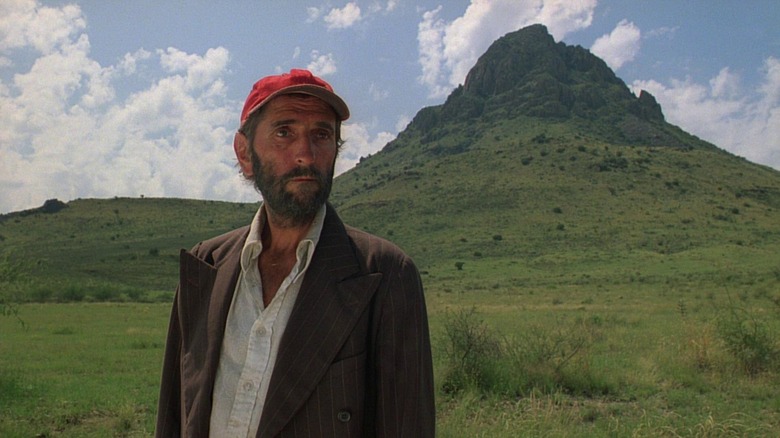
Maybe not one that would first spring to mind as a Western in any traditional sense of the word, but Wim Wenders' melancholy drama about a man's journey toward personal redemption strikes humanistic chords within a neo-Western Texas setting, uncovering striking truths about our relationship to ourselves and our collective history with others. In that way, "Paris, Texas" works as a similar excavation of the past as something like "Lone Star," but on a much more personal, intimate scale.
One of the best slow-burn movies of all time, "Paris, Texas" tracks the journey of Travis Henderson (Harry Dean Stanton), who stumbles out of the expansive American desert after disappearing for four years, now mute and amnesiac. He reconnects with his brother and son and sets out to find his estranged wife, Jane (Nastassja Kinski), presumably to seek some kind of emotional resolution to deep-seated discontent. The script by Sam Shepard and L.M. Kit Carson rejects a perfectly tidy resolution for a man whose salvation may not mean his life can be fully restored, but Wim Wenders' stirring sense of mood and tone suggests that Travis can salvage the rudderless present of his life.
3. Unforgiven
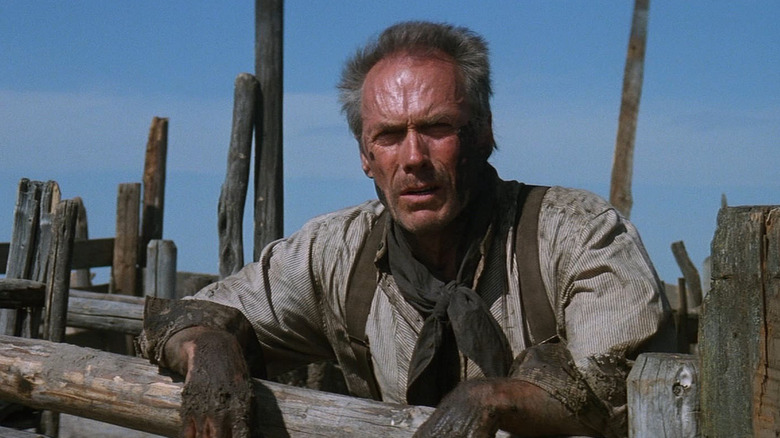
Though he's one of the de facto faces of the Western, nearly all of Clint Eastwood's appearances in the genre find him subverting its classical ideas and ideals. Even Sergio Leone's Dollars Trilogy — for all its slick stylization and mythic fantasy — pushed the Western into new, explosive territory. But Eastwood would ultimately need to reckon with the explicit violence at the heart of those films more directly, and he did so in the morally gray, relentlessly somber anti-Western "Unforgiven," the movie that completes his star persona.
Eastwood's character may be a spiritual successor to the Man With No Name, but if so, a lifetime of violence has finally caught up with his soul. Eastwood plays a grieving widower living in isolation on a farm, reluctantly drawn into one last bounty-hunting job to secure his children's future. "Unforgiven" dismantles the genre's typical heroes and villains: the real culprit here is an entire social order and the ideology sustaining it. Watch as cinema's greatest cowboy delivers the genre's most trenchant critique.
2. There Will Be Blood
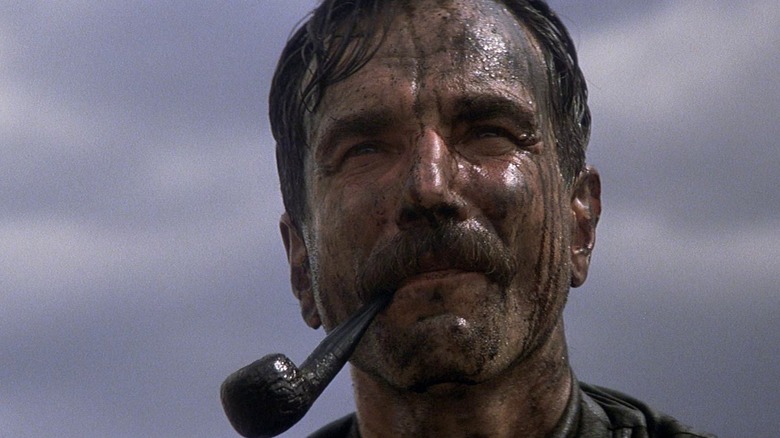
You could argue that half of Paul Thomas Anderson's films qualify as his true masterpiece, but the answer always seems to come back to "There Will Be Blood." Anderson's epic drama about the monstrous ambition of oil baron Daniel Plainview (Daniel Day-Lewis) — who swallows up a town whole to get rich off what's buried beneath it — is one of the ultimate films about the black heart of American enterprise. In many ways, it's a neo-Western that traces the country's transition from isolated outlaws and bandits to the bankrupted morality of pure commercialism.
There's really no better way to approach a modernized Western than by examining how unrestrained capitalism tears apart the foundations of our social contracts. That's to say nothing of how masterfully crafted the film is — including the generational performance from Day-Lewis. Plainview is unforgettably abominable in his myopic drive to amass wealth at the expense of his soul. This is effectively contrasted against the fanatical piousness of Paul Dano's preacher Paul Sunday, whose faith and devotion to a higher power prove to be no match for the ruthlessness of business.
1. No Country for Old Men
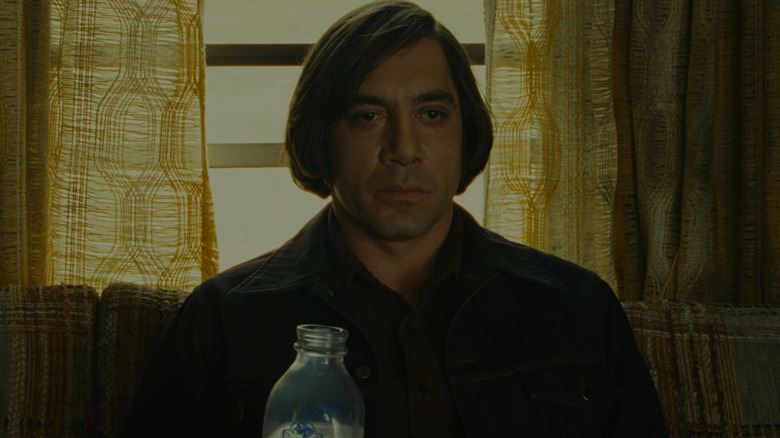
When I think of the neo-Western genre, it's hard not to picture Javier Bardem hunting across the landscape, stripped of humanity; Josh Brolin running across the open plains, pursued by a force he can't outthink; and Tommy Lee Jones sitting at the dining room table in one of the greatest closing scenes of any film. "No Country for Old Men" is a towering achievement and the Coen Brothers' best movie — one that builds its own sense of moral ambiguity and fatalism around the skeleton of the traditional Western.
Much of that work comes straight from Cormac McCarthy's novel of the same name, but his unflinching depiction of human fallibility was always a natural match for the Coens' interest in predestination and the frailty of our choices. Together they meld these preoccupations with McCarthy's solemn reflections on what it means to be alive in the world — to co-exist with evil that seems indomitable, and whether any grace comes with defeating it, or simply outliving it. It's the elemental Western realized on an intimate yet existential scale. Unforgettable, and the greatest neo-Western.