

Why Do All Klingons Dress The Same? Star Trek's Unified Species Explained
We may receive a commission on purchases made from links.
(Welcome to Trekspertise, a series where we break down the technology, history, details, and decisions that make the Star Trek universe so complex — and so fun.)
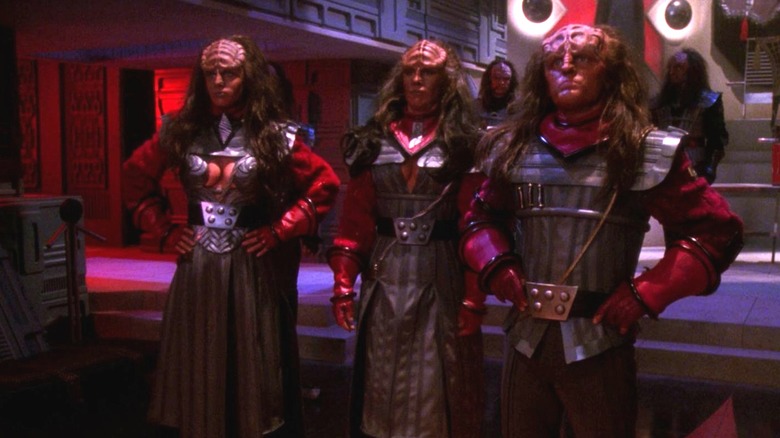
There is a writerly conceit throughout "Star Trek" that has, at least in a distant way, always bothered Trekkies. When the USS Enterprise arrives at the homeworld of a notable alien species, the aliens all dress the same. On the Klingon homeworld of Qo'noS, for instance, all Klingons tend to wear a certain kind of warrior's uniform, usually grey with large belts and sporting large, metal shoulder pads. They all wear red leather sleeves. Klingons wear this uniform presumably because they are in service of the Klingon Empire.
More than their dress, though, Klingons all tend to believe the same things. They all subscribe to a warrior's ethos, and are deeply devoted to a very particular sense of personal honor. Klingons believe in fighting prowess and all dream of dying nobly in battle. And while there have been a few notable Klingons who reject this ethos throughout "Star Trek," they are the exceptions to the rule. For the most part, all Klingons tend to look and behave the same way, and have the same worldview. They even all speak the same language.
Why is this? After all, Earth doesn't operate that way. Earth is a planet with hundreds of languages, thousands of political viewpoints, tens of thousands of cultures, and literally every imaginable life philosophy. Humans don't dress alike, and we certainly don't all subscribe to the same singular cultural ethos.
There are a few reasons why "Star Trek" tends to feature unified alien species, although most of them, even Trekkies have to confess, are done for the convenience of the writers and not necessarily because it makes sense in "Star Trek" canon.
The Planet of Hats allows sci-fi writers a certain degree of shorthand
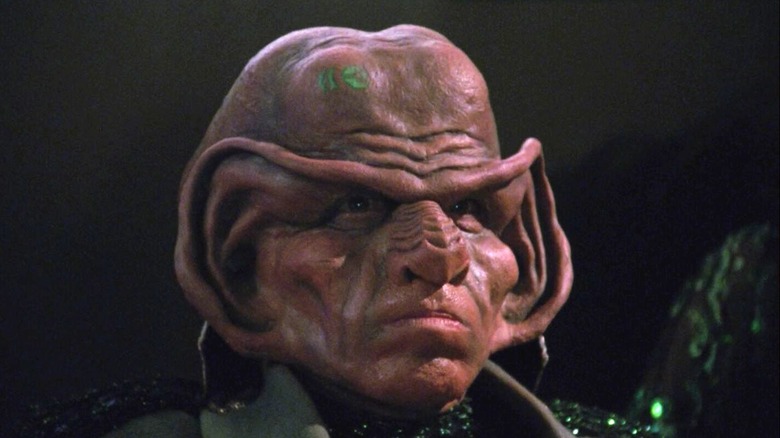
There is a writing theory, talked about on the TV Tropes website, called the Planet of Hats. The term is a nickname for a sci-fi writer's tendency to have all members of a certain alien species look and behave in the same fashion. They all wear the same hats, you see. "Star Trek" does this with almost every single alien species it features. If you run into a Vulcan, they will be a dispassionate intellectual devoted to logic. They wear the logic hat. If you meet a Ferengi, they will be an unscrupulous capitalist devoted to their own monetary profit. They wear the money hat. If you run into a Cardassian, they will be part of their empire's military. They wear war hats as comfortably as hipsters wear trilbys.
Even El-Aurians, the species of Guinan (played by Whoopi Goldberg on "Star Trek: The Next Generation"), are said to be a species of listeners. Being able to listen to bar patrons wasn't just Guinan's character quirk, it seems to have been a cultural feature of her whole species.
The primary reason "Star Trek" writers stick to the Planet of Hats trope is that it makes things easier for viewers. The Planet of Hats is essentially a handy form of dramatic shorthand. "Star Trek" is a broad, vast, 60-year-old entertainment franchise with reams of lore and hundreds of alien species to wrangle. It's going to be easier for viewers to remember a world if all the members of a given alien species have similar personalities. When a Vulcan enters the room, all the Trekkies watching know exactly what to expect. There won't be a need to iterate their culture, their language, their political faction, or their nation.
Unified planets keep "Star Trek" lore manageable.
Unified planets allow the writers to keep it simple
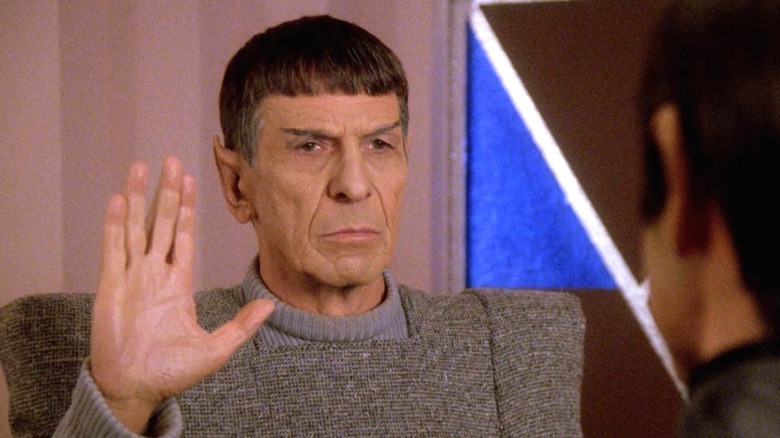
Of course, the Planet of Hats shorthand also makes things easier for the writers themselves. There's going to be so much less to keep track of if all Vulcans are philosophically the same. A Vulcan is a Vulcan.
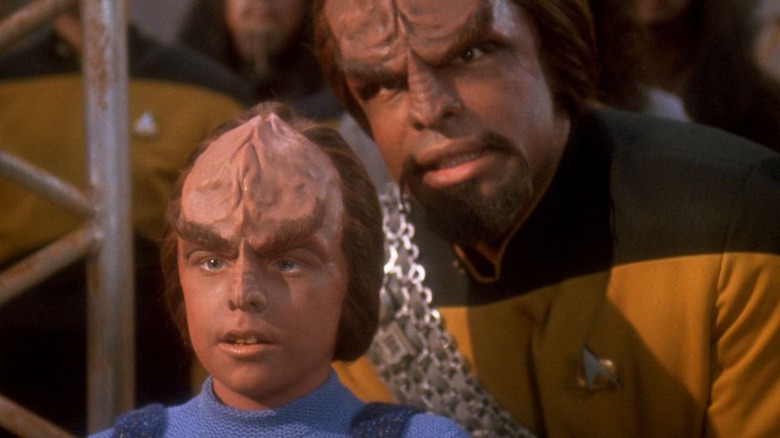
Can you imagine writing for a show like "Star Trek" if every planet were as philosophically diverse as Earth is right now? Realistically, Klingons should come from a homeworld where there are hundreds of languages, and only a few countries believe in all that warrior/honor stuff. It doesn't make sense that a species capable of interstellar travel should also be wholly devoted to combat. Surely there are Klingon engineers who have to spend their whole lives inventing warp engines, or doctors who work in hospitals. For a society to function, you actually need a wide variety of people who are variously devoted to different things. If every Klingon were wholly devoted to being a warrior, Klingons would not have become advanced enough to travel the stars.
But thanks to the writerly shorthand, "Star Trek" teleplay authors don't have to worry about that. They don't have to approach every single planet with hundreds of thousands of years of global history in their heads. They don't have to invent myriad cultures, fashions, philosophies, countries, rulers, presidents, artistic movements, musical subgenres, architectural trends, or any of the things covered in Will and Ariel Durant's "The Story of Civilization." Instead, writers can invent one (1) single culture, and lean on that.
Then, as the franchise grinds on, that one alien culture can be expanded upon and explained in detail. But until that happens, it's easier to say "Vulcans are devoted to logic" than to invent an 11-volume set of history books.
Unified planets actually make sense in Gene Roddenberry's galactic utopia
So it seems that keeping "Star Trek" planets unified was done solely for writerly convenience, right?
Actually, no. There's also a canonical reason for the worlds throughout "Star Trek" to be unified. In Gene Roddenberry's vision of the future, humanity has come together to rid itself of prejudice, reject war, and jettison money from our lives. Humans use their scientific curiosity and engineering know-how to become explorers and diplomats, equipping themselves to go on errands of mercy and aid. Earth in a pacifist utopia devoted to bettering its inhabitants.
According to the film "Star Trek: First Contact," humans were only able to reach that state after passing through an extended historical period of vicious world war. The wars drove humanity to the brink of extinction. Luckily, a resourceful inventor named Zefram Cochrane (played by James Cromwell, who was genuinely interested in extraterrestrial life) was able to develop faster-than-light engines in the aftermath of the wars, and happened to successfully test his engines just as some Vulcans were passing by.
Because humans had invented warp-speed travel, they were finally seen as belonging to a larger galactic community of many, many alien species. When humans learned this, they unified. The previously fractured governments united as one, and the whole of the planet became devoted to being good interstellar neighbors.
This was emphasized in the "Next Generation" episode that was also called "First Contact" (I know, it's a little confusing). In that episode, the Enterprise encountered a planet that was on the brink of inventing warp engines, but that was still politically divided across the globe. It was determined that the planet had to unify before being ready to traverse the heavens. If a planet wants to be part of the larger galactic community, it kind of has to be united.
So what is the unified ethos of Earth in Star Trek?
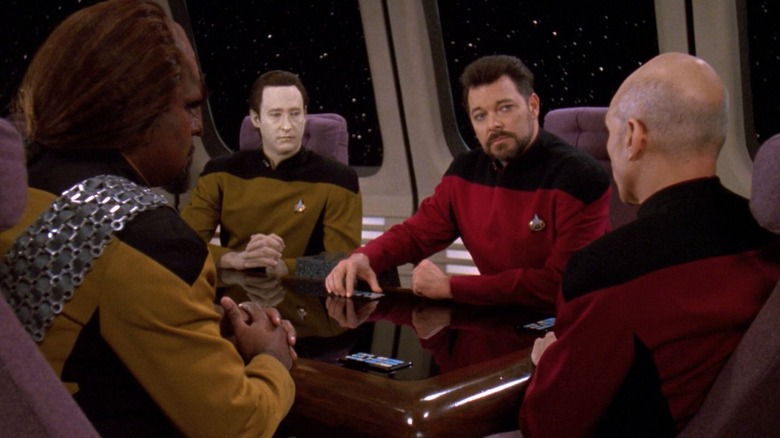
So if we run into a wholly united world on "Star Trek," it's because they had to be united in order just to play along. In the canon of "Star Trek," total global unification is the price of admission. It's not just writerly convenience that keeps worlds unified in the franchise, it's a devotion to Gene Roddenberry's utopian fantasies of unity. (Well, also it's writerly convenience.)
Of course if all Klingons are devoted to combat, and all Vulcans are devoted to logic, etc., what is the unifying ethos of humans? Throughout "Star Trek," other species comment on the Federation and the ideas that bring us mere humans together. On "Star Trek: Enterprise," the great Dr. Phlox (John Billingsley), a Denobulan, notes that humans are known for their optimism. On "Star Trek: Deep Space Nine," Quark (Armin Shimerman) and Garak (Andrew Robinson), a Ferengi and a Cardassian, comment that the Federation is a lot like the human drink of root beer. It's cloying and bubbly and eager-to-please. Quark and Garak, of course, hate those qualities.
The overarching implication, though, is that humans on "Star Trek" are a species devoted to helping others. It's telling that when a beleaguered space traveler appears in front of the Enterprise, the captain's first instinct is to ask what they need. There is a degree of caution, of course — the shields go up sometimes — but more than anything, the Enterprise is there to help. Humans, at least in their ideal form, are meant to be devoted to diplomacy.
On a personal level, "Star Trek" humans are also very welcoming, often bringing visiting aliens to social gatherings and introducing them to various foods and customs.
So we humans are unified as the best possible versions of ourselves: friendly helpers.