

Mother Mary Review: Anne Hathaway And Michaela Coel Lead A Confounding, Emotionally Distant Misfire
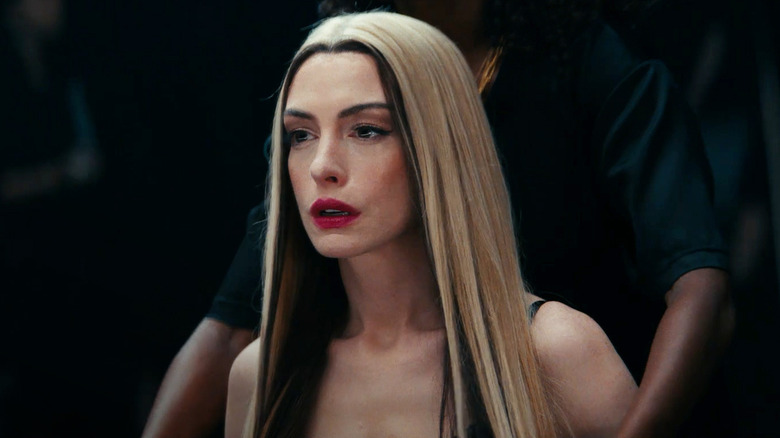
With zero respect to AI grifters: being an artist is work, and it is taxing work in more ways than one. Setting aside the obvious obstacles, there's the fact that every time someone makes art, they're giving part of themselves away. This sharing is necessary; art is as much about seeking connection and understanding as it's about entertaining or anything else. As risky as it is for an artist to bear their soul in public, it's just as tender an act to collaborate with each other. The end result of the combined efforts of two or more artists involves parts of each person blending together, forging a bond which can be as intense and delicate as any relationship.
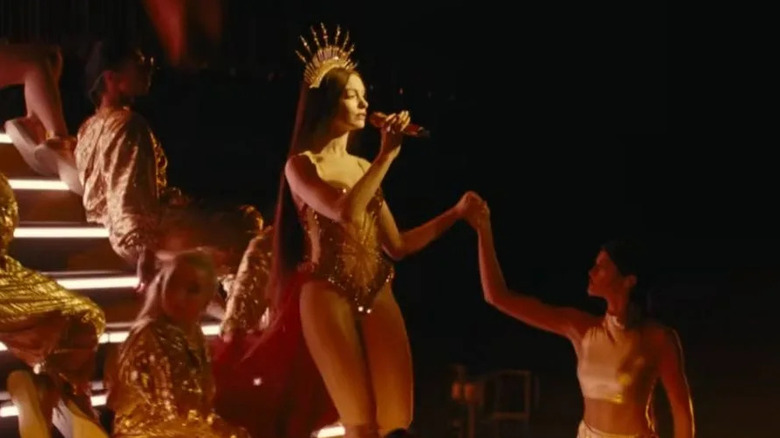
It's this type of relationship which is explored at length in David Lowery's "Mother Mary." While on the surface the film may appear to be joining the ranks of "Vox Lux," "Trap," and "Smile 2" in its askew look at pop stardom, the movie uses the trappings of a pop diva (complete with original music written by actual pop divas Charli XCX, FKA Twigs, and, er, Jack Antonoff) as symbolism for the inner life of an artist in general. "Mother Mary" is awash with symbolism, in fact, something which isn't too surprising given Lowery's body of work. What unfortunately is surprising is he's allowed the symbols and metaphors to take over the movie so much that it feels like an impenetrable shell has been woven around its core. "Mother Mary" is an emotionally distant, confounding, and ultimately unsatisfying work of art. Though its visual ambition and lead performances are commendable, it never gives enough of itself to let the rest of us in.
Mother Mary feels like a short film stretched to feature length
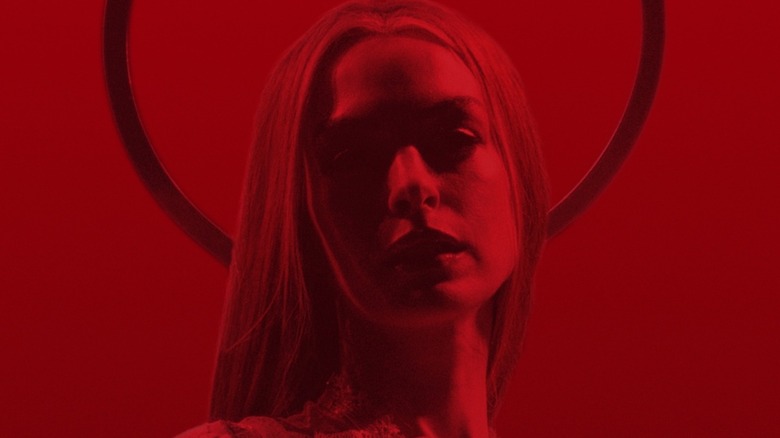
Despite all of its symbolic, surrealistic imagery and pop concert sequences, "Mother Mary" is built around a very pared down, simple premise. Pop star Mother Mary (Anne Hathaway) is in the midst of a comeback tour, yet it seems there's something deeply wrong. The issue initially appears to be with her climactic outfit for the concert, which she finds so wrong it moves her to tears. In her emotional state, she travels to the home studio of fashion designer Sam Anselm (Michaela Coel), who used to be her regular collaborator and longtime friend. The two had a falling out years ago, and if you might be interested in the details of this breakup, keep wondering, as David Lowery's script never wants to give that backstory much space. Suffice to say that the two women, once reunited, dance around their emotions while sparring. Mother Mary insists Sam make her a new dress, while Sam insists that in order to do so, she must strip Mary bare psychologically, not physically. Thus, revelations and confessions ensue.
However, the nature of these revelations and confessions do not deepen and enrich the characters and the narrative, as with most conventional stories. Instead, Lowery uses this highly theatrical structure (it's almost surprising to learn the script is an original, and not based on a stage play) to dive into more metaphysical matters. As Mary and Sam try to heal old wounds, they end up opening new ones, including the introduction of a possible shared haunting. While this process helps them begin to connect again, it only serves to alienate the viewer. Such an obtuse and experimental approach may have gone down easier as a short film; Lowery has made shorts with a similar vibe before. As a feature, it quickly becomes exhausting.
Anne Hathaway and Michaela Coel dig into a verbose but hollow script
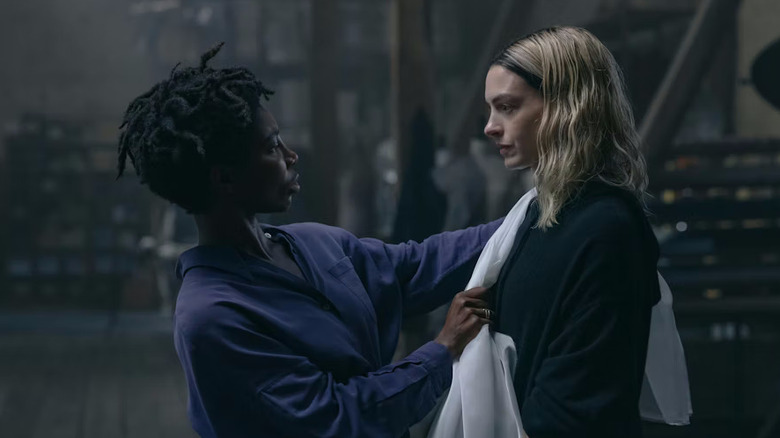
If the above description sounds like "Mother Mary" would be an actor's dream, well ... it partially is. Certainly, Anne Hathaway and Michaela Coel are the main attractions here, and they demonstrate their considerable talents throughout. Coel laces all of her lines with barbed wire, making Sam dig into Mary's skin with each word as it's spoken with a syrupy sweetness that cuts deep. Meanwhile, Hathaway accomplishes the formidable task of playing a woman seemingly on the verge of an emotional breakdown, her eyes welled with tears that continually threaten to run over but never quite do. Hathaway draws a compelling parallel between the pop star on and off stage: during a performance, Mary is the goddess she's dressed up to be, while alone with Sam, her voice is shaky and hesitant, with the confident artist only poking through for a moment here and there.
These are performances which deserve a release valve, a monologue or similar device which allows everything simmering beneath the surface to finally have its day in the sun. Unfortunately, David Lowery's script isn't built around a reckoning or settling of accounts, but instead a supernatural/metaphysical concept which obfuscates more than illuminates. The introduction of such a device explains some things (such as why Mary is so perpetually unsettled), but never feels cathartic. Even though Lowery eventually illuminates the themes and subtext of his film, it's at the expense of the characters and the drama they're so concerned with. It's all much ado about nothing.
Mother Mary frustrates more than delights
There's no question that David Lowery's films, especially those made for independent distributors as opposed to a big studio, demand patience from the audience. See, for instance, the infamous "Rooney Mara eating pie" scene from "A Ghost Story," or the use of 14th-century-stylized dialogue from "The Green Knight." Of course, in those examples, Lowery rewards our patience with some transcendently powerful and emotional moments, achieved in part thanks to our alignment with the characters and our understanding of their plights. It's apparent early on in "Mother Mary" that Lowery is refusing to be as forthcoming; even flourishes like a pre-A24-logo bit of footage and a title card stating "COVER YOUR EARS/THIS SONG IS CURS'D" feel like appetite-whetting clues. Yet as the film drags on, it begins to feel like Lowery is all bark and no bite.
Frustratingly, this may be by design: at one point, Sam and Mary realize that what Mary is truly after is clarity, something which Lowery appears to be continually refusing the audience. To wit, amidst the film's myriad flashbacks, flashforwards, and other such flights of fantasy, we're never sure if we're witnessing events which actually have occurred (or will occur), or if we're watching exaggerated visions of them, or something in between. The film is so steeped in ambiguity that it never feels like it reaches confession, nevermind clarity, and yet Lowery and his regular composer Daniel Hart soak the finale in heaps of schmaltz that feels unearned as a result. "Mother Mary" is unequivocally a gorgeously shot and designed film, so perhaps all of its suggestiveness and symbolism will allow you to open yourself up to it. Sadly, I never felt like I was given the key, so I didn't connect, I could not understand, and I was not entertained.
/Film Rating: 5 out of 10
"Mother Mary" opens in theaters on April 17, 2026.