

Paramount Asked NBC To Cancel Star Trek, According To This Original Series Star
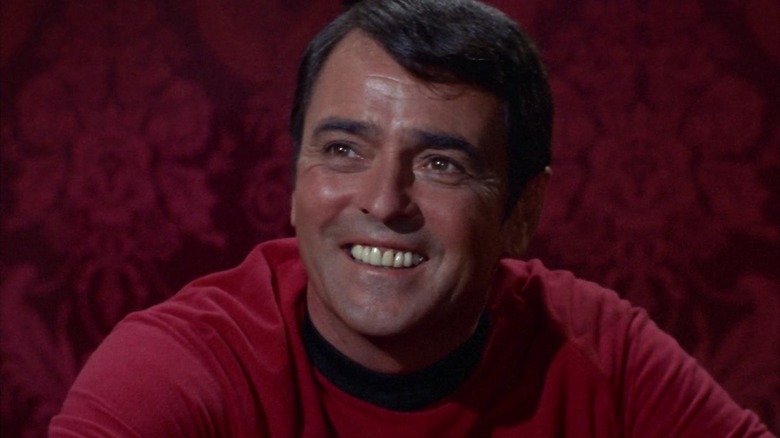
To offer a little history: back in 1964, Gene Roddenberry sent a long pitch packet to Desilu — the studio founded by Lucille Ball and Desi Arnaz — explaining exactly what "Star Trek" was to be. The packet was called "'Star Trek' Is...," and it's well-known to Trekkies. In it, Roddenberry described his upcoming sci-fi series as "'Wagon Train' to the stars," an allusion to the celebrated and long-running Western TV series. Desilu brought the series to NBC. It's work remembering that Lucille Ball was instrumental in making "Star Trek" happen, and had to make some life-changing sacrifices to keep it on the air. "Star Trek," as we all know, ran from September of 1966 through June of 1969.
Partway through "Trek's" run, however, in 1967, Ball sold Desilu to Gulf+Western, a giant entertainment conglomerate. Gulf+Western had purchased Paramount Pictures in 1966, so when they snagged Desilu, they renamed it Paramount Television. That meant that "Star Trek" suddenly had new corporate overlords, just as their second season was unspooling. New corporate overlords meant a new set of capricious whims, and it appears that no one at Paramount was particularly fond of the show. That didn't help Trek's already shaky status on TV.
Most Trekkies likely know that "Star Trek" wasn't super-popular for its initial run, and more in-depth fans might know about superfan Bjo Trimble and her letter-writing campaign to keep "Star Trek" on the air. The series was struggling. According to "Star Trek" actor James Doohan, who played the Enterprise's chief engineer Montgomery "Scotty" Scott, Paramount was the one who petitioned NBC to cancel it. Doohan was interviewed for a 1996 issue of Cinefantastique Magazine, and he spilled the beans on all the inter-studio politics that threatened his series.
James Doohan said that it was Paramount that wanted to cancel Star Trek
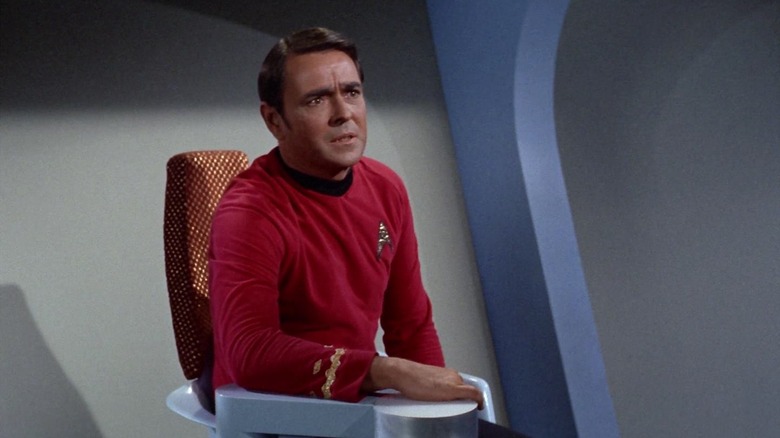
Doohan recalls the series of events quite well. He recalls the purchase of Desilu, and how the series was immediately under threat from Paramount. He doesn't state a clear reason why Paramount disliked "Star Trek," other than to say that the new studio was at a loss. Doohan also recalled the letters that flooded in to save the series for a third season. In his words:
"We couldn't understand at the end of the second year, when Paramount wanted to duck us all, wanted to get rid of us. We had done 44 shows for Desilu, and when Paramount bought Desilu, they bought us. Paramount had no idea that to do with us, with this space show. They wanted NBC to drop it. NBC said 'okay,' and then when that was run out on the press, NBC got a million fan letters saying 'keep the show.' And they hemmed and hawed and hemmed and hawed and finally they kept us for one more year."
Doohan added that Paramount, despite agreeing to keep the show on the air, didn't really want to put any more money into it. Trekkies can tell you that a lot of third-season episodes look cheap, with some elaborate sets being replaced by a large, undressed, black studio space (see the episode "The Empath" for the clearest example of this). Doohan also noted that none of the actors received raises. He said:
"[Normally, you get] an increase in pay each year. 10%, or whatever, some little bit. Paramount told us 'You're back for another year, but don't think you are going to get an increase in pay.' [...] And Paramount wonders why we hate them."
Yeah. Not cool, Paramount.
James Doohan still liked working on Star Trek, even without a raise
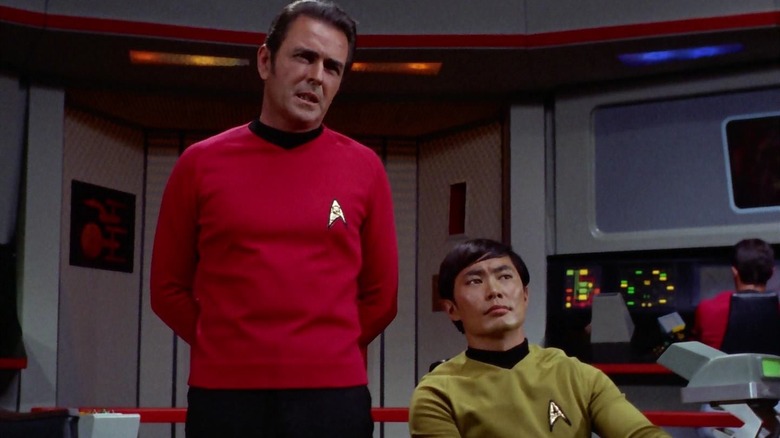
Doohan added, however, that his bitterness over not receiving a raise from Paramount didn't prevent him from being wholly devoted to the gig. He was, after all, a professional, and he wasn't about to let studio stiginess alter his performance as Montgomery Scott. The one who was most rattled by Paramount's hate of "Star Trek" was, perhaps expectedly, Gene Roddenberry himself. Doohan said he continued to clock in:
"Because to me, that's my job, and I do it. I think most other actors feel the same way, but they certainly weren't happy with it. [...] I think morale came down because Gene decided not to be there that much. He was really p***ed off they they were getting rid of his show. You can't blame him at all. He'd just go off got three or four weeks and take a trip here and a trip there. They treated Gene very badly all the way through the whole thin, and Gene took it inside too much, too strongly, I think."
NBC ended up canceling "Star Trek" after its third season.
Of course, we all know what happened with "Star Trek" after that. Fans discovered it in reruns, and conventions started to be arranged in the early 1970s. The series grew a cult, and then expanded into a legit pop culture phenomenon. It spawned movies starting in 1979, and Gene Roddenberry returned in 1987 to create a spinoff, "Star Trek: The Next Generation" (mostly out of rage in being excluded from some of the movies). There have been multiple spinoffs, two of which are about to wrap up their runs. To this day, Paramount still oversees "Star Trek," it being one of their biggest intellectual properties.