

A Game Of Thrones Dragon Is Named After One Of George R.R. Martin's Favorite Fantasy Movies
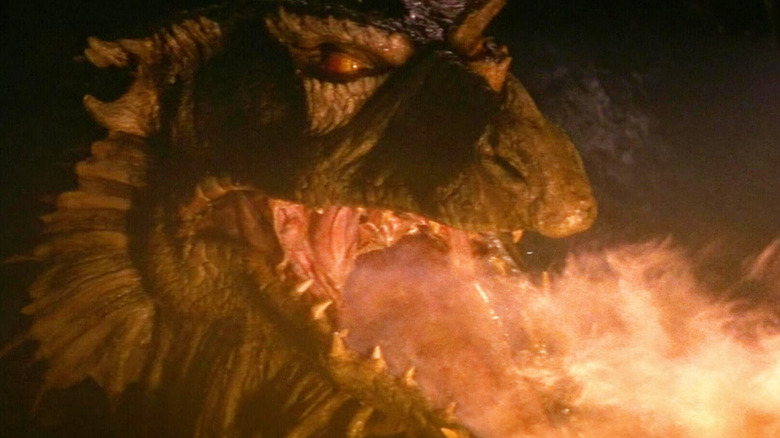
There's a brief moment in "Game of Thrones" season 1, episode 4, "Cripples, Bastards, and Broken Things," that should make fans of dark 1980s fantasy movies sit upright. As the exiled Targaryen prince Viserys (Harry Lloyd) is sponged off by Doreah (Roxanne McKee), a handmaiden he bought for his sister Daenerys (Emilia Clarke), he discovers he can, ahem, excite her by talking about the great dragons his family once rode. It's a prime example of the show's infamous use of "sexposition" (that is, sexual scenes that operate as an excuse to dump loads of exposition and plot-related information), but that's not the reason I'm bringing it up.
Among the dragons Viserys mentions is Vermithrax, a fire-breathing giant who doesn't come from George R.R. Martin's source material (the "A Song of Ice and Fire" books). That's because this particular beastie gets its awe-inspiring name from "Dragonslayer," the grisly '80s fantasy flick that Martin himself has cited as a personal favorite. In the home media commentary for "Cripples, Bastards, and Broken Things," "Game of Thrones" co-showrunner D.B. Weiss confirms that this detail was included in the episode as a way to shout-out the movie.
So far as creepy '80s fantasy features go, "Dragonslayer" hews closer to that decade's more adult offerings (think 1982's "Conan the Barbarian") than you might expect, given that the film was partly distributed by Disney (more on that to come). To be sure, that's undoubtedly a crucial part of what the younger Martin found so appealing when he first laid eyes on it, along with the movie's kickass scaly villain, whose full name is Vermithrax Pejorative. But most of all, "Dragonslayer" is a fantasy adventure that bucks the genre's conventions of its era and clearly helped to shape Martin's own fantasy writing following its theatrical release in 1981.
Dragonslayer paved the way for George R.R. Martin's fantasy stories
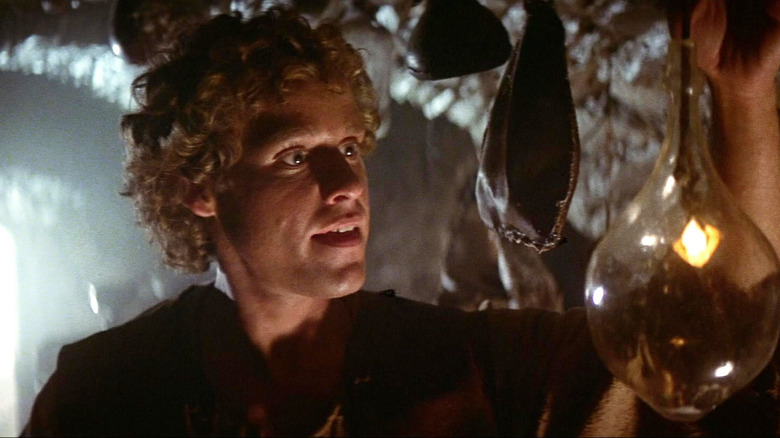
Disney typically releases its most innovative films when it's in trouble, as was the case in the decade leading up to the Disney Animation Renaissance in the late '80s. Hence, the studio took a gamble by joining forces with Paramount to produce co-writer/director Matthew Robbins' "Dragonslayer," a movie that doesn't yell "Disney Whimsy" so much as "Gritty Dungeons & Dragons."
Narratively, "Dragonslayer" centers on Galen Bradwarden (Peter MacNicol), a plucky if unremarkable spell-caster's apprentice who's forced to battle the terrifying Vermithrax in medieval England. What follows is unusually brutal for a PG-rated picture with the Mouse House's name stamped on it, with characters being horrifically burnt alive as sacrifices to Vermithrax or hungrily devoured like sausages by the creature's offspring. That's on top of some proper nudity, which is merely another reminder that the film arrived shortly before the PG-13 rating was invented.
Just as daring are the film's frequently radical ideas and themes, including its unflattering depiction of the monarchs, patriarchal attitudes, and classism that govern its historical fantasy setting. (The symbolism of Vermithrax preferring their sacrifices in the form of virgin girls, in particular, is hard to misinterpret.) It even shows early Christianity gradually replacing the Pagan beliefs of yore, with the movie's proto-Christians typically spreading falsehoods about their victories to shore up their power.
Obviously, George R.R. Martin takes things way further than "Dragonslayer" does with the violence, sexual material, political intrigue, and references to real-life history in his own fantasy works, which are generally more complex and intricate. All the same, the movie's influence on his "A Song of Ice and Fire" novels is unmistakable, from their shared love of underdogs to the ways their stories aspire to reinvigorate the fantasy genre at large.
Dragonslayer remains influential decades after flopping in theaters
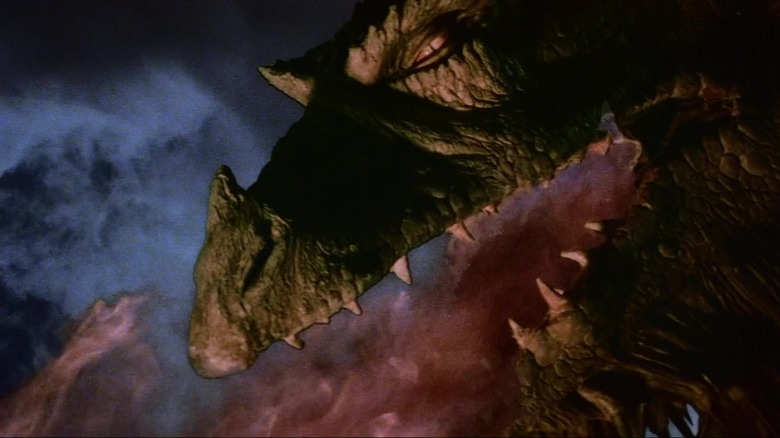
Like so many live-action movies released during Disney's "dark" era in the late 1970s and early '80s ("The Black Hole," "The Watcher in the Woods," "Something Wicked This Way Comes," etc.), "Dragonslayer" is an imperfect but otherwise compelling attempt by the studio to do something different. Unfortunately, like so many of those same films, it was also a clear-cut box office bomb. In this case, audiences mostly chose to get their pulpy action/adventure fix from "Raiders of the Lost Ark," which premiered theatrically just two weeks before "Dragonslayer" hit theaters.
Nevertheless, the Oscar-nominated go-motion miniature effects and life-size models used to bring Vermithrax to life in the movie were legitimately groundbreaking, and they still look pretty great to this day (some rough compositing aside). It's not just George R.R. Martin who thinks the film's dragon rocks, either. As movie monster expert Guillermo del Toro once opined to Coming Soon back in 2008, "The design of the Vermithrax Pejorative is perhaps one of the most perfect creature designs ever made."
The subversive elements and social overtones of "Dragonslayer" plainly made an impression on del Toro, too, given his own well-known practice of crafting original political fantasy features like "Pan's Labyrinth." What's more, the filmmaker has gone on to work alongside Matthew Robbins directly on several projects over the last 30 years or so, with Robbins serving as a co-writer on such del Toro joints as "Mimic," "Crimson Peak," and his stop-motion "Pinocchio" (plus the 2011 "Don't Be Afraid of the Dark" remake that Robbins and del Toro wrote only).
So, yeah, Viserys was right about one thing on "Game of Thrones": Vermithrax is kind of a big deal.