

The Supergirl Trailer Gives Kara Zor-El A Role We Rarely See For Movie Women
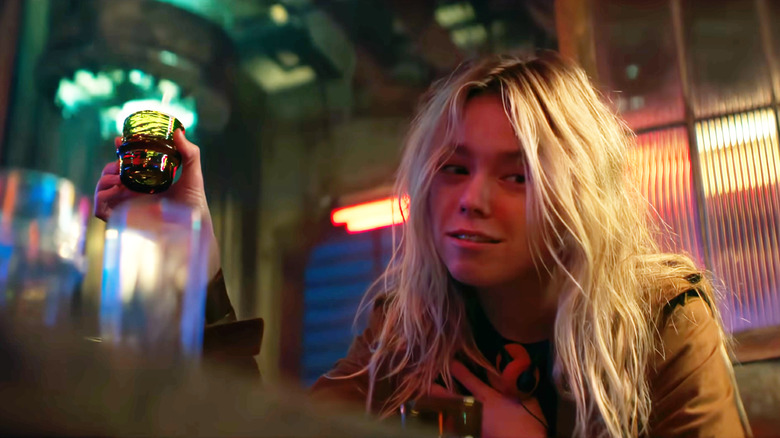
"One Battle After Another," which took home the Oscar for Best Picture, is a film anchored by one of Leonardo DiCaprio's finest performances, playing a stoned-stupid former revolutionary named Bob who, in his words, "can't get over the first hurdle." Bob joins the ranks of other washed-up, drunken/stoner heroes like Will Smith in the titular "Hancock," Paul Newman's Frank Galvin in "The Verdict," and even Simon Pegg in Edgar Wright's beloved "Shaun of the Dead." It's a character type that we've seen countless times on screens big and small, but almost exclusively portrayed by men. Fortunately, for my fellow disastrous women, "Supergirl" is boldly inviting Kara Zor-El (Milly Alcock) to the party.
"Supergirl" is based on the precious eight-issue comic mini-series "Supergirl: Woman of Tomorrow" by writer Tom King and artist Bilquis Evely, in which our hero is ... going through it, to put it kindly. She's desperate to self-medicate to cope with her internal anguish, so she frequently travels to planets with red suns to zap her powers enough to allow her to get drunk. She's not yet hit rock bottom, but she's partying her face off trying to find it. Cinema has no problem depicting women who could be the captain of the Hot Mess Express, but those women are seldom allowed to be heroes as well. It's a frustrating double standard where male heroes are allowed to be complex, unlikable, chaotic, flawed, and morally ambiguous while saving the world, while women are held to a higher standard of moral purity.
Cinematic traditions demand that "strong female characters" double as "good role models," and this not only makes for incredibly repetitive (see: boring as hell) stories, but also perpetuates a standard of womanhood that is impossible for women to meet in real life.
Supergirl is suffering from survivor's guilt

Many "fans" who are unfamiliar with "Supergirl: Woman of Tomorrow" have taken to social media to express their disdain for a Kara Zor-El who would rather get drunk and hang out with her dog, Krypto, than Do Good. Meanwhile, one of the most important things we heard Kara Zor-El say in the first trailer for "Supergirl" was the following:
"I watched my entire planet die. I had to bury my family. And it didn't happen in one day. The gods are not that kind."
Unlike Kal-El/Clark Kent/Superman, who was sent to Earth as a baby and missed witnessing the genocide of his planet firsthand, Kara was a teenager when Krypton was destroyed. The destruction of her home and everyone she loved is not something that exists in the theoretical, but is a scar on her soul that she carries with her every day. She's very clearly suffering from survivor's guilt, a debilitating symptom of Post-Traumatic Stress Disorder. One of the best showcases of this behavior already existing in film is Katherine Langford's Mara Carlyle in Brian Duffield's "Spontaneous," a teenage girl who starts drinking heavily and engaging in destructive behavior after students in her graduating class start spontaneously combusting at random. Mara's sorrow and guilt are so all-encompassing that she does anything she can to help numb the pain. This is exactly what Kara Zor-El is doing.
While healthier coping mechanisms like, I don't know, therapy, are a more acceptable way of dealing with her trauma, it's ridiculous to expect everyone to go down the correct pathway. Sometimes, a selfish path of self-destruction is a necessary evil to exorcise your demons.
Support Supergirl's rights and wrongs
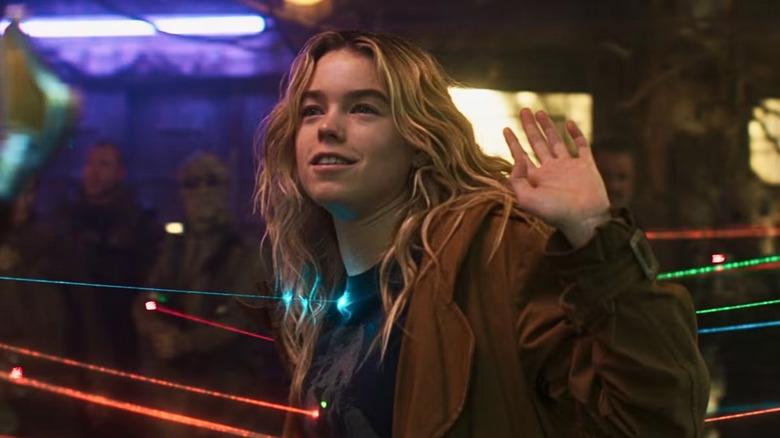
People love to say, "I support women's rights, but I also support women's wrongs," but once a woman defies the expectation of what a "good" woman looks like, that belief system is abandoned. People demand complex female characters, but the moment a character exercises that complexity in a manner that isn't easily digestible, audiences reject the character as problematic at best and harmful at worst. How can we ever expect our media to reflect the vast continuum of womanhood if we refuse to engage with the behaviors that make us feel uncomfortable?
It happens to women in real life as well. Pop starlets and former Disney teen idols have been criticized en masse for the crime of becoming adults and behaving as such, thereby shedding a kid-friendly image and losing their "role model" status. If you're a woman in the public eye, you will be demanded to set a good example for all or else face the wrath of a public that will label you "difficult." Forcing women into a binary system of "good" and "bad" role models is doing the dirty work of the patriarchy by labeling some women's stories as inherently more valuable than others. This is a landscape that "Supergirl" director Craig Gillespie is familiar with, having directed the biopic about one of American culture's most famously controversial female figures with "I, Tonya."
The insistence that female characters be admirable, aspirational, or morally intact at all times reduces them to ideas rather than fully rounded human beings. Women deserve to be allowed to be brilliant and insufferable, resilient and deeply flawed. Supergirl crashing out does not mean she's incapable of saving the world. And that's a good reminder to us all about what we're capable of even at our lowest moments, too.
"Supergirl" hits theaters on June 26, 2026.