

Clint Eastwood Once Named His Three Favorite Hollywood Classics From The '40s
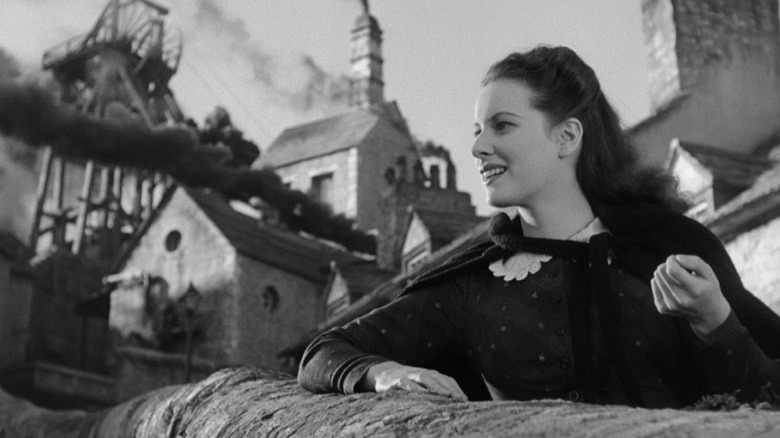
Back in 2009, legendary actor and director Clint Eastwood was stopped on the red carpet at an American Film Institute event and asked about his favorite movies of all time. Now, all cineastes likely long to be asked this question, as it's a great way to begin a prolonged conversation about the cinematic form. And the conversation we'd like to have is already laid out in our heads, isn't it?
Firstly, one will need to establish the discussion's parameters. Are we talking about a certain genre of films? The ones I would put on a film school syllabus? Are you asking which movies are dear to me personally? (For me, it's a tie between Ingmar Bergman's "Persona" and the Quentin Tarantino-endorsed Joe Dante sequel "Gremlins 2: The New Batch.") And then, once those parameters have been established, a film lover can crack out a few surprises.
But sometimes we don't have the time for all that. Instead, we just need a few classics in our back pockets to whip out, just in case we, like Eastwood, are passing by an interviewer and are unable to stop and really dissect the fineries of our favorites. Clearly, Eastwood had a few of those ready to go when he was stopped at the aforementioned AFI event, stating that he was raised in the so-called Golden Age of Hollywood.
He began by mentioning John Ford's "How Green Was My Valley," the 1941 drama about Welsh miners that won a Best Picture Oscar. Eastwood also brought up "The Ox-Bow Incident," the 1943 anti-Western that was directed by William Wellman and nominated for Best Picture (although it lost to "Casablanca"). Finally, he said he loved John Huston's "The Treasure of the Sierra Madre," a 1948 horror/Western that was similarly nominated for Best Picture.
Clint Eastwood loves How Green Was My Valley and The Ox-Bow Incident
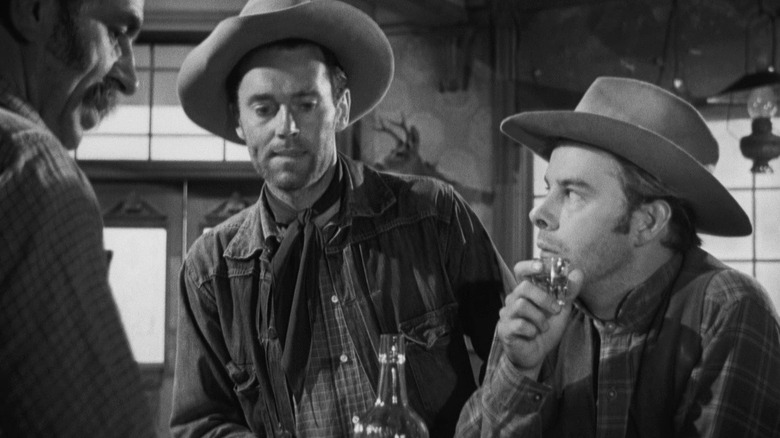
"How Green Was My Valley" was a bold choice for Clint Eastwood, as the film is generally known for little else besides beating "Citizen Kane" for the Best Picture Oscar. (It also gave 20th Century Fox its first Best Picture Oscar.) Based on the novel by Richard Llewellyn, "How Green Was My Valley" tells the story of the Morgan family, who live in the industrialized coal-mining valleys of South Wales. The film unfolds largely from the point of view of the young Huw (Roddy McDowall) and concerns the lives and fates of his older sister Angharad (Maureen O'Hara), his father Gwilym (Donald Crisp), his mother Beth (Sara Allgood), the local pastor (Walter Pidgeon), and several others.
The movie's action begins rolling when a strike is proposed against the unfair conditions the local miners are all subjected to ... and the alienation that arises when Gwilym suggests they do not strike. That's not the whole of the story, but it's the first incident that details how the old world of mining is actively contracting. That, in turn, serves as a backdrop for romance and other personal relationship drama throughout the village, mostly Huw and Angharad's. It's a pretty great film and should be seen as something other than an object of derision for fans of "Citizen Kane."
Likewise, it makes sense that Eastwood would love "The Ox-Bow Incident," given that he eventually directed "Unforgiven." Both films begin with classic Western setups before slowly revealing the moral irresponsibility of the genre when dissected enough. Frontier justice, "The Ox-Bow Incident" argues, is actually very bleak and extrajudicial hangings are perhaps to be avoided. It's one of Henry Fonda's best starring vehicles.
Clint Eastwood also loves The Treasure of the Sierra Madre
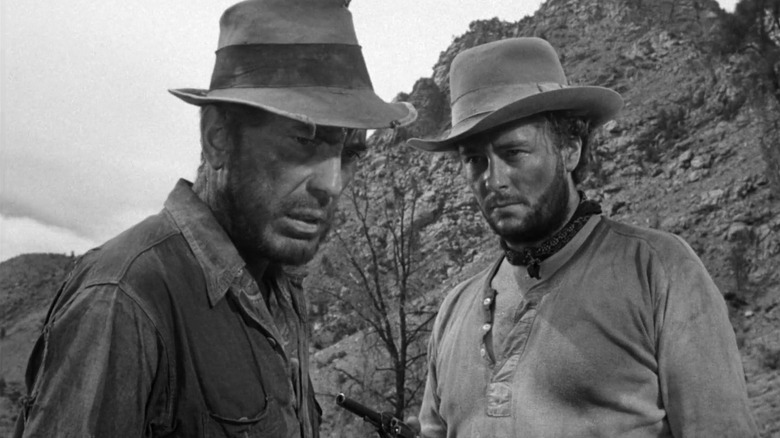
"The Ox-Bow Incident" is about a righteous posse of villagers who seek out a gang of rustlers who might have killed one of the locals. When the posse finds some mean guys sleeping nearby, they think they have their culprits. It turns out, however, that the mean guys didn't do it. Nevertheless, the villagers begin to debate whether to hang them anyway, as a way to achieve some kind of cosmic closure. It's pretty grim. The "heroic" idea of freelance vigilantism is seen as an excuse to kill whoever you want in the name of justice.
Lastly, Clint Eastwood's fondness for "The Treasure of the Sierra Madre" makes absolute sense. The film centers on a trio of destitute laborers who trek out to a remote desert to mine a secret vein of gold. The men are hungry and impoverished (they can only afford to take the trek thanks to a chance lottery win) and are, naturally, suspicious of one another. Of course, once they begin to pile up some gold, they come to suspect the others of planning to steal their personal stashes. Humphrey Bogart is hardly heroic as Fred, the sweaty Tim Holt co-stars as the intense Bob, and John Huston's own father, Walter Huston, won an Oscar for his performance as the older, gentler prospector Howard.
"The Treasure of the Sierra Madre" is talked about often in film schools, and many people are fond of it, so it's no surprise that Eastwood would say he digs it. It has a Western setting, but the film's sticky atmosphere and tangible suspicion make it feel almost more like a horror movie. No wonder Stephen King loves it as well.