

Ready Or Not 2 Directors Learned One Key Lesson From Scream 6 [Exclusive Interview]
This interview contains mild spoilers for "Ready or Not 2: Here I Come."
Horror is one of the most profitable and prolific genres in cinema, where low-budget outings can rake in millions for the studios willing to take a chance on them, and even tertiary characters can live on as cult heroes for generations. "Ready Or Not," which hit theaters in 2019, had all the makings of becoming an instant horror classic. The feature film, directed by Radio Silence co-founders Matt Bettinelli-Olpin and Tyler Gillett, is about a woman named Grace (Samara Weaving) who is thrust into a life-or-death game of Hide and Seek after unwittingly marrying into a family of a cabal of rich freaks who sacrifice people to maintain their elite power. Explosive, violent, and a hell of a lot of fun, Grace's blood-drenched bridal gown with a bullet bandolier became an instant favorite for Halloween costumes and cosplayers. It was only a matter of time before the team delivered a sequel.
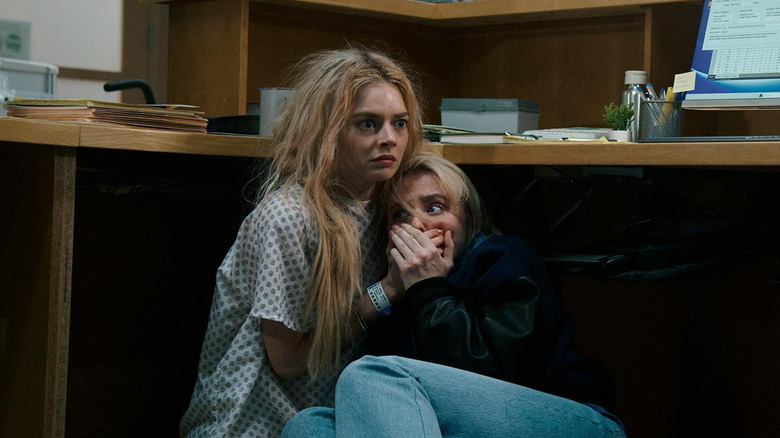
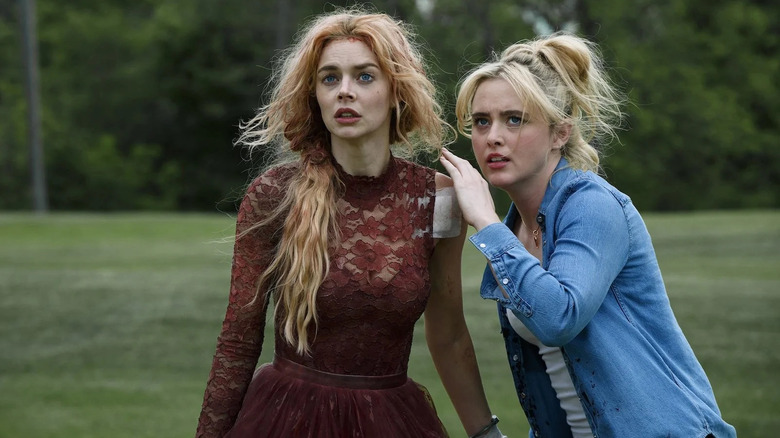
"Ready Or Not 2: Here I Come" starts immediately after the events of the first movie, and shows that exploding the elite is double the fun the second time around. Grace is joined by her estranged sister Faith (the perfectly cast Kathryn Newton), and the duo must now fight against all of the world's elite families, whose authority is in jeopardy as long as Grace and Faith are still alive.
I recently sat down with the directing duo to talk about jumping back into the beloved world they've created, pester them about why they continue to make movies with massive ensemble casts, and ask what messages they hope horror fans take away from this unflinching critique of class warfare. Let the game begin!
The Scream franchise prepared Radio Silence for Ready or Not 2
The last time we spoke, you were diving back into original horror storytelling with "Abigail" after having directed two sequels in the "Scream" franchise. Now you've got a foot in each of those worlds with this sequel to something that you've created. How has that impacted your process?
Bettinelli-Olpin: It's weird. We took a lot of what we learned from "Scream VI" in terms of — not specifics about the movie, but just mindset going into it when we were going into this. And what I mean by that is, when we went into "Scream VI," the idea was, "All right, we did 'Scream 5' and reset the franchise for a modern audience. Now let's do something that takes a wild left turn." So for this, we kind of had the same ethos where it was like, all right, we made "Ready or Not." We love "Ready Or Not," and we're so happy it's found an audience. Now let's not be precious about it at all and make sure that this does not rest on any laurels from that movie and that we can go into this being like, "This has to be a standalone movie."
The thing that we would say to each other and the producers and the writers, even before I think we fully believed it was, "If we're going to do this, it has to be as good as the first one or better, period. If it's not, there's no reason to make it." So we kept saying that until it felt true to us.
We've also talked before about the pressure that comes with working on a legacy franchise like "Scream," which has been around for decades now, but ["Ready or Not"] is something people hold very near and dear that you created. So it's your baby, but it's also, at the same time, not your baby, because once you put a movie out into the world, it becomes everybody else's.
Gillett: Totally.
Radio Silence knows how much people love Samara Weaving's Grace
So what sort of pressure, or was there no pressure at all, in revisiting this world, knowing how much Grace means to so many horror fans?
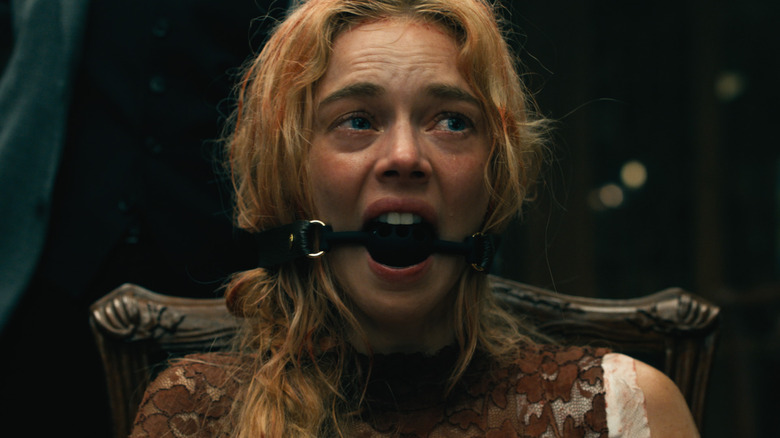
Gillett: I mean, I think there was certainly pressure in the sense of wanting to do that character justice and continue to do that character justice, because we're certainly aware of how people have personalized her and dress as her. But we also think that there's real opportunity in that. What's interesting about a character is, to us anyway, is that they're complicated, and that what you think you might know about them, there's more. That there's an offscreen story with every character. With Grace very specifically, I think what we wanted to do was explore what that might be.
Bettinelli-Olpin: Give her a flaw.
Gillett: Yeah. And in a way that complicates her and hopefully makes her, at the end of the day, not only feel heroic because of the trial that she survives multiple times over the first movie, and then of course in this one as well, but that there's something that she also has to solve for herself emotionally in this movie. We talked a lot about how the first movie is a love story and really tracks a relationship falling apart in the most genre way possible. And this one, we really talked a lot about that same sort of story, but inverse. It's a story that is about a relationship that's broken at the beginning, and it's really a romance. It's about these two characters falling back in love after many, many years apart and estranged. Hopefully there is as much heroism and beauty and catharsis in that as there is in just simply surviving.
Radio Silence knows the trick to directing ensemble casts
You both tend to make your lives a little bit more difficult by consistently having these large ensemble casts...
Gillett: Why do we do this? Why do we do this? [laughs]
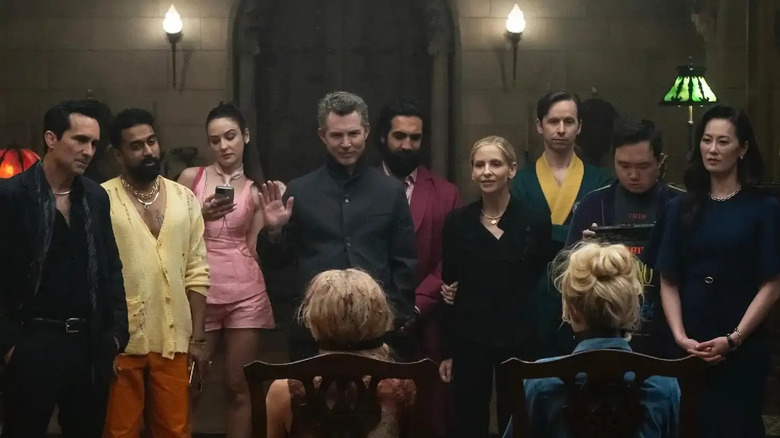
You're combining living legends of the genre that people love and new faces for people to fall in love with, and then pulling from your own rogues gallery. How do you make sure that all of these characters feel distinct enough for the audience to really attach themselves to them, while also ensuring that they all make sense within the world that you've created?
Bettinelli-Olpin: I mean, we spend a ton of time talking about exactly that. We don't want any characters that feel throwaway. If there's not something that makes them special and different than everybody else, then we usually cut that.
Gillett: They don't need to be in the movie.
Bettinelli-Olpin: There's no reason for them to be in the movie. And that happens a few times. It happens in the script, when we're working on the script with the guys. And then also, once the role gets cast, it's, "How do you make this yours? What makes this special for you so that you can really embody it?" I think for us, a lot of our casting, it's not like we watch a bunch of tapes and go like, "That person's great at this thing and that thing."
Gillett: I'm counting on my fingers the number of characters that we cut during development. I think we cut five people out of the ensemble over the –
Bettinelli-Olpin: Or six. Yeah.
Gillett: Five or six. And some of it is just specifically like, "But why do we need this character to do this thing when this could just belong to this character?"
Bettinelli-Olpin: A hundred percent. At the end of the day, it's that thing where it's like, and we've talked about this before, we want to make characters, whether it's Grace and Faith or a character that is only in a little bit of the movie and has two lines, really memorable and something that you might identify with. There's something for everybody. That you can have a moment where you go, "Oh, I get who that person is."
Gillett: There are legitimately two unnamed butlers –
Bettinelli-Olpin: — who have moments!
Gillett: ... in the movie, played by Sarah [Hillier] and Kevin [Enriquez], who have such great moments, and they are so specific and so in reaction to something so specific, but you understand so much about the world of the movie, the tone of the movie, and who those characters are by those very distinct moments.
Bettinelli-Olpin: Well, and the other thing I was just going to add is that, to your question about how do we do it, we talk to people and if they seem cool or we've seen them in something, that does a lot of it for us. It's not like, "Oh man, they didn't get that one moment." It's not about that. It's about the feel and the vibe. And hopefully you get a bunch of friends together and go, "I think you guys will all get along." It's not unlike that.
Gillett: Yeah. And I think it's f***ing listening. When talented people tell you, "Hey, I think I'm good at this thing, and I want to try it," f***ing listen to them because they will give you something wonderful, and it may not be what you had planned, but it will be honest. And that, at the end of the day, that's everything.
Radio Silence geeked out about directing David Cronenberg
I'm so glad that you brought up the tone because you already know that the tone of the movies that you make really resonates with me. It's exactly what I want. And I love that we're on this precipice right now in the genre where I think fun horror is making a resurgence, but it's fun horror that doesn't sacrifice still saying something important. So, where do you find that balance for yourselves of making sure that this is still an absolute blast to watch in the theaters with a ton of people, but at the same time, you are still saying something about these powerful systems?
Bettinelli-Olpin: It's not very subtle! [laughs]
Gillett: You are absolutely saying everything that we hope people feel and understand about this movie, but all of our work. I think that the idea that because something is entertaining or fun, that it doesn't have a message is absolutely crazy to us. In fact, we think quite the opposite: That sometimes the things that are the most fun and the most entertaining actually have the deepest meaning, and certainly maybe are significant in that they let you in and you let them in. Because you're entertained, you might understand or get to experience a perspective that if the movie was declaring its message on a soapbox, you would just tune it out and shut off.
I think we're also just so surrounded by the message all of the time now that to find a way to make a movie that has something to say, but is also an escape from the megaphone that I think we're all just, the noise of that is so exhausting, and it's so ever-present that hopefully ... I think the real challenge for us, and I think the real work that we do, is finding a way to make all of that exist in something that is just really a f***ing great time at the end of the day.
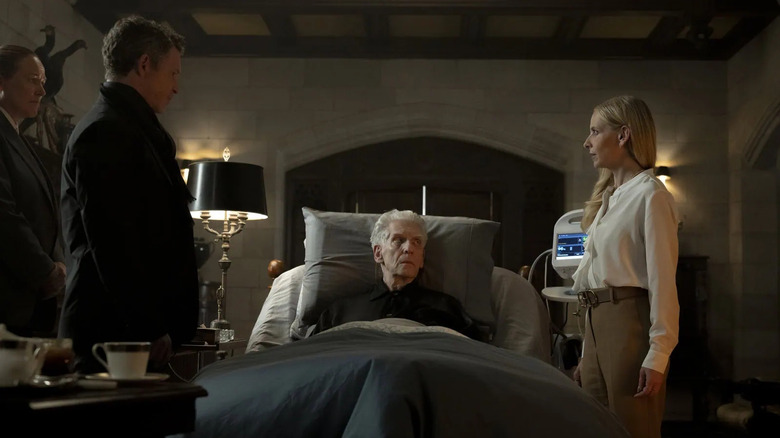
And one of the people responsible for that is David Cronenberg. You directed David Cronenberg! [laughs]
Gillett: Did we, though? Is that not something you dreamed? Is that a thing that actually happened? [laughs]
Bettinelli-Olpin: Yes. No, I mean, it's one of those things where we're pinching ourselves that it even happened. He was so welcoming. He was so kind. It was like we'd walk out, and I remember Elijah [Wood] was there shooting a lot of it, and so we're hanging out by the monitors, and he has to go act with him, and we have to go direct him. And it's like, "Okay, here we go." It's like, "Oh, hello, sir." But he's obviously been doing it for so long, and he knows the effect he has on us. So he was very disarming and like, "Just tell me what you need."
Gillett: I can't remember if we were both standing there, but he said to me, he was like, "You guys run a really lovely set." And I was like, "Okay, cool. I'm going to go barf now." [laughs]
Bettinelli-Olpin: Yeah. I know. Absolutely. 100%. [laughs]
Above all else, Radio Silence wants you to have a good time
This movie is so much fun. All the movies you make are so much fun. That's not a question. It's just a compliment. But what sort of feelings are you hoping the audience is feeling once they leave the theater and they're in the lobby chit-chatting with everybody else who just saw it?
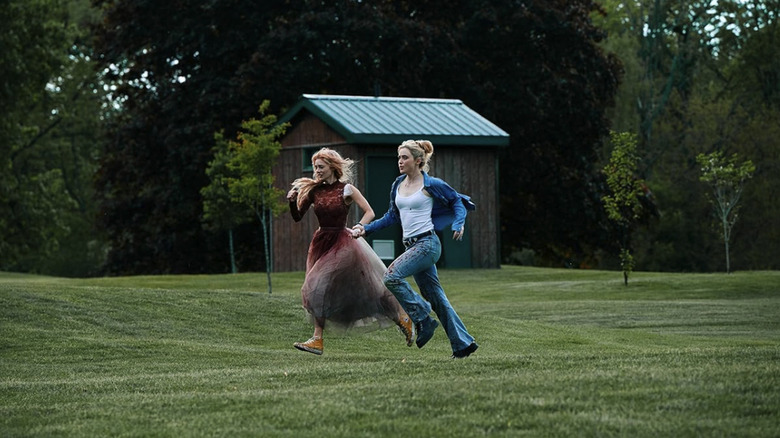
Bettinelli-Olpin: Oh, I love that question. We talk about that all the time, because we want people to be buzzing and not because "that one thing was shocking" or whatever, but come out feeling the catharsis that we hope you feel at the end of this. This is one of those movies where it's like, yes, it's a horror movie and it's also kind of an action movie, but at the end of the day, it's like what Tyler was saying earlier, it's really a love story, and we want you to come out with that feeling of like, "Oh, that was such a good time. I'm so happy."
Gillett: "I feel so emotional. Why do I want to hug my sister or my brother, call my friends and tell them I love them?"
Bettinelli-Olpin: We try to sneak in emotions.
Gillett: I also think on just a pure experience level, though, one of the things that people have said about the first movie and we hope they will also say about this is just the sort of recapping in your head of like, "What the f*** was that? No, that moment. Wait, that also happened. Oh my God, that person exploded. Wait, they killed that whole...?" Hopefully, there is a relentlessness to the pacing and the story of this movie that people, we sort of talk about that the movie kind of happens to you because it just has such an energy, and it's so loud and there is no off-ramp. I know there was an early screening where one person got up to go to the bathroom during a scene that felt quiet, and it was emotional and enough of a break that you'd have time to get up and go to the bathroom. And by the time they'd come back in –
Bettinelli-Olpin: It was the mace fight.
Gillett: Yeah. The brides were starting to beat the s*** out of each other. And this person just looked at the screen and was like –
Bettinelli-Olpin: You could see the confusion of like –
Gillett: "How'd we get from here to here in a matter of two and a half minutes?" But I think the experience of just the ride of it, not to be overly reductive, there's something ... we love that. We love the energy of a movie that sort of takes hold of you really early on and just shakes you through the experience.
"Ready Or Not 2: Here I Come" is now playing in theaters everywhere.