

Who Is Hayt? Jason Momoa's New Dune 3 Character Explained
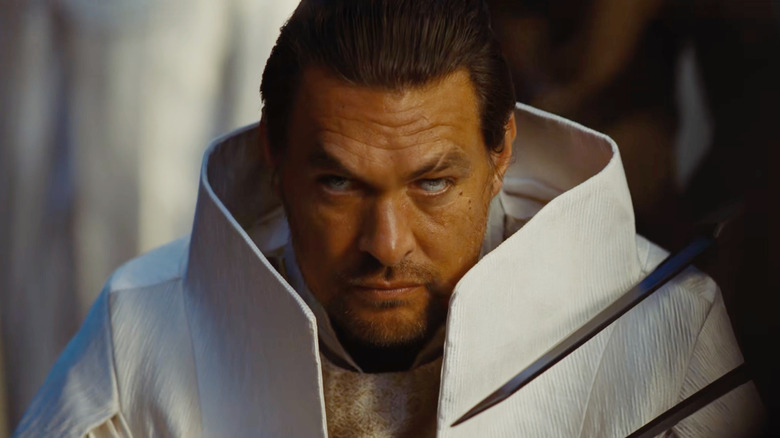
Who doesn't love Jason Momoa's Duncan Idaho? His final moments in "Dune: Part One," spent defending his lord Paul Atreides (Timothée Chalamet), felt like the ushering out of a hero. Idaho's memory is cherished in "Dune: Part Two," but he remains, well, dead. Then, hey presto! Everything changed when the first look images and posters for "Dune: Part Three" dropped and there was Momoa again, bright and bushy-eyed (or maybe that's not the right word to use for his eyes, but more on that in a minute). Now the first trailer for director Denis Villeneuve's third and final (?) "Dune" film has been released, and Momoa is clearly in the spotlight again — and not just as a flashback.
If you're wondering what the heck is going on, I get it. Remember, we're talking about sci-fi here. There are no rules. The "Dune" universe is a place where Uber has been replaced by sandworms and drugged humans guide ships through space. For all of the predictably human elements of author Frank Herbert's original "Dune" novels, there are plenty of otherworldly elements, one of which is Duncan Idaho's semi-return as the character Hayt.
The short and simple explanation for Momoa's "Dune: Part Three" character is that he isn't the Duncan Idaho we know and love. Rather, Hayt is a resurrected and weaponized iteration of the original Idaho who exists for a wholly different purpose: assassination.
Hayt is a ghola who doesn't have Duncan Idaho's memories (sort of)
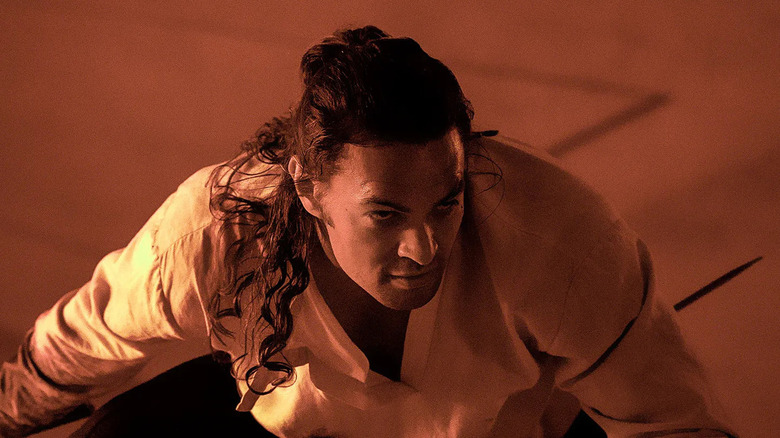
"Dune: Part Three" will highlight an important race from Frank Herbert's "Dune" books: the Bene Tleilax. This disturbing group of humans is known for their genetic engineering, which they use on themselves as well as others. Most infamously, they're known for creating gholas.
Herbert's novel "Dune Messiah" (the primary source material for "Dune: Part Three") describes Duncan Idaho's ghola, Hayt, as follows:
"This was a Tleilaxu ghola, a being reconstructed from the dead flesh of the original. That original had perished saving Paul. This could only be a product of the axolotl tanks."
Gholas are designed to be blank replicas that are mostly identical to the original host, yet they're identifiable by the fact that they have cold, metal eyes. This is why Idaho's ghola is given a different name. He is a distinctly different character from the original Idaho.
Hayt is also not supposed to have Idaho's original memories. However, when he meets Paul in "Dune Messiah," he clarifies:
"I know nothing of my past for sure, my Lord. It was explained that I can have no memory of my former life. All that remains from before is the pattern set by the genes. There are, however, niches into which once-familiar things may fit. There are voices, places, foods, faces, sounds, actions — a sword in my hand, the controls of a 'thopter ..."
So, in Herbert's typical blend of the scientific and mythic, Hayt technically doesn't have the original Idaho's memories, yet they're still there, in a sense, in the "pattern" of his flesh — and they're pushing to flood his mind with Idaho's remembrances and loyalties. This creates a tension in the plot between the ghola's technically unknown past and his present purpose.
What is Hayt's role in Dune 3?
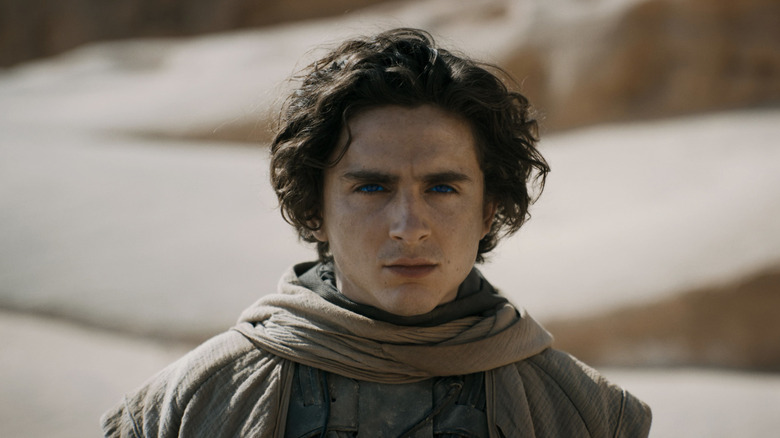
Duncan Idaho is one of the feel-good elements of "Dune: Part One." He's fun, loyal, brave, and ready to sacrifice himself. Hayt is bred to be the opposite. He is trained as a swordsman and mentat with the primary purpose to assassinate Paul. In "Dune Messiah," the character Scytale (played by Robert Pattinson in "Dune: Part Three") mentions that Hayt is "a multi-purpose ghola" who is also designed to distract Paul's sister, Alia (Anya Taylor-Joy).
This, combined with Hayt's nagging memories of Idaho's loyalty, create a wild tension in the story, which plays a key role in the third act of "Messiah." It seems director Denis Villeneuve is ready to push the character in that direction, too. At a "Dune: Part Three" press event that /Film participated in, Jason Momoa asked the director why he killed his character off in "Dune: Part One" and brought him back for "Part Three." Here's how Villeneuve responded:
"[It's] Frank Herbert's genius. The idea is that I think he created that tremendous, charismatic character that our heart was broken seeing him falling in the first one, and then [we have] the desire to see him back. And he comes back just at the right moment in the story. And it's like a very, very important comeback. Paul is struggling [...] and having that kind of strong Atreides figure coming back from the past will have a tremendous impact. That's what I will say. And I will look forward to ... I will say he's fully back."
Those words "fully back" could carry more weight than they seem, if Hayt's inner struggle from "Messiah" has any bearing on the film adaptation. But it's a detail that will have to wait until "Dune: Part Three" hits theaters on December 18, 2026.