

5 Forgotten '60s Sci-Fi Movies That Still Hold Up Today
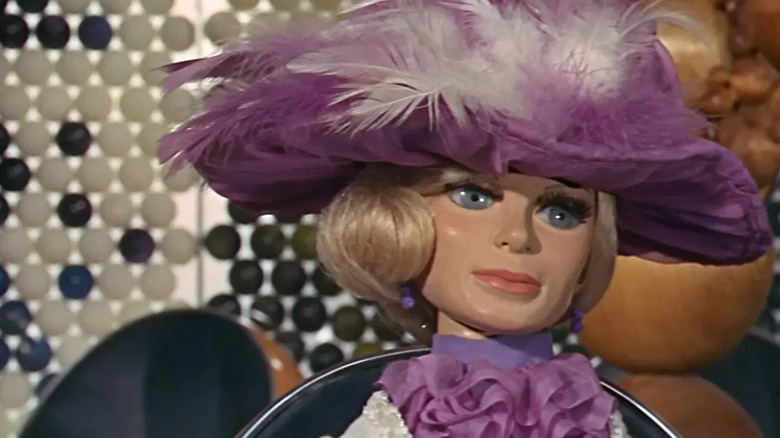
In the 1960s, filmed science fiction began to bound forward in many fascinating ways. One might immediately think of Gene Roddenberry's 1966 TV series "Star Trek," a utopian text that envisioned a future (on whatever budget it could muster) wherein humanity had overcome war and prejudice, and now worked together in harmony on board a fleet of faster-than-light starships, committing acts of diplomacy and discovery.
One might think of the psychedelic cosmic exploration of Stanley Kubrick's 1968 film "2001: A Space Odyssey," a film that argued that, in traveling to space, humanity had just started to officially enter its evolutionary infancy. One might even think of the bitter satire of Franklin Schaffner's "Planet of the Apes" from the same year, which posited a sideways world wherein apes and humans had transposed places. One might even think of Jean-Luc Godard's strange psycho-noir "Alphaville," Roger Vadim's sexy fantasy "Barbarella," or Ishiro Honda's "Destroy All Monsters" as some of the finest examples of 1960s sci-fi out there. Sci-fi had gotten both experimental and thoughtful, and VFX tech made it all look slick, strange, and gorgeous. Big budget or small.
But we're not here to tell you about the movies you know. We're here to delve a little deeper. The following films might be a little more obscure, but they are definitely all worth a look. There's a space opera, a monster movie, a straight-up skin flick, an experimental opening salvo from an important filmmaker, and even a kid-friendly puppet movie on the list. Sci-fi is a wide-ranging genre, so it can incorporate the classics above just as easily as the oddities below. Read on and take notes, and maybe line up some of the following movies for your next party.
Nude on the Moon (1961)
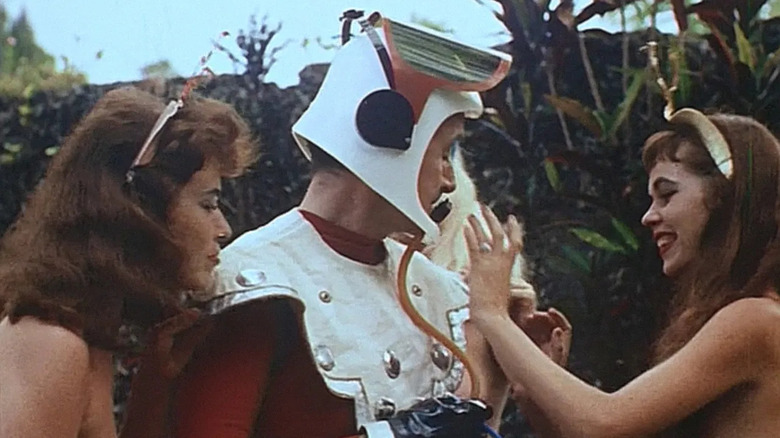
Doris Wishman's 1961 film "Nude on the Moon" does not mislead you with its title. The plot follows a horny astronaut named Dr. Jeff Huntley (Lester Brown) who uses a recent inheritance to build a rocket to the moon. He and a buddy (William Mayer) travel to the moon in cheap-looking space suits and land in an area that looks suspiciously like Coral Castle, a tourist attraction in Homestead, Florida. The moon is populated by a species of human-looking psychic women who, as the title notes, do not wear clothes. They communicate via telepathy, which means none of the actresses are seen actually speaking their dialogue; it's all achieved through ADR. It was hard to find a safe-for-work-appropriate screen capture from "Nude on the Moon," as it is pretty much just nudity throughout.
On one level, "Nude on the Moon" is barely one step removed from the titillation nudist reels that would sometimes sneak their way into grindhouses and adult theaters of the era. But on another, filmmaker Doris Wishman (who co-wrote the screenplay under the pseudonym O.O. Miller) added a striking amount of eerily human sensitivity into her breast odyssey. It's actually about the emotional journey of the queen of the moon women (Marietta), and how she relates to the men around her.
If someone were to walk in on you watching "Nude on the Moon," they might assume you're just having a little prurient fun, but the film is too thoughtful ... and way too strange ... to dismiss as a work of mere titillation. Doris Wishman continued to make exploitation movies into the 2000s, and passed in 2002 at the age of 90. She was frank and awesome and her movies deserve discovery.
Matango (1963)

Some American readers may be tempted to dismiss Ishiro Honda's horror movie "Matango" as goofy fluff, largely because it initially aired on TV in the United States with the much sillier title "Attack of the Mushroom People." This is no larf, however. Indeed, "Matango" is bleak, disturbing, and Lovecraftian in its setup. It opens in a mental institution wherein the one survivor of the film's events recounts everything that led him there.
It seems that he and a group of tourists were on a yacht at sea when they shipwrecked on a lost tropical island. The island is populated by a malignant species of massive, quick-growing mushrooms that they have never seen before. They also find an abandoned nuclear ship, which may have something to do with the mushrooms. No points for guessing that they'll be attacked by a lumpen-faced mushroom being.
Or will they? This is a sweaty, paranoid film. Some of the characters are exposed to or eat the hallucinogenic mushrooms, and begin threatening acts of violence and villainy on one another. And the mushrooms seem to be addictive. They take over your brains. Maybe you become a humanoid mushroom, your brain rotted from the inside. Everyone is falling apart. It's a nightmare. The premise might have one picturing a lighthearted monster adventure along the lines of Honda's many Godzilla movies, but "Matango" is terrifying. Nature will have her way. Humans are but fodder for the growth of the natural world. And how much, really, did the mushrooms alter us when it turned us into violent, mad creatures? It's heavy, heavy stuff.
One can see why Ishiro Honda and Akira Kurosawa became friends.
Planet of the Vampires (1965)
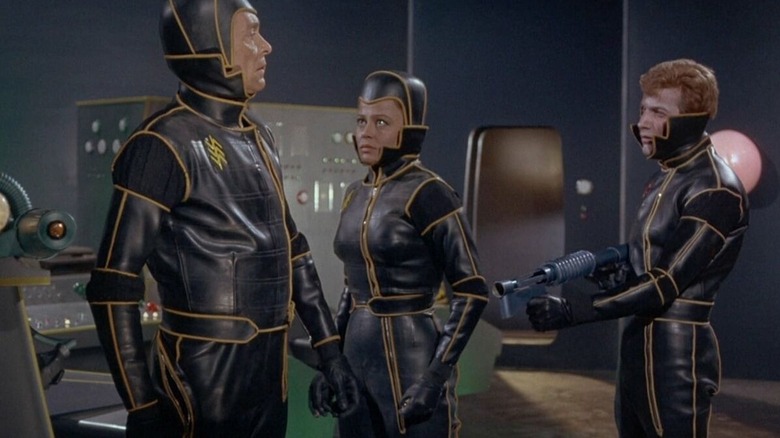
Mario Bava's "Planet of the Vampires" will look eerily familiar, as it likely came to influence the ideas and the design of later sci-fi classics like "Alien." "Planet of the Vampires" takes place on a pair of exploratory starships in the distant future that have landed on a mist-shrouded planet far off in deep space. Bava's use of color is impressive, and the brightly shining mists are a glorious sight indeed. Barry Sullivan plays Captain Markary, and he and his crew go out onto the planet, only to discover that the mist — like in "Matango" — takes over human brains and forces them to become cruel and violent.
"Planet of the Vampires" doesn't have fanged bloodsuckers as the title might have you believe, but reads more like a ghost story. And an eerie one at that. There is a scary scene I remember seeing in my youth wherein an astronaut tries to break into a room full of corpses, only to check again and see that the corpses have vanished.
There is a pulp quality to "Planet of the Vampires" that will excite readers of EC comics, and introduce a younger viewer to the glories of colorful Eurotrash. It's a little slow moving, but it's all in service of a thick, scary atmosphere that is one part haunted house, three parts sci-fi mystery. If you have ever seen a gloriously painted sci-fi movie poster, only to watch the movie and find that the poster was way more salacious and exciting than the movie itself, you won't be disappointed with "Planet of the Vampires." It looks like the poster came to life.
Thunderbird 6 (1968)
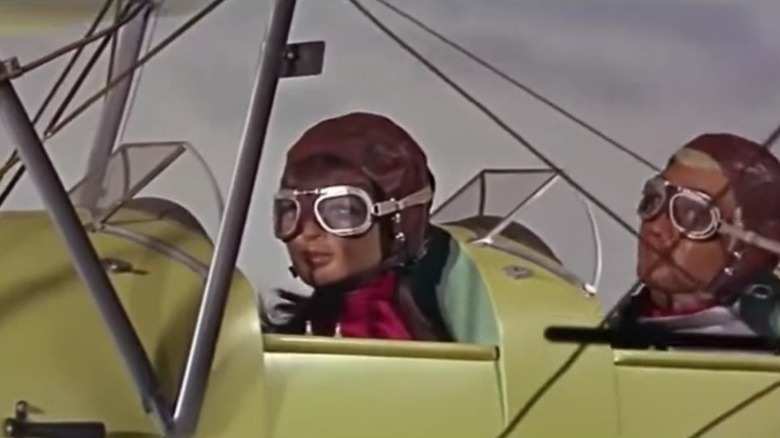
Gerry and Sylvia Anderson's TV series "Thunderbirds" debuted on British television back in 1965, and lasted 32 episodes over its two seasons. "Thunderbirds," along with many other Anderson productions, was filmed in Supermarionation, which was the couple's way of branding their unique form of puppet-based entertainment. The characters were all barely articulate marionettes, and they were filmed on miniature sets. Closeups of people's hands, however, were achieved with real, live-action actors, giving the puppets an eerily lifelike reality. "Thunderbirds" was about a team of freelance emergency personnel, International Rescue, who used the power of their five high-powered super-vehicles to aid people in crisis. The pilots, nicknamed Thunderbirds like their vehicles, were all brothers belonging to the Tracy family. They lived in a posh, high-tech mansion on a faraway island.
In 1966, the first "Thunderbirds" movie, "Thunderbirds Are Go," hit theaters, and it's a gloriously strange film with a lot of vehicle obsession, a fun James Bond-like plot, and a musical number. The follow-up, though, "Thunderbird 6," is, for my money, the better movie. The premise is that the Thunderbirds have been getting along fine with their five central vehicles, but it's high time the team expanded to include a Thunderbird 6. Brains (David Graham) has to design one, but no one has any idea what it should be.
The plot involves the fate of a giant airship, Skyship One, and an evil saboteur who would steal its secrets. It's Saturday morning hooey, that plot, but it functions. More than anything, it's a childlike delight to see the puppets talking and interacting, and all toy-collecting kids will get a kick out of all the flying and soaring vehicles. It's a pure, bubbly delight.
Stereo (Tile 3B of a CAEE Educational Mosaic) (1969)
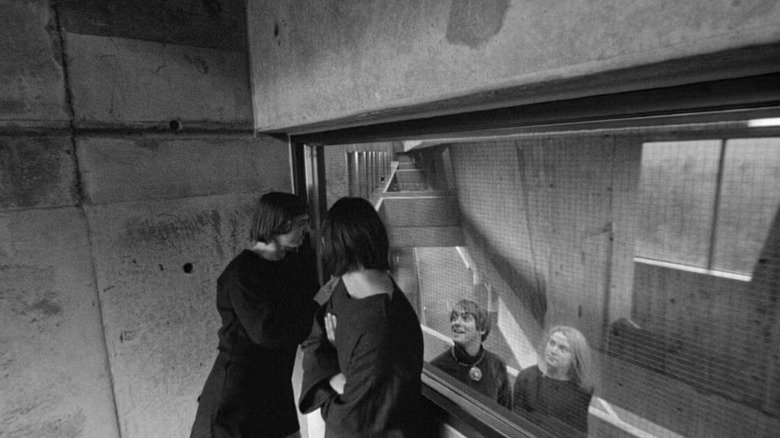
David Cronenberg's debut film, "Stereo (Tile 3B of a CAEE Educational Mosaic)," laid out the filmmaker's interests right away. Cronenberg has always had an eye for the eerie and is very keen on notions of addiction, obsession, and the way our fixations can transform our bodies and our surroundings. Most of his movies have an unusual, non-real conceit at their center (a brainwashing TV signal, a virus, a sexual proclivity no one has, an obsession with bodies and surgery, a hard look at death) and surround characters who explore that conceit, as well as the strange, unknown conspirators who seem to know more about everything than the protagonists ever could.
"Stereo" is presented as a collected mosaic of found footage uncovered by the fictional Canadian Academy of Erotic Enquiry. It involves, in a dreamlike way, some kind of medical experiment wherein subjects are endowed with psychic powers as a means of getting more sexual with each other. The idea is that if more people were psychically sexual, everyone would live in blissful polyamorous enclaves. The experiment ends up working a little too well, and everything ends in tragedy.
Shot in a glimmering black-and-white and suffused with a leisurely pace, "Stereo" is difficult, and may be maddening to some people. In many ways, it's the full realization of Gene Roddenberry's "Star Trek" free love ideal, but presented as being rife with dystopian possibilities. Every utopia, Cronenberg seems to argue, will be ripped apart by people afraid to let it happen. And we can't be sure if a utopia is a good thing, or just a new thing we haven't tried yet. "Stereo" may feel sloppy and a little amateurish at times, but Cronenberg was a master right out of the gate.