

Why Batman Villain Poison Ivy Only Exists Because Of The Adam West Show
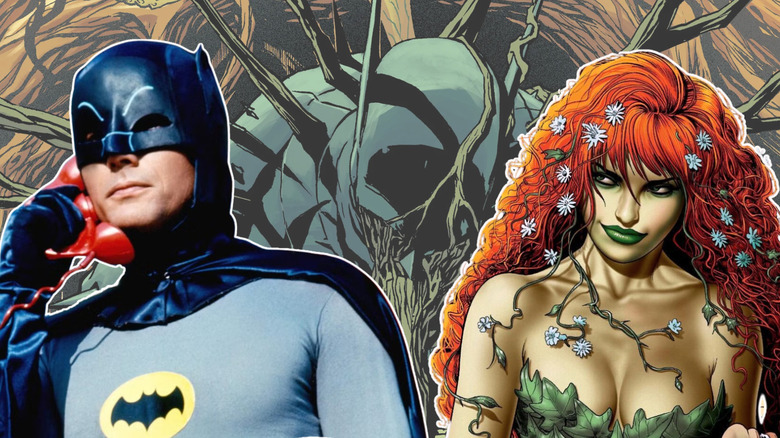
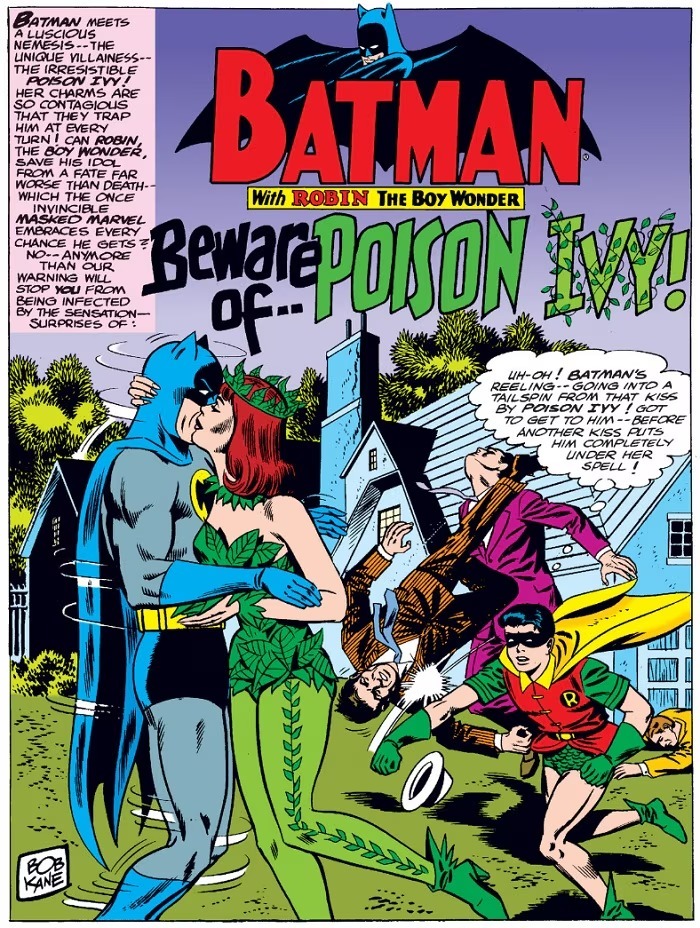
The floral femme fatale Poison Ivy debuted in 1966's "Batman" #181, the same year that the "Batman" TV series starring Adam West hit the air. While Ivy never appeared on the show, she owes her existence to it. Ivy was co-created by writers Sheldon Moldoff, Robert Kanigher, and artist Carmine Infantino, all prolific part of DC's Silver Age stable of writers and artists.
In a 2007 interview, Infantino revealed Ivy was created due to the popularity of Julie Newmar's Catwoman on "Batman." "They wanted more female villains [for Batman]," Infantino recounted. (He also later co-created a new female sidekick for Batman, Barbara Gordon/Batgirl, in an unsuccessful attempt to save "Batman" from cancellation.) Indeed, in Ivy's debut issue, her goal is to become the no. 1 female villain of Gotham City, against rivals like Dragon Fly, Silken Spider, Tiger Moth.
Nowadays, Ivy has superpowered control over flora and is an eco-terrorist who cares more for plant life than humans. But in her debut, she's a simple criminal. The plant motif is almost incidental to her name; she looks pretty, but if you get close, she'll sting you. The one unnatural power she displays (besides chloroform lipstick) is briefly scaling a wall, the way that real poison ivy plants climb up trees as they grow.
As she was made in Catwoman's image, Ivy is initially infatuated with Batman. Her charms affected the Caped Crusader so much that Robin has to keep Batman from falling into Ivy's waiting arms.
 DC Comics
Poison Ivy's powers slowly became more plant- and toxin-themed — from vine whips to poison darts — while at the same time she also became less of a crime boss and more of a mad botanist.
Poison Ivy's evolution across DC's Batman comics
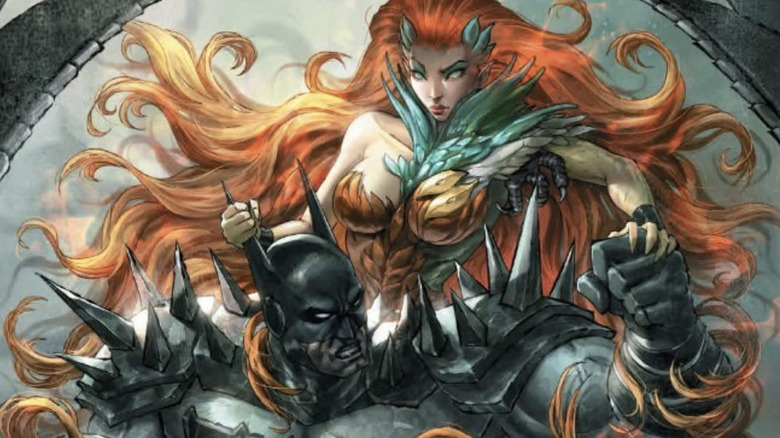
In "World's Finest" #252-253 (written by Gerry Conway and drawn by Jack Abel), it was revealed that Poison Ivy had been imbued with natural immunity to poisons by mystical herbs after an ex-lover tried to kill her. She'd then transformed him into a wood-skinned henchman called Redwood, one of many half-animal, half-plant monsters Ivy has cooked up since.
The modern Ivy first takes root in 1986's "Pavane" (by Neil Gaiman and Mark Buckingham, published in "Secret Origins" #36) which revised her backstory. Pamela Isley was a lonely rich girl who only found companionship by tending plants. In college, she fell for her professor, Dr. Jason Woodrue (future super-villain The Floronic Man), who used her as a test subject for poison immunity. Let down by men throughout her life, she fell for Batman from a distance and became Poison Ivy in order to claim him as hers.
Gaiman tied Ivy to Alan Moore's "Swamp Thing" by revealing she is connected to "The Green," the embodiment of Earth's plant life. Thus, Ivy can bend plants to her telepathic will, and she regards plant as peers because when she talks to her flowers, they talk back.
Poison Ivy (Diane Pershing) was a prominent villain on "Batman: The Animated Series." While I'm partial to the "Body Snatchers"-esque "House and Garden," her most important episode is "Harley and Ivy," which paired her up with Harley Quinn (Arleen Sorkin). Thirty years of stories later, Harley and Ivy have evolved from girlfriends to girlfriends.
It's not just her relationship with Harley that has humanized Ivy; her radical acts to defend nature start to seem more sympathic as humans keep inflicting damage on the natural world. Poison Ivy is even currently starring in her own comic, written by G. Willow Wilson.
Absolute Batman's Poison Ivy is the freakiest yet
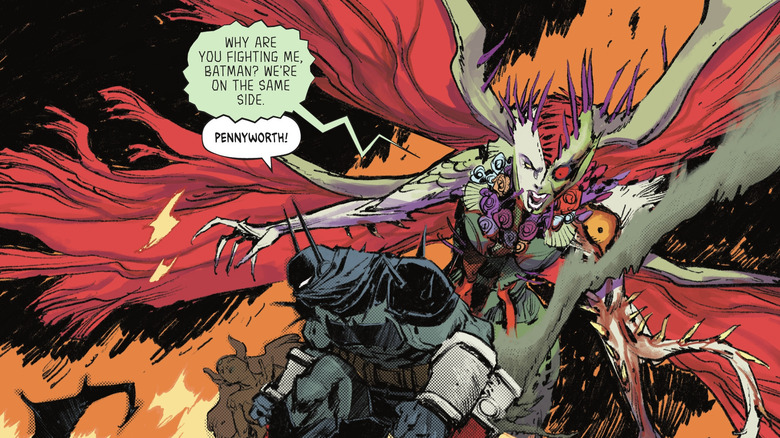
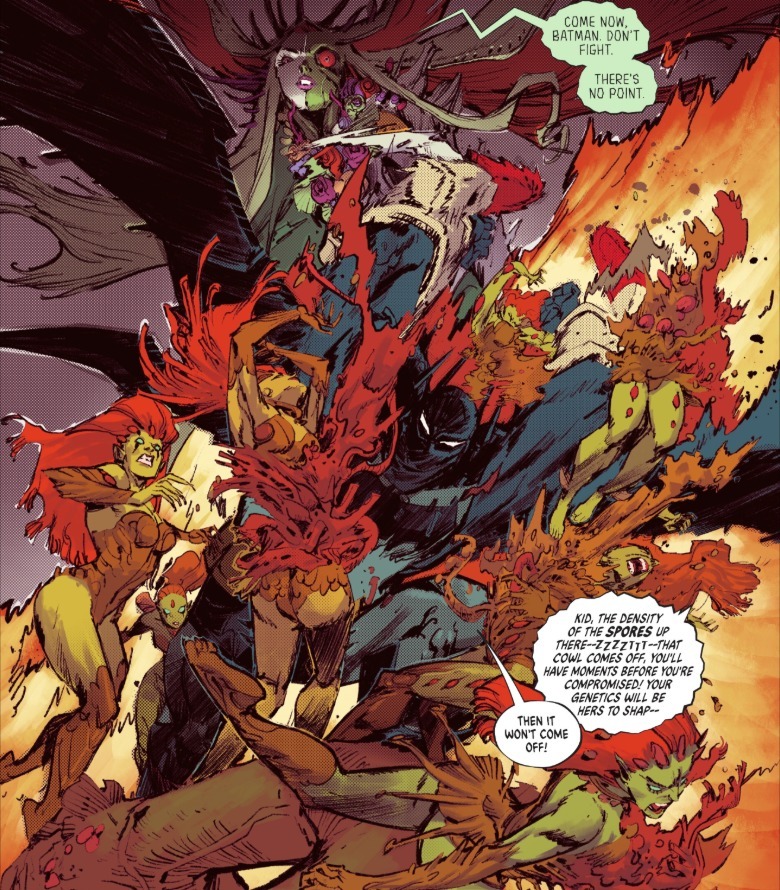
Ivy's origins as a femme fatale haven't completely faded. Even as her body blurs the line between plant and person, she rarely loses sexy features like her buxom figure or luscious red hair. At least, not until her most recent reinvention in Scott Snyder's "Absolute Batman," a horror story dressed up as a superhero comic. In "Absolute Batman" #17-18, "The Seventh Kingdom," Snyder and guest artist Eric Canete go straight into body horror with Poison Ivy.
 DC Comics
"Absolute" Pamela Isley, working on combining plant and animal DNA to cure her terminally ill mother, died in a lab fire. Her body, reduced to a mutated heart, grew into a new, chimeric form. Biology says life has six kingdoms, but Poison Ivy is the harbinger of a seventh that takes characteristics of all the others. Her primary body, which features not just plant growths but bird-like feathers and wings, is asymmetrical. Half her head is white, the other green, and along the border, a toothy jaw opens. Her name may be "Poison Ivy," but she's got the mouth of a venus flytrap.
Lacking Ivy's traditional sexuality, she tries to "seduce" Bruce by convincing him they both want to tear down the evil men (like Jack "Joker" Grimm) who rule the world. "Be my knight," she says. Ivy's mutations and her creations represent change, mirroring the kind that Batman wants to bring. As he defeats Ivy by targeting her still-human heart, Bruce concludes he might need to bury his own to be the hero Gotham needs.
"Absolute Batman" is miles apart from Adam West's "Batman," but that show's influence remains so great that it even manifests in invisible ways. There wouldn't be a Poison Ivy to reinvent without it.