

Harry Potter: Sirius Black's Family Tree Explained
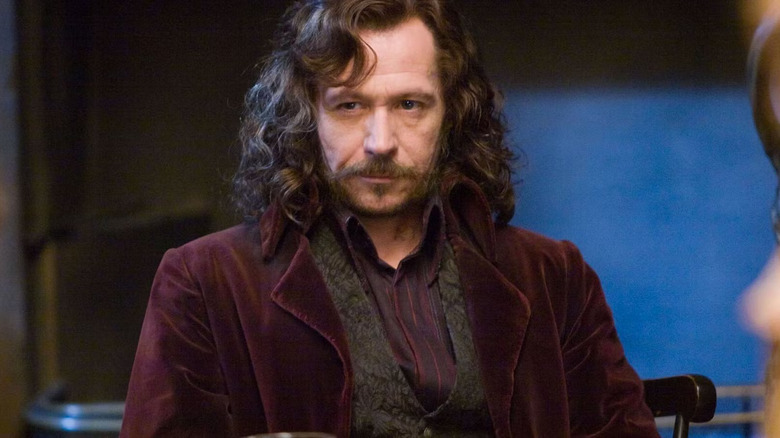
The wizarding world of "Harry Potter" created by original series author Joanne "J.K." Rowling is quite vast, and a major divide amongst magical families in this particular part of the world — England and Scotland, specifically — has to do with the "purity" of their bloodlines. So what of the House of Black, an ancient and particularly, uh, "pure" magical family with the motto "toujours pur," which, in French, means "the most pure?" They're pretty hard-line about all of this, as you can imagine ... except for Sirius Black.
This major "Harry Potter" character and godfather to the titular boy wizard (portrayed by Daniel Radcliffe in the films) is the "black" sheep of his family, so to speak ... and when we first meet him on the big screen in the third movie "Harry Potter and the Prisoner of Azkaban," he's an alleged convict on the run (and played by Gary Oldman). In both the books and movies, Sirius is initially introduced as an antagonist, only for readers and audiences to discover — decades-old spoiler alert! — that Sirius didn't betray Harry's parents to the Dark Lord Voldemort (Ralph Fiennes). That was actually the work of another longtime Potter family friend, Peter Pettigrew (Timothy Spall), but it sends Sirius into hiding and ostensibly leaves the Black family line in tatters. (James Potter, Sirius, Peter, and their friend Remus Lupin, played by David Thewlis, were all members of the Marauders, a group whose full storyline was cut from the films.)
So what of that Black family line? How far back into wizarding history does it go, and does it continue even after — another decades-old spoiler alert! — Sirius meets an untimely end in the fifth book and film "Harry Potter and the Order of the Phoenix?" Allow me to break it all down.
The House of Black claims to date back to the medieval wizarding world ... and leans towards the dark side
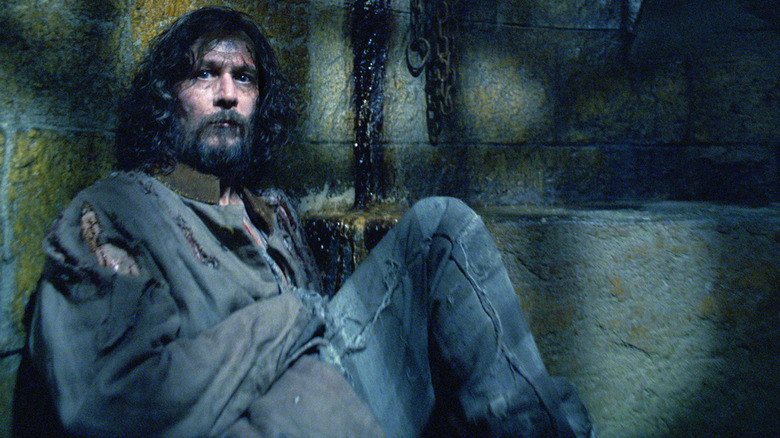
When it comes to ancient wizarding families with the "purest blood," there's a list known as the Sacred Twenty-Eight, and yes, that absolutely includes the Black family. So how do we know how far the line goes back? In "Harry Potter and the Prisoner of Azkaban," Harry inspects the Black family tapestry with Sirius, which Sirius muses that his late mother must have permanently affixed to the wall of 12 Grimmauld Place with a charm that cannot be undone. As we learn from Harry, "The tapestry looked immensely old; it was faded and looked as though doxies had gnawed it in places; nevertheless, the golden thread with which it was embroidered still glinted brightly enough to show them a sprawling family tree dating back (as far as Harry could tell) to the Middle Ages."
Sirius goes through the tapestry with Harry, giving shout-outs to some of his relatives — nearly all of whom sound absolutely awful. "I haven't looked at this for years," Sirius muses before continuing:
"There's Phineas Nigellus . . . my great-great-grandfather, see? Least popular headmaster Hogwarts ever had . . . and Araminta Meliflua . . . cousin of my mother's . . . tried to force through a Ministry Bill to make Muggle-hunting legal . . . and dear Aunt Elladora . . . she started the family tradition of beheading house-elves when they got too old to carry tea trays . . . of course, anytime the family produced someone halfway decent they were disowned."
We meet Phineas Nigellus again through his portrait — but more importantly, there are some other big names on that tapestry.
Several wizarding families are intertwined with the House of Black
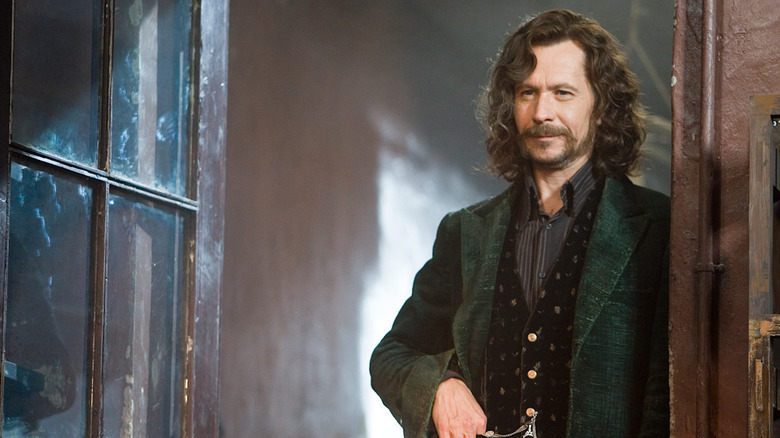
When Sirius mentions that Grimmauld Place's resident house-elf Kreacher won't obey orders given by Auror and Harry's new friend Nymphadora Tonks (played by Natalia Tena in the film series), Harry is surprised to learn that Tonks and Sirius are related. Sirius says that Tonks' mother, Andromeda, was his "favorite cousin" but quickly points out that she's been removed from the tapestry by Walburga, Sirius's late mother whose living portrait terrorizes the creaky old house. He then explains to Harry, after Harry sees the names Malfoy and Lestrange elsewhere on the tapestry and realizes that Sirius is related to his school nemesis Draco Malfoy (Tom Felton) and notorious Dark wizard Bellatrix Lestrange (Helena Bonham Carter), Sirius explains:
"The pure-blood families are all interrelated. If you're only going to let your sons and daughters marry purebloods your choice is very limited, there are hardly any of us left. Molly [Weasley, portrayed by Julie Walters in the films] and I are cousins by marriage and Arthur's something like my second cousin once removed. But there's no point looking for them on here — if ever a family was a bunch of blood traitors it's the Weasleys."
Ultimately, Sirius thinks very little of his family and his lineage, particularly because of the fact that said family's political beliefs about blood purity were objectively bad and gross ("They thought Voldemort had the right idea, they were all for the purification of the Wizarding race, getting rid of Muggle-borns and having purebloods in charge," he tells Harry). Here's something he doesn't address, though: he's the third Sirius Black in the family.
There are actually multiple Sirius Blacks in the history of House Black
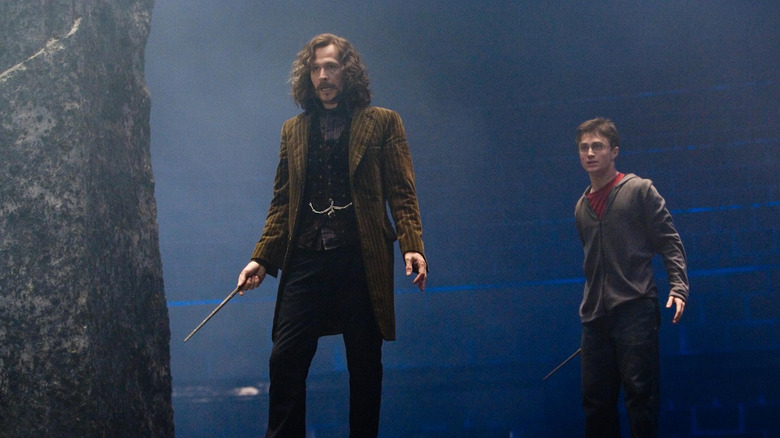
The Sirius Black we know and love from the "Harry Potter" books and movies isn't the first or second of that name; he's actually the third. On the tapestry, there's a first Sirius Black, who was actually the brother of the aforementioned jerk Phineas Nigellus. That Sirius passed away when he was just a kid, which you can see if you really get a good look at the tapestry in the film.
That's probably why Phineas Nigellus named his own son Sirius Black as well, who also shows up on the tapestry in the film and is briefly mentioned in the video game "Hogwarts: Legacy." During Phineas Nigellus' tenure as a probably widely disliked Hogwarts headmaster, the second Sirius was a student at the school; later, he becomes the only Sirius Black in the family's history to continue the line by having children. So what happened to cause this "ancient and noble family" to almost die out entirely?
Sirius and his brother Regulus Black's deaths nearly ended the lineage of House Black
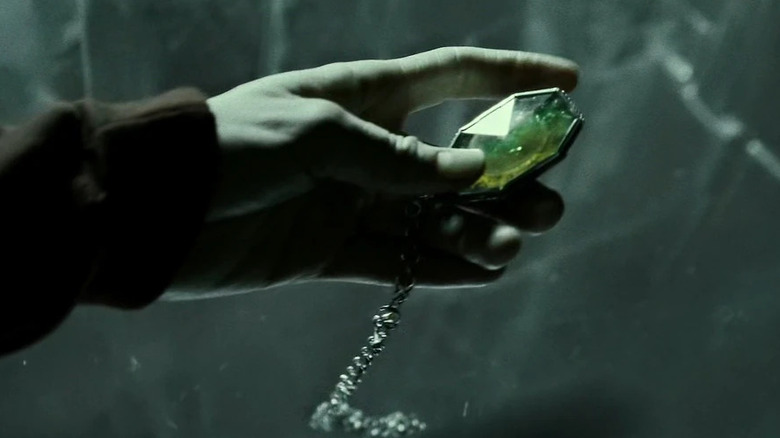
In case you forgot, here's what happened to both Sirius and his brother, Regulus Arcturus Black. In "Order of the Phoenix," Sirius mentions that Regulus died years earlier after becoming a Death Eater (a Dark wizard in Voldemort's service), but he doesn't actually know the whole story ... and neither, at this point, does Harry. Ultimately, in the final book "Harry Potter and the Deathly Hallows" (split into two parts on-screen), Harry learns the truth from Kreacher, who remains unfailingly loyal to Regulus, his lost master. Regulus actually turned on Voldemort and stole one of his Horcruxes, items that contained chunks of the Dark Lord's soul (in this case, it's a locket that once belonged to the Slytherin family), and replaced it in its hiding spot with a fake. Sadly, in the process, Regulus was killed by Inferi in the lake guarding the locket.
Sirius, on the other hand, is killed by his own cousin Bellatrix. In "Order of the Phoenix," Voldemort uses the fact that he and Harry often experience shared visions to trick him into going to the Department of Mysteries in the Ministry of Magic, specifically so that Harry can access a prophecy containing the two of them. The vision that Voldemort conjures is of an injured Sirius in the Department of Mysteries, so Harry rushes there, only to discover that it's a ruse. Sirius and members of the resistance group, the titular Order of the Phoenix, arrive to help ... but during the fight, Bellatrix hits Sirius with a killing curse and knocks him through a mysterious veil, ending his story. So how does the Black family line continue without Sirius and Regulus? Through relatives, of course!
There are still some wizards in Harry Potter who can trace their roots to the House of Black
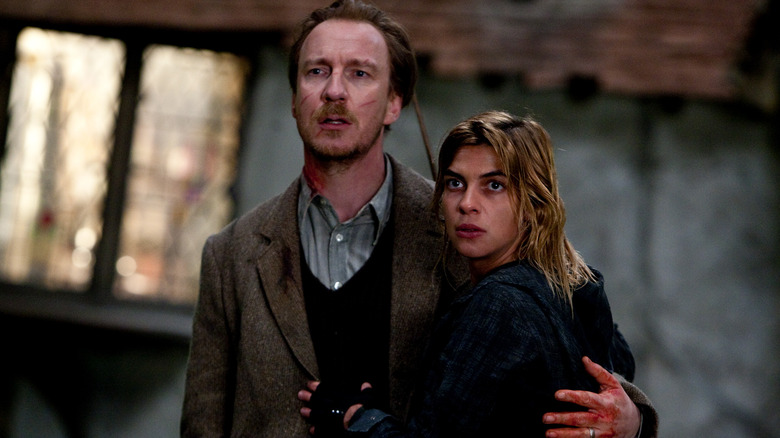
Despite Sirius and Regulus dying before they could traditionally carry on the family line of the House of Black, their blood lives on through relatives. Tonks and her husband, Sirius' only remaining childhood best friend Remus Lupin, both die during the Battle of Hogwarts, but their infant son Teddy survives; in the "Deathly Hallows" epilogue, we learn that Teddy Lupin spends so much time at his godfather Harry's house that he's basically a member of the immediate Potter family. Draco, the son of Bellatrix and Andromeda's sister Narcissa (played in the films by the late, great Helen McCrory), has a child with his eventual wife Astoria Greengrass, Scorpius ... and we meet Scorpius properly in the stage play "Harry Potter and the Cursed Child," technically a canonical "book" in the franchise. (That's also the play that heavily features Harry's younger son Albus Dumbledore, and through the Prewett family, even Harry and subsequent Potters can trace their lineage to the House of Black.)
In "Cursed Child," we also meet Delphini, the secret love child of Voldemort and Bellatrix Lestrange. How that union even produced a child is ... upsetting and questionable, but it apparently did, so fans of the House of Black can rest easy knowing it continued on after Sirius and Regulus were gone. The "Harry Potter" movies are streaming on HBO Max and Peacock now.