

Star Trek: Starfleet Academy's In-Universe Comic Book Was Not Created Using AI
In the "Star Trek" franchise, artificial intelligence (AI) is often a good thing, as the series features several sentient artificial beings ranging from the android Data (Brent Spiner) to the holographic Doctor (Robert Picardo). Super-smart computers run the systems onboard most Starfleet ships, and there's even a Digital Dean of Students voiced by Stephen Colbert on "Star Trek: Starfleet Academy." While these kinds of artificial intelligence have been embraced by both Starfleet and fans of the franchise, a different kind of AI is much less welcome.
Generative AI has become a growing concern for creatives of all kinds, as large language models (LLMs) like ChatGPT and Midjourney are being used to "create" artwork, short films, and more, algorithmically drawing from huge resource libraries. Unfortunately, these digital libraries are often full of stolen material from human creators, raising serious ethical questions about replacing human artists with AI. That's why fans of "Starfleet Academy" were up in arms when they believed that a comic book depicted in episode 6 of the new series was created using this controversial technology.
The good news is that the folks at TrekMovie.com did some digging and discovered that the comic book was not created with AI at all, but was designed and drawn by the show's in-house art department. That's a huge relief, but the situation highlights just how strong the negative reaction to generative AI can be, even in a franchise where other kinds of AI are heartily embraced.
Starfleet Academy's comic art kerfluffle highlights a larger concern
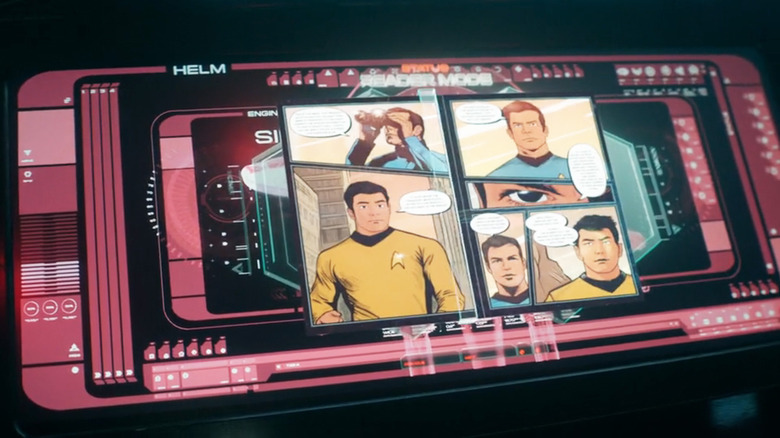
In the episode "Come, Let's Away," the students at Starfleet Academy are visiting a ship graveyard and the derelict ship the Miyazaki, which was involved in a legendary mission during the Burn in the 31st century, 100 years or so before "Starfleet Academy" begins. The legend of the Miyazaki was depicted in a comic book called "Tales from the Frontier," and the students end up scanning the comic book into the Miyazaki's computer to help it learn its own history. It's a neat moment and it's fun to think of comic books existing all the way in the 32nd century, but some fans were so concerned about the art's creation that the story itself became secondary.
This kind of backlash, even when something isn't artificially generated, might hopefully start showing corporations that audiences are getting fed up with AI. It's not just "Star Trek," either, as audiences were furious about the use of generative AI in the Academy Award-winning film "The Brutalist" and in the indie horror flick "Late Night with the Devil." It's almost like people want their art created by artists, and not algorithms.
Thankfully, "Star Trek: Starfleet Academy" was on the right side of things and had one of their in-house artists create the artwork and a printed comic book prop. Since LLMs often use the work of real creatives to create their models, it's unfortunately becoming increasingly common for art and writing created by humans to earn accusations of being AI-generated. Generative AI is butchering movies and TV shows, but thank the Prophets that at least "Star Trek" is still safe.