

Ethan Hawke's 2025 Drama With A 91% Rotten Tomatoes Score Is A Must-Watch On Netflix
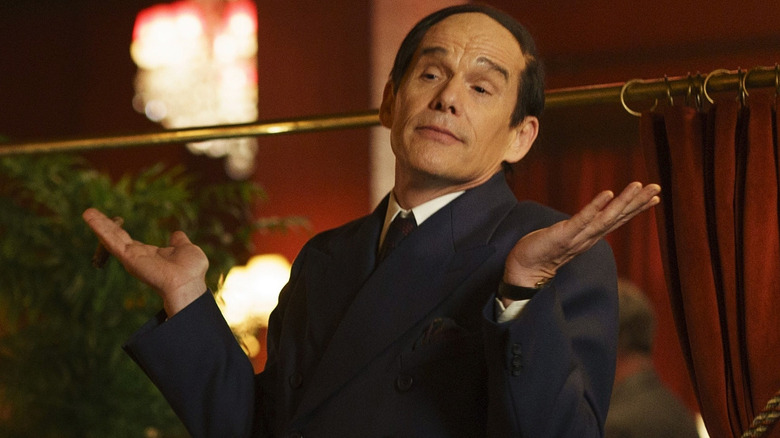
Playing a real person on screen in a way that doesn't feel like a shallow imitation is tough. (Speaking of which: Best of luck to the "Beatles — A Four Film Cinematic Event" cast at dodging those inevitable comparisons to the caricature versions of the Fab Four in "Walk Hard: The Dewey Cox Story.") But portraying a real person who's constantly putting on a performance of their own is harder still. It's to his credit, then, that Ethan Hawke does this without breaking a sweat in "Blue Moon," the actor's latest team-up with director Richard Linklater and a deservedly applauded 2025 true story drama that will hopefully gain more eyes now that it's streaming on Netflix. (The film's 91% critics' score on Rotten Tomatoes should only help its cause.)
Written by Robert Kaplow (who, along with Hawke, has gotten an Oscar nod for his efforts on the picture), "Blue Moon" centers on Lorenz Hart (Hawke), the legendary U.S. lyricist whose many great works include the titular tune (a song I'll personally always associate with the warbling mice from the film "Babe" — sorry, Mr. Hart, but none of us get to truly choose our legacy). Like many Linklater features, his and Hawke's "Before" movie trilogy included, the story here takes place in a limited window of time and largely consists of people chatting. Their main topic of discussion? The spiffy new stage musical that was written by Hart's former creative partner of 20 years, Richard Rodgers (Andrew Scott), and has only just opened the same night that most of the movie is set in 1943 ... a show by the name of "Oklahoma!"
Yes, as you've no doubt put together, we're talking about the same Rodgers of Rodgers & Hammerstein fame. Is it any wonder Hart's a mess?
Blue Moon is a melancholy showcase for Ethan Hawke and his co-stars
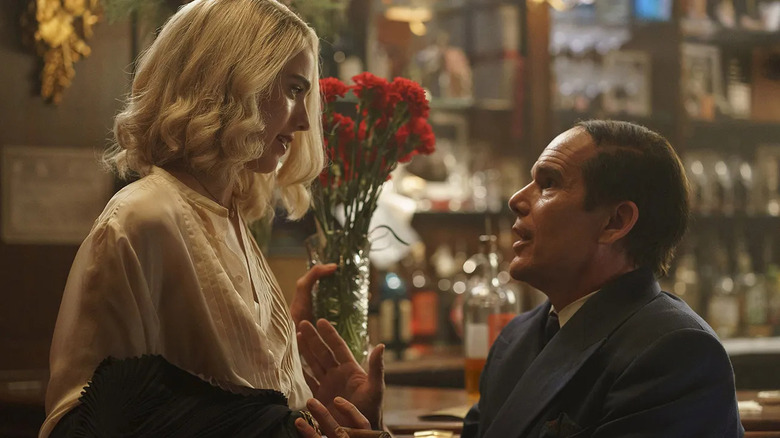
Lorenz Hart might've been a real person, but as depicted by Ethan Hawke in "Blue Moon," he's your typical Richard Linklater protagonist (and that's a compliment). Case in point: In the rare moments that Hart isn't babbling poetically about art, life, and sex, you can see the anguish and yearning that he's desperately failing to hold back bubble up behind his eyes. He's a queer, short, repressed individual who can't help but project queer, short, repressed individual energy (no matter how much he insists that's not him), and even if the movie didn't reveal his tragic fate in its opening minutes, one could readily (and sadly) discern it from the way Hart handles himself at the bar where much of the action unfolds.
As Rodgers, Andrew Scott does a lot with very little; he's a cocktail of smiling reverence and barely hidden resentment when he speaks to his brilliant, infuriating ex. Meanwhile, Margaret Qualley is equally superb as Elizabeth Weiland (the winsome, liberated young woman and aspiring creative that Hart has grown close to), and Linklater is content to let his actors hold the spotlight as well, as his direction is mostly invisible. The film does have some minor technical problems since it employs forced perspective and other practical tricks to make Hawke look as short as the real Hart (which leads to some mildly ungainly camerawork), but it's a small quibble for what's otherwise a thoughtful, melancholy movie about a troubled artist left behind by history.
On a lighter note: Keep your eyes peeled for a random "Stuart Little" (?) Easter egg here, then read up on the actual book later. You'll never look at the M. Night Shyamalan-penned adaptation of this story the same way.