

10 Must-Watch Netflix Movies Nobody Talks About Anymore

Netflix is home to thousands of options for viewers looking to veg out on all manner of shows, movies, documentaries, comedy specials, and more. That's great in theory, but it can be hard in practice to even know what's available on the streamer at any given moment, unless you have the days to spare, while you go title by title through their entire catalog.
Adding to the daunting nature of catching what's great on Netflix is the streamer's habit of simply dumping new content onto the site and immediately moving on to the next thing. It's why too many series are canceled too early and why film lovers cry when another critically acclaimed festival movie is bought up by Netflix (or any streamer, really). Great movies get forgotten, and the passage of time only adds to the issue as movies are buried beneath the weight of newer titles.
The 10 movies below are a mix of Netflix Originals and actual theatrical films that were released into the world with some degree of heat before slowly (or quickly) exiting the conversation. Title of this post aside, we're not actually suggesting that literally no one is talking about these films these days, but we are saying that all of them should be talked about a lot more.
Now keep reading for a look at 10 must-watch movies (in chronological order) that not enough of you are talking about.
Sea of Love
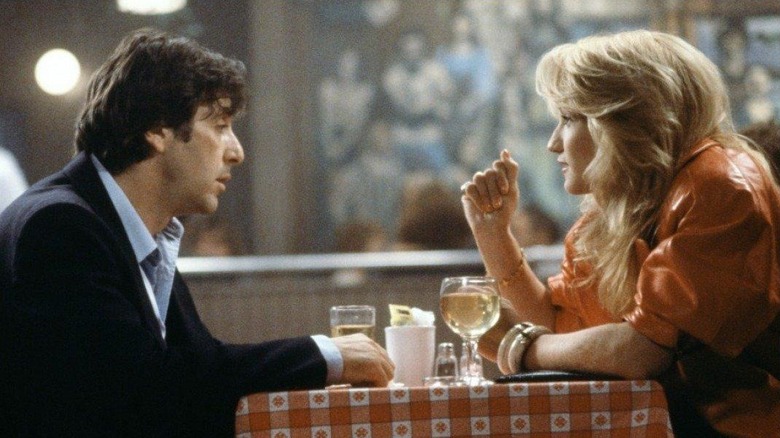
A serial killer is breaking hearts and taking lives in New York City, and they're targeting lonely people looking for love. Det. Frank Keller (Al Pacino) fits the bill as a divorced alcoholic who finds himself falling for a possible suspect (Ellen Barkin). The harder he falls for her, the closer he gets to discovering the truth.
It's a cliche at this point, but Hollywood really doesn't make movies like "Sea of Love" anymore. The late 1980s and 1990s saw the screen playing host to healthily budgeted erotic thrillers for adults like "Fatal Attraction," "Suspect," and "Basic Instinct." A murder mystery, two middle-aged(-ish) stars going head-to-head in more ways than one, and a committed execution saw filmmakers spinning gold for fans of movies that refused to play it safe. (See if "Sea of Love" made the cut on our list of the best erotic thrillers.) Harold Becker's film delivers all of that and more with great performances, layered characters, and a saucy pairing at its core.
Pacino and Barkin are an incredibly intense and smoldering combination, and while the film's characters are rife with deep sadness, the two of them reveal a real spark together. That plays beautifully into the suspense as to her possible guilt, too. John Goodman, Richard Jenkins, and Michael Rooker all bring the goods with even the smaller roles given an unexpected humanity in their writing and performances. The reveal is ultimately the least interesting thing here, and that's not a criticism.
The Pledge
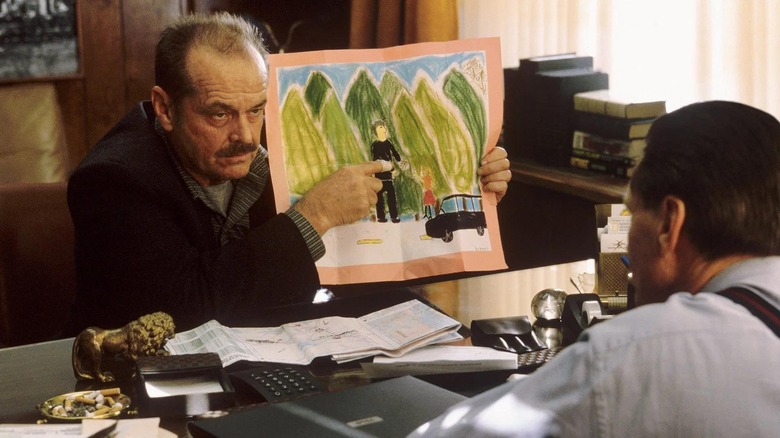
A police chief nearing retirement makes the mistake of promising a murdered girl's mother that he will find the child's killer. A suspect comes to light, and the case is closed, but Jerry (Jack Nicholson) isn't convinced. He remains persistent, but as his dedication becomes obsession, he discovers too late the price of that promise.
This is a generalization, but American audiences tend to prefer upbeat endings with their thrillers. They want the satisfaction that comes with good guys being rewarded and bad guys being punished. There are successful exceptions (think "Se7en" or "Oldboy"), but thrillers typically reward that desire at the end, even if the journey getting there is grim. "The Pledge" is one of those exceptions, and the result was an absent audience on release and too few people still talking about it a quarter of a century later.
Sean Penn's direction balances tone, atmosphere, and an appreciation for actors who are given time to breathe with their characters. There are minor action/suspense beats, but the film's thrills mostly stir just outside of frame in the realm of expectation and obsession. Nicholson electrifies as a man fueled by sincerity whose quest for truth sees him lose track of honesty — it's one of his best performances, even though it doesn't make our list of Nicholson's most iconic roles — and supporting turns by Robin Wright, Benicio Del Toro, Sam Shepard, Harry Dean Stanton, Patricia Clarkson, Helen Mirren, and others help infuse the film with a desperate humanity in crisis. The end is a gut punch, but it is satisfying all the same.
Match Point
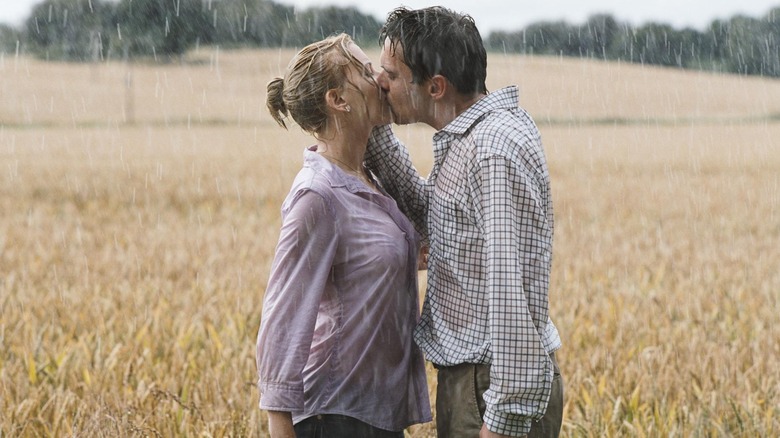
Chris (Jonathan Rhys Meyers) has a good life. He decides, though, that sometimes you just gotta throw a sexy wrench into that perfection and see what shakes out. On the cusp of marrying into a wealthy, high profile family, he instead falls for another man's wife, and that one poor decision opens the door to many, many more — including, perhaps, murder.
While it's a mystery as to why some of the movies on this list aren't talked about much these days, the same can't be said for "Match Point." It's written and directed by Woody Allen, and that's, understandably, enough of a reason for some people to simply ignore it. You'll find no defense of the filmmaker here, but that said, the movie remains a solidly crafted and honest exploration of both privilege and luck.
Happily, Allen doesn't appear on screen, and the film is wholly unlike the rest of his filmography. It's a darkly twisted thriller, and while Meyers is fine as the slug at its center, the supporting cast delivers with varying degrees of upper-class ignorance, reptilian charm, and misguided innocence. Matthew Goode, Emily Mortimer, Brian Cox, and Scarlett Johansson all mesmerize as predators and prey drink from the same watering hole before one decides to casually devour the other. Is it a downer? Sure, but sometimes you need to be reminded which side of the equation you're really on.
Mudbound
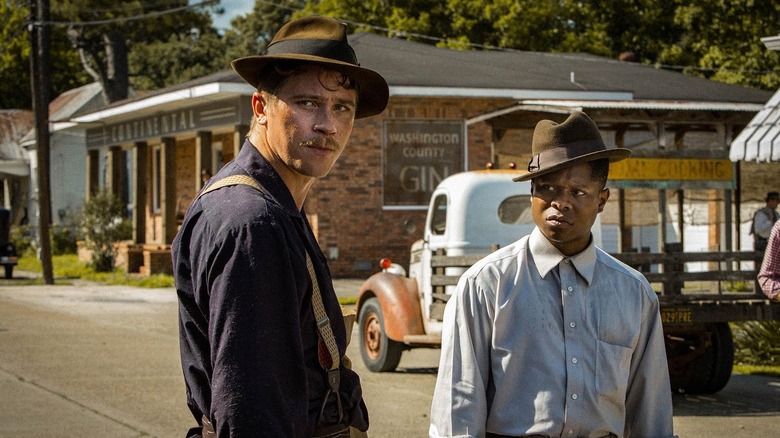
Two young men, neighbors in the poverty-strewn Mississippi Delta, head off to fight in World War II. Jamie (Garrett Hedlund) is white, Ronsel (Jason Mitchell) is black, and the differences they encountered back at home fade while in Europe. Their return from the war, though, sees a return to a landscape shaped by racism and ignorance.
Dee Rees' "Mudbound" was a critical darling after its Sundance premier, but the combination of a sale to Netflix and the film's heavy themes seemed to dampen its reputation over time. That's too bad as it remains a powerful, beautifully acted film about the value of family and friendship, the cost of kindness, and the ideas we pass on to our children. Also worth noting is that this movie earned cinematographer Rachel Morrison an Academy Award nomination — remarkably, the first time a woman was nominated in that category. (It also makes our list of the best period films streaming on Netflix.)
There are painful beats here involving racist violence, but the argument that such films shouldn't be made anymore rings hollow in a world where these ignorant attitudes continue. While a major element here, racism is only one of the film's themes as the specter of poverty is the foundation for all that follows. Rees isn't interested in excusing racist behaviors, but she's exploring the groundwork that helps support and keep them fed. It's uncomfortable, but it's important.
Under the Silver Lake
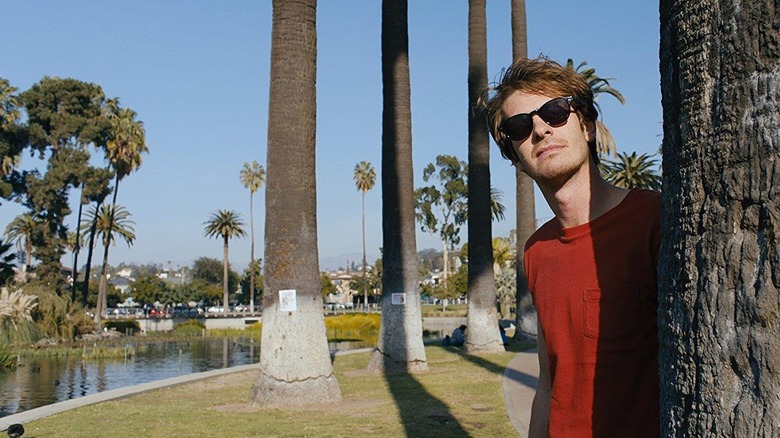
Sam (Andrew Garfield) is a thirtysomething slacker living in Los Angeles with little to nothing to show for a life lived dully. That changes, for Sam at least, when a neighbor (Riley Keough) he's been spying on in his apartment complex goes missing. It's a mystery that only he can solve, and soon he's waist deep in conspiracies, hidden messages, wealthy weirdos, and beautiful women in need of his help.
Much like Los Angeles itself, "Under the Silve Lake" is big, sprawling, and messy, and none of that is meant derogatorily. There's a shaggy charm to David Robert Mitchell's third film, a genre mashup that's part absurd comedy, part offbeat neo-noir, and part commentary on our willingness to delude ourselves in service of things we think we need.
The film was criticized over its female characters being nothing more than objects, ideals, and cautionary tales, but while debatable, that observation only lands because this is a story told through Sam's limited viewpoint. (The film "(500) Days of Summer" received similarly misguided critiques.) To that end, Garfield is absolutely terrific with stellar comedic timing as a young man who can't imagine anything more important that his own needs and wants. He's no hero, and he's ultimately part of a very big problem, but he's also oblivious on both counts. (Here's our explainer about the film's ending.)
Atlantics
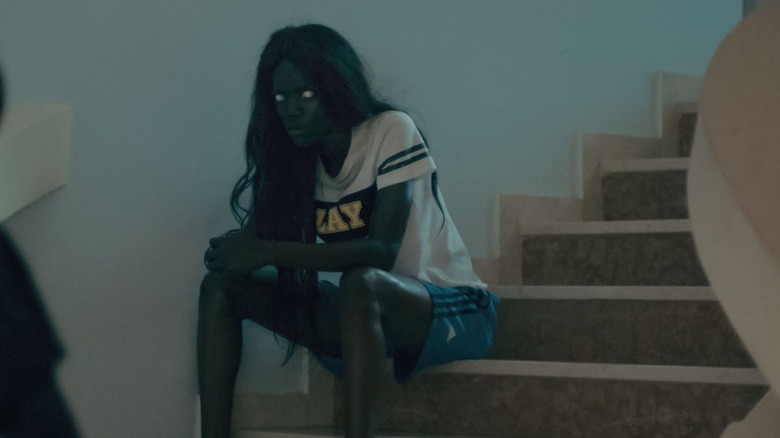
Souleimane is a construction worker employed far from home, but mistreatment forces him and others to head to Spain by ship. They're all hoping for better lives, but Souleimane is also looking to reunite with Ada, the woman he loves — and who loves him. Fate and the human condition have other plans, though.
2019's "Atlantics" was, remarkably, both Mati Diop's debut feature and the first film by a black female director to compete at Cannes. Sadly, she has yet to make a second feature, but her first has lost none of its power or beauty in the seven years since its release. Don't let its ignoble shuffling onto Netflix fool you — this is a hauntingly gorgeous film that works both above and below the surface on themes like love, loss, greed, class, and the lasting power of the human spirit.
More directly, the film explores immigration with its setup involving people willing to risk it all for a better life, the pursuit of which harms no one else in the process. It's a slow burn made on a tight budget, but Diop and cinematographer Claire Mathon craft something truly beautiful here in its photography, lighting, and atmosphere. There's an eeriness, too, enough to add elements of horror at times, making this a dark love story that sticks with you.
The Fable
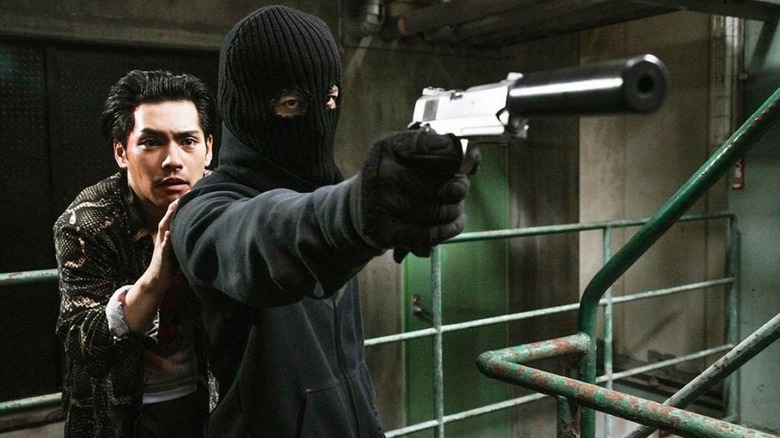
Akira Sato is known in his business as The Fable. His business? Being an assassin for the yakuza. His record is unequaled and he's rarely felt challenged, but that changes when his boss forces him to take a low-profile break — a year off in Osaka where he's not allowed to kill even a single person. Unfortunately for him, it's a year filled with gang members, violent convicts, and other hitmen.
"The Fable" and its arguably even better sequel, "The Fable: The Killer Who Doesn't Kill," are among the most entertaining action/comedies of recent years. Netflix deserves credit for giving them a home in the US — their only home here as they've never received a release to disc or other streaming outlets — but you'll have to dig around for both. The extra time is worth it as the action here is crisp and effective and the comedy lands despite the language/cultural barrier.
Junichi Okada is a big part of the film's success as he gives the title character the perfect attitude as waves of bad guys come his way. Basically, he's extremely annoyed at all times, and that's played for laughs as he's forced to think and fight outside the box. Okada is also a stellar screen fighter delivering some wicked fight sequences and stunt pieces. Don't let their absence from our list of the best Japanese action films fool you, because both films rock. The sequel is even better on that front, but start here for a fun introduction to an amusingly angry character.
1917
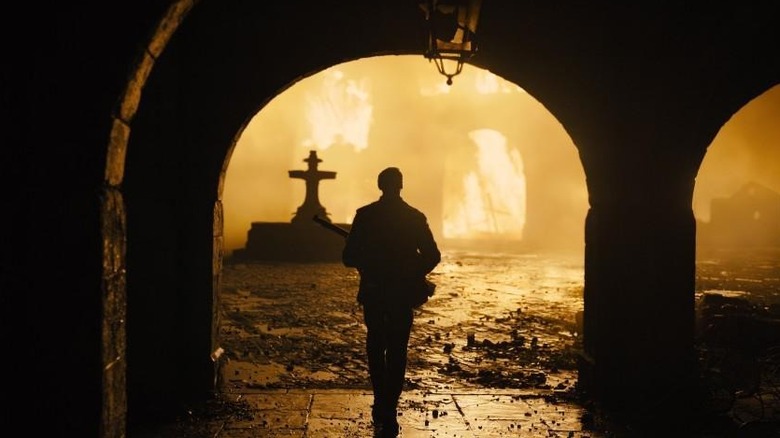
It's early 1917, and the first World War rages across Europe. The Allies have made plans for a battalion to surge forward in pursuit of a retreating German force, but it's discovered that the Germans are actually planning a surprise attack. With normal lines of communication down, two young soldiers are sent to the front line in the hopes that they can stop the battalion from their suicidal charge.
Sam Mendes' "1917" was a critical and commercial hit upon release, but affection for it has seemingly fallen off over the years. Some have come to view its near real-time and almost single-take presentation as a gimmick, but even if that was the case — and it's not — so what? It's an incredibly effective approach to a story built on such a propulsive premise, and not for nothing, but Roger Deakins' cinematography makes every frame a work of art along the way.
George MacKay and Dean-Charles Chapman play the two soldiers in a race against time, and their youthful energy finds a compatriot in Deakins' camerawork. The filmmakers bring viewers into the action with an intensity akin to Steven Spielberg's "Saving Private Ryan," and it all builds to an epic set piece featuring one of the soldiers sprinting across a battlefield as it comes to life with explosions, gun fire, and death. It's still an unforgettable sequence in one of the greatest war films of the last half-century.
His House
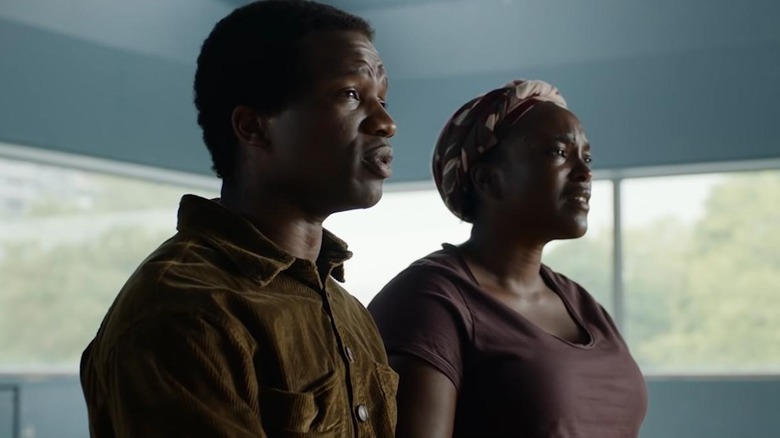
Bol and Rial are refugees who've left war torn Sudan behind for the possibility of a brighter future for them and their young daughter in the UK. Their child dies on the journey over, along with several others, but the couple make it only to face the harsh reality of being immigrants in England. The pain caused by their new neighbors and immigration rules is dwarfed, though, by the suffering uncovered by a haunting presence in the walls.
Pair Remi Weeks' "His House" with "Atlantics" above, and you have one hell of a powerful double feature about supernatural horrors atop the already harrowing immigrant experience. This film is the more horror-forward of the two — and earns a spot on our list of the best Netflix Original horror films — and delivers some genuinely unsettling sequences as the couple is haunted by an unknown spirit. Weeks, like Diop above, has also unfortunately yet to make a follow-up feature.
Sope Dirisu ("Gangs of London") and the great Wunmi Mosaku ("Sinners") are both terrific here as a couple in well over their heads. The system and human nature are both rigged against them, and you can't help but root for the pair even as dark truths come into the light. There are some jerks here, but the film isn't interested in vilifying people as it instead sees choices made under the duress of poverty and danger as simply part of ongoing tragedies. The result is a scary horror film with emotional heft, and while that's already enough, it's also one that feels all the timelier given the world we're currently living in.
The Half of It
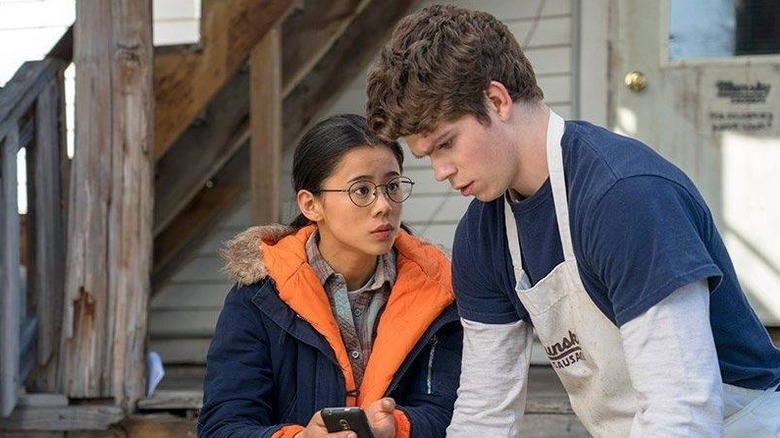
Ellie (Leah Lewis) is the only Asian girl in the small rural town of Squahamish, WA, and her shyness is a direct result of it. The other part of that particular puzzle, the part that's not necessarily visible to the eye, is that she's gay. Her neighbor Paul asks her help to woo a fellow classmate named Aster, but what starts as a simple cash transaction (like when she ghostwrites other students' essays) is complicated by Ellie's growing feelings for Aster.
On its face, "The Half of It" is a very clear riff on "Cyrano de Bergerac," but writer/director Alice Wu uses that as little more than a jumping off point as she takes the story in some unexpectedly wonderful directions. From the flipped genders and orientations to the big laughs and atypical ending, the film feels like a spirited follow-up to Wu's feature debut, the excellent "Saving Face," and it's every bit as good.
Unrequited love is only part of the story here as we also spend time with Ellie and her dad (Hong Kong great Collin Chou) as the two deal with the grief of Ellie's mother's passing and his desire for Ellie to follow her own dreams. It's sweetly beautiful stuff that pairs well with the comedy elsewhere, and it ensures the film's tone constantly encircles the heartfelt themes of family, love, and yearning.