

Before The Boys, Karl Urban Starred In A Canceled J. J. Abrams Sci-Fi Crime Series
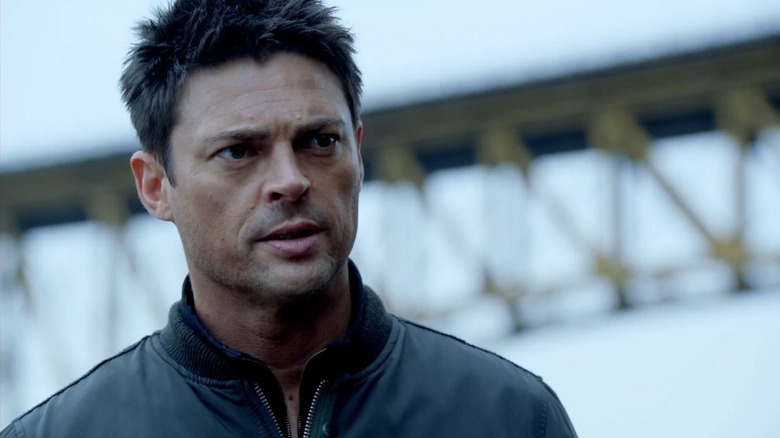
J.H. Wyman's 2013 TV series "Almost Human," overseen by J.J. Abrams, is one of many TV shows in the long and proud "cops with robot partners" subgenre. This is a genre that has also seen shows like "Future Cop," "Holmes & Yoyo," "Mann & Machine," and "Total Recall 2070." It should be noted that all of these shows, including "Almost Human," were canceled after their first seasons. It's hard to understand why. A buddy-cop drama about a human learning to work with an intelligent android is a great way to blend the genres of sci-fi and the ever-popular serialized police procedural.
It's especially hard to understand with "Almost Human," as it was a very good series. "Almost Human," set in the year 2048, starred Karl Urban as the crotchety, old-fashioned cop John Kennex. John hates androids, as his last android partner left him to die after calculating his odds of survival following an accident. John survived, but now walks with a detachable robotic leg.
John is paired with a new android partner named Dorian — real named: DRN-0167 — played by Michael Ealy. Dorian is part of a disused line of androids that was abandoned years before as they appeared too human, and couldn't handle their emotions. Dorian has agency and consciousness, and has to butt heads with the android-hating Kennex. The dynamic between the lead characters is as ancient as the earliest mismatched-cop dramas, but juiced up by both the future setting, and the excellent performances from Urban and Ealy.
The series also starred Lili Taylor as the all-business police captain, and Minka Kelly as a fellow police officer who is the result of genetic tinkering, making her unnaturally strong and beautiful.
Sadly, the series only lasted 13 episodes.
Almost Human was a pretty great show
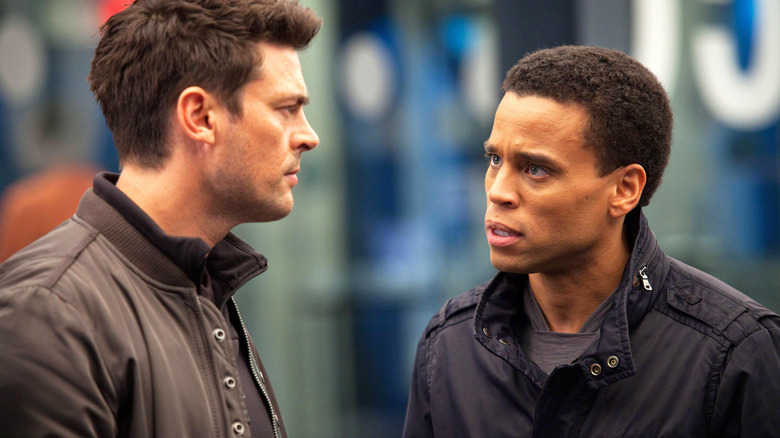
"Almost Human" was a visually impressive series. The sets appeared to be enormous, and the show's central police station was a glittering, futuristic glass edifice. The VFX were also notable, with future technology and robot effects looking rather convincing for network TV. The stories were also quite clever, with the show's writers inventing a slew of new technologies that served as the source of a long strong of tech-based crimes. Structurally, however, "Almost Human" was relaxingly familiar. Police procedurals were big business, and "Almost Human" stuck to a sharp cop-drama structure.
In the pilot episode, a super-criminal has invented tech that can be programmed to target only cops. In the second episode, it's revealed that robotic sex workers are being outfitted with real (stolen) human skin. There is another episode that deals with the ethics and tricky criminal tracking of clones. Some of the stories are, however, more traditional. There is a drug problem in the future of 2048, and while the drug is high-tech, the actual legislation and law-enforcement around it remains grounded in old-fashion cops shows. The show is episodic and not serialized, exploiting an easy-to-consume crime-of-the-week structure. Of course, in 2013, many audiences may have wanted the more popular serialized storytelling.
Through it all, Urban and Ealy develop a notable rapport. Kennex hates Dorian at first, but they slowly begin to understand one another well. By the 13th and final episode, they seem to be friends. Frustratingly, though, the episodes aired in a different order than their production, so TV audiences didn't see quite as natural a progression in their relationship. Luckily, there were no dramatic deaths or major plot points that the out-of-order broadcasting ruined. Episodes, for the most part, stood alone.
Why was Almost Human canceled?
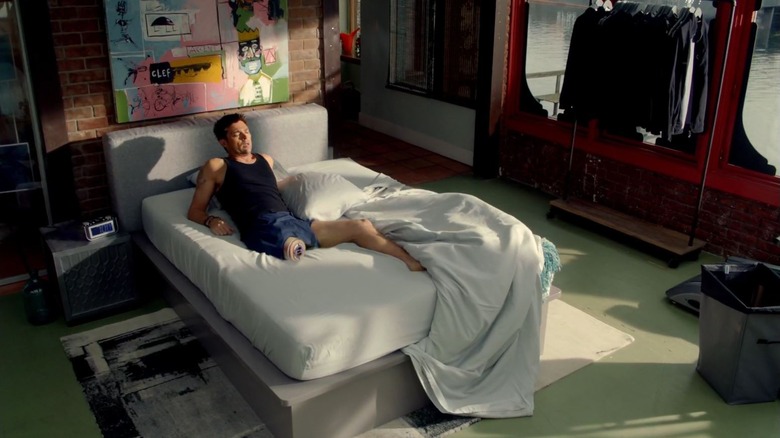
"Almost Human" was pretty well-received, and even semi-widely watched in its initial airing. Critics gave it semi-positive reviews, netting it a 69% approval rating on Rotten Tomatoes, based on 48 reviews. The show has a cadre of defenders who feel it should have had a chance to live long, notably Carli Velocci from The Wrap. It was, as she pointed out, a good blend of the novel and the familiar, and, on paper, looked to be a big hit. Even /Film likes "Almost Human."
Also, some of the guest stars were impressive. The intense David Dastmalchian played a cyber criminal, and TV legend John Larroquette played the robotics engineer who invented Dorian. Brad Anderson, Mimi Leder, and Jeannot Szwarc directed episodes.
The extensive production design and VFX on "Almost Human" may have been its undoing, however. The series was incredibly expensive to make, and the ratings weren't high enough to justify the expense. This was confirmed to me personally when I had an opportunity to talk to a source close to the production off the record. They told me that ratings were pretty good, but that it was just too expensive to continue. The series would need to have netted ratings as high as "CSI," the gigantically popular police procedural, in order to continue. In brief, "Almost Human" was good, but not good enough.
At the very least, "Almost Human" was nominated for an Emmy for its VFX, so some people were paying attention. Sadly, "Almost Human" isn't available on any streaming services, but it can be purchased via the Apple TV store. I would argue it's worth the expense. Of the many short-lived cops-with-robot-partners shows, "Almost Human" is one of the better ones.