

A Knight Of The Seven Kingdoms' Best Character Redeems The Weakest Game Of Thrones House
This article contains spoilers for "A Knight of the Seven Kingdoms" episode 3, "The Squire."
"A Knight of the Seven Kingdoms" is unlike anything we've seen in the franchise of ice and fire. It's recognizable as part of the same universe as "Game of Thrones" and "House of the Dragon," because its world is unforgiving, violent, and full of nobles abusing peasants. And yet, as our full review indicates, this is also a show that feels like a breath of fresh, dragon-free air. It has low stakes, it's sincere and heartfelt, and follows a genuinely nice guy, Ser Duncan the Tall (Peter Claffey).
The show features a rather small scale story set entirely around a tourney attended by several big-time lords and fancy knights. It doesn't really focus on the highborn, even if we do see several familiar houses from the previous two shows. Houses Targaryen, Dondarrion, Tyrell, and Tully are all featured in the show alongside lesser representatives from House Beesbury of Honeyholt and House Fossoway.
One other very familiar house that's heavily featured here is House Baratheon. They have an old history intricately connected to the history of Westeros, but virtually every Baratheon we've met outright sucks. They are either incompetent and goofy like King Robert (the perfectly cast Mark Addy, although a "Succession" star was up for the part), or outright monsters like Borros (Roger Evans) and the daughter-burning Stannis (Stephen Dillane).
That streak has officially ended.
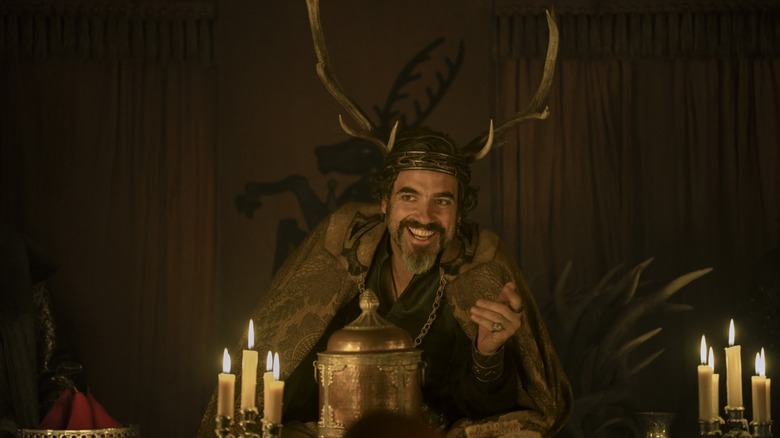
"A Knight of the Seven Kingdoms" introduces the best character in the entire franchise, a man who holds the camera's attention harder than Rhaegar Targaryen held Lyanna Stark hostage at Harrenhal. That man is Lyonel Baratheon (Daniel Ings), who singlehandledly redeems House Baratheon with sheer charisma from his very first scene.
Lyonel has the best parts of every Baratheon
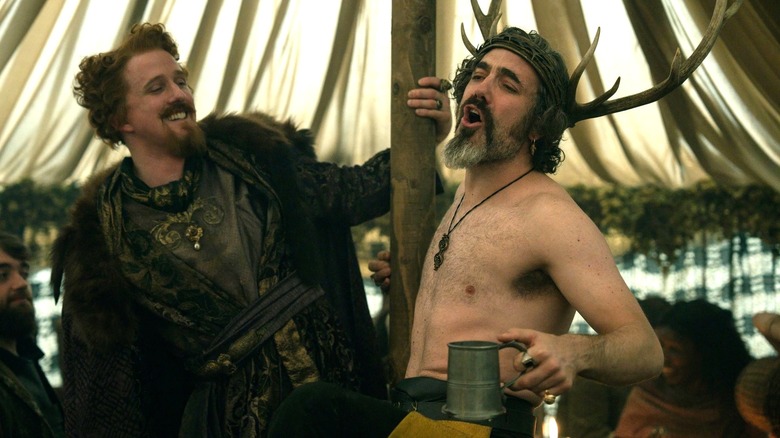
From the moment Lyonel Baratheon appeared on screen in a phenomenal original scene, Daniel Ings immediately embodied the character's moniker, "The Laughing Storm." His little dance number with Dunk and general debauchery makes it extremely clear he is Robert's ancestor, while his good looks and flirting with Dunk presages the behavior of the similarly short-lived Renly Baratheon from the early seasons of "Game of Thrones" (remember him?).
Every time Lyonel pops up on screen, the scene brightens up with joy and charisma. Take his appearance in episode 2, when Lyonel grabs Dunk by the neck and taps him to join a game of tug-of-war. Naturally, Lyonel instantly abandons his teammates for a quick drinking game before returning at the last second to claim the glory. In the span of a couple of minutes, Lyonel is flirty with Dunk, charming to the crowd, pretentious about his skills, and also a good teammate that celebrates with his lads after a good game. By the third episode, Lyonel is dancing and singing drunk and half-naked with crowds of both nobles and smallfolk.
This is a side of not only House Baratheon but even just highborn nobles we haven't really seen before. Sure, Tyrion (Peter Dinklage) hung out with a sellsword and a squire more than other nobles, but he was also ostracized by other highborns. Lyonel feels like the best parts of Pedro Pascal's Oberyn Martell (his good looks and effortless charisma) mixed with Tyrion's penchant for words and drinking.
House Baratheon has suffered from poor representation: We've seen them as drunks, backstabbers, inept leaders, and outright child-murderers. But in just three episodes, Lyonel Baratheon has turned his house's reputation upside down and redeemed his entire House. He can be our champion any day.