

John Wayne's Oscar-Winning 1939 Western Got A Remake That's Worth Watching
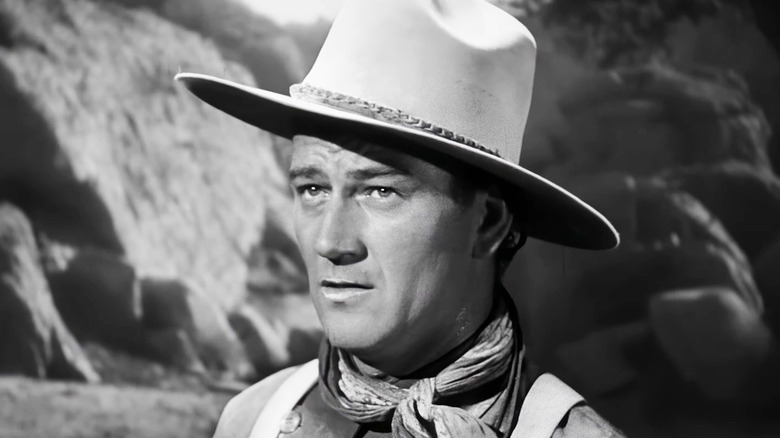
In 1966, Hollywood did what Hollywood loves to do and remade a celebrated film of the past for a new generation. Far from being disaster, however, the 1966 remake of John Ford's classic, "Stagecoach" was actually pretty good. It received praise from critics and filmmakers alike and stands as proof that remakes aren't always entirely unnecessary dross.
If you thought Hollywood's obsession with recycling the hits of yesteryear was a relatively new phenomenon, you'll likely be dismayed to learn that studios have been doing this since the very beginning. Sure, a Harry Potter reboot feels like the tipping point for our nostalgia-mad monoculture, but replaying the hits has been a staple of Hollywood filmmaking ever since Warner Bros. bought First National Pictures and remade all their silent Westerns as "talkies."
It was these remakes that kept a young John Wayne in the acting business during the 1930s. Prior to becoming the legend we know him as today, the Duke was churning out so-called Poverty Row Westerns, many of which were just remakes of earlier, Ken Maynard-starring silent films. In 1939, however, Wayne was as surprised as everyone else when the great John Ford cast him as the lead in "Stagecoach," the film that would save the Western genre at a time when it teetered on the brink of complete obsolescence.
By the mid-60s, the genre wasn't quite yet in need of saving again (though it would find itself on life-support by the time the following decade rolled around). Regardless of the genre's standing, 20th Century Fox (as it was then known) remade "Stagecoach" for the baby boomers. Thankfully, the studio's infamous co-founder Darryl F. Zanuck managed not to insult Ford's legacy with this remake, which was surprisingly good considering how ill-advised it seems even in retrospect.
Stagecoach was remade in color for the audiences of the 1960s
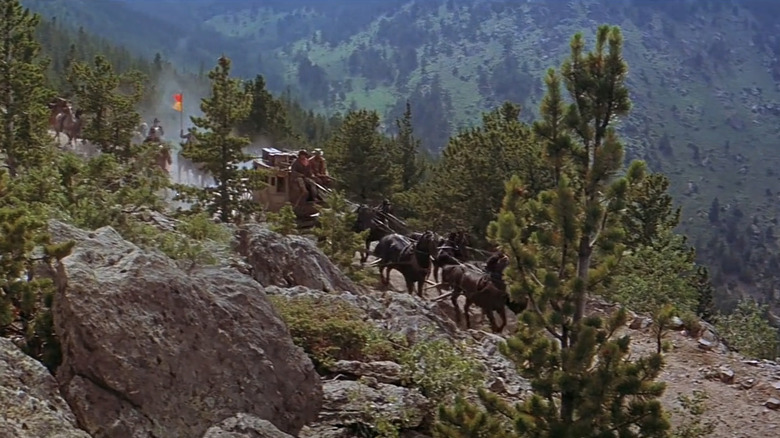
"Stagecoach" made John Wayne a star, even if his casting did cause problems for John Ford. But it also did so much more than that. It proved Westerns could be serious films rather than the simplistic hokum of the "Poverty Row" era. Ford's film was simple in its set-up: mismatched travelers are forced to spend time together on a perilous trip through Apache territory. But these travelers acted as avatars for the class system, with Ford not only exploring real socio-political issues via his ensemble, but ultimately subverting audience expectations of each ostensible archetype in the titular carriage. It made for a truly legendary film, celebrated by everyone from critics to filmmakers such as Orson Welles and Quentin Tarantino (though his controversial movie takes made his endorsement slightly less impressive than it might otherwise have been).
"Stagecoach" is a classic in every sense of the word. Why, then, did we need a remake less than 30 years after Ford's film debuted? Well, because producer Martin Rackin said so. The former head of production at Paramount evidently thought Ford's film was so outdated by the mid-60s that audiences of the era would "throw rocks at the screen" were they subjected to a screening. So, a new, color version was required.
That new version materialized after Rackin managed to convince Darryl F. Zanuck (who once tried to pay $25k to shave Gregory Peck's face) that such a thing was an imperative. All of which sounds like it should have resulted in one of the biggest missteps in cinema history. But "Stagecoach" 1966 was actually pretty good.
Stagecoach 1966 is surprisingly good
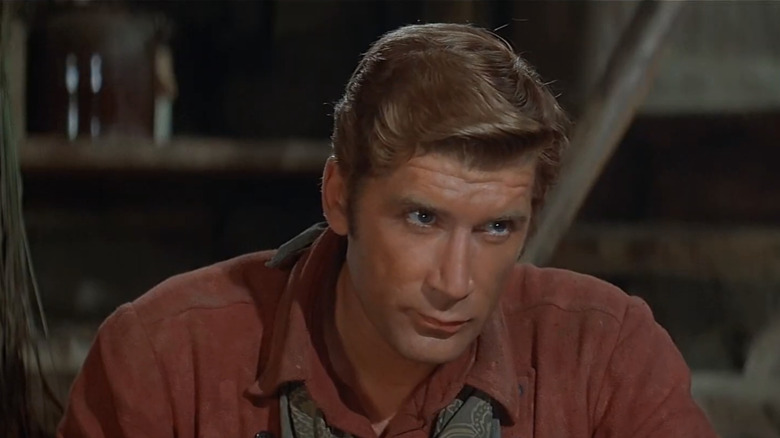
1966's "Stagecoach" was directed by Gordon Douglas and followed the same story as the original. An outlaw, a sex worker, a banker, a drunk, a salesman, a sheriff, a belle, and their driver set out on a journey from Dry Fork to Cheyenne. They do so under perilous circumstances, however, as Crazy Horse and his tribe are just waiting to accost unsuspecting travelers on the road to Cheyenne. The cast included several big names of the era, including Ann-Margret, Red Buttons, and Bing Crosby. Alex Cord played The Ringo Kid, and even managed to hold his own in one of John Wayne's best roles.
The action wasn't shot in the majestic landscapes of Utah this time, but it did make excellent use of its Colorado scenery, displayed this time in beautiful Technicolor. What's more, Douglas somehow matched Ford when it came to the action sequences, which had been one of the standout elements of the original. As The New York Times' Robert Alden wrote in his contemporaneous review of the 66 film, "The action, also altered somewhat, is still muscular, sometimes blood-curdling stuff."
Alden also surmised that the remake was "an enjoyable trip most of the way," which seems to be the consensus among most who have seen it. Another contemporaneous review from Variety (via Bing Magazine) praise the "absorbing script," "fine direction and performances," and what was ultimately a "handsomely mounted Martin Rackin production." "Stagecoach" 66 also has a decent amount of fans over on Letterboxd, all of which is pretty impressive for a project that seemed doomed to fail. Of course, somebody had to run things into the ground eventually, which they did in 1986 when CBS produced a television version of "Stagecoach," starring Willie Nelson and Kris Kristofferson.