

How Frank Miller Felt About Batman: The Animated Series' The Dark Knight Returns Homage
We may receive a commission on purchases made from links.
The last few decades of comics and movies have cemented Batman as the quintessential "dark superhero," but all of the campy Batmen in the Adam West mold are just as valid an interpretation. There are few better illustrations of this dichotomy than "Legends of the Dark Knight," one of the best episodes of "The New Batman Adventures" (a continuation of "Batman: The Animated Series" with the same cast and crew).
Directed by Dan Riba and co-written by series co-creator Bruce Timm and Robert Goodman, "Legends" features three young kids in Gotham City imagining stories about Batman. That prompts two imaginary segments where the show shifts art styles. In the first, Matt (Ryan O'Donohue) shares a lighthearted tale about Batman (Gary Owens) and Robin (Brianne Siddall) stopping the Joker (Michael McKean) from robbing a music museum. The segment is drawn in the style of 1950s Batman artist Dick Sprang; it even features the Joker trying to crush Batman & Robin inside of a giant piano.
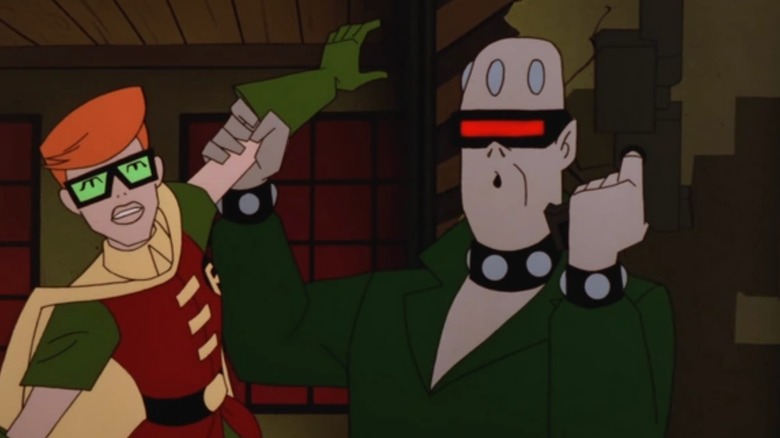
But Matt's friend Carrie (Anndi McAfee) decides to school him on what Batman's really like. Carrie imagines herself as Robin, while she and a bulky, brutal Batman (Michael Ironside) fight a vicious gang called the Mutants. This second segment is a heavily abbreviated adaptation of the O.G. "dark Batman" story, Frank Miller's 1986 "The Dark Knight Returns," which introduced a new female Robin: Carrie Kelley.
Timm discussed the episode when interviewed for the "Modern Masters" book series, including how (on the advice of then DC Comics Publisher Paul Levitz) the "New Batman Adventures" team notified Miller they were making it. His only request was that they send him a copy of the finished episode. Miller has since said he doesn't like watching Batman movies, but according to Timm, he loved "Legends of the Dark Knight."
Frank Miller loved seeing his Batman and Robin be animated
Bruce Timm said in "Modern Masters" that his disappointment with the rather goofy (and tumultous) "Batman Forever" got him thinking about how the different versions of Batman "don't cancel each other out." From there, Timm conceived of an episode spotlighting how Batman is an urban myth in Gotham City.
"Some people would think [Batman] was this dark, satanic figure, and some people would think he was an upright, Dudley Do-Right type hero. That led me to think of doing the different vignettes in different comic book styles. You really can't get more opposite than Dick Sprang and Frank Miller — those are two of the most obvious extremes — and we just took it from there."
Focusing the episode on impressionable kids was the perfect angle for the show's target audience. They may not recognize the homages paid to Sprang and Miller like older comic fans would, but they would hear echoes of their own playground chats about Batman in Carrie and Matt's dialogue. Making Carrie Kelley a real girl imagining herself as Robin was another perfect touch; what kid wouldn't want to be best friends with Batman?
Miller, Sprang, and Batman's original co-creator Bill Finger are all thanked in the credits of "Legends of the Dark Knight." According to Timm, Miller couldn't contain his excitement once he'd seen the episode.
"After I'd sent [Miller] the show — I happened to be out of the office that day — he called back three times to talk to me about it. He was just raving. Every phone message that he left was longer than the previous one. 'Wow, I just watched it again, and Lynn [Varley, Miller's ex-wife and the colorist on "Dark Knight Returns"] was going crazy, going, 'Oh, my God! There's Carrie Kelly!”
The Dark Knight Returns later became a full animated feature film
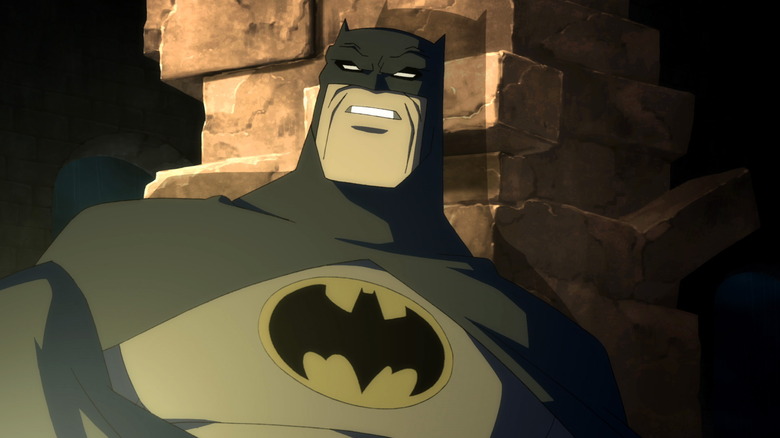
For "Legends of the Dark Knight," Bruce Timm melded his own art style (simple and striking character designs) with Frank Miller's (Batman's proportions and characters' facial details). Shirley Walker's usual operatic score also gives way to techno music, reflecting the 1980s setting of the original book.
In a few short minutes, "Legends of the Dark Knight" recreates important scenes from "The Dark Knight Returns" chapter 2, "The Dark Knight Triumphant" (where Carrie becomes Robin and Batman fights the Mutants.) A Mutant thug is holding a hostage at gunpoint (a baby in the comic, Robin in the episode) and warns Batman, "Believe me, I'll do it!" So, Batman shoots/pounces on them, quipping "I believe you."
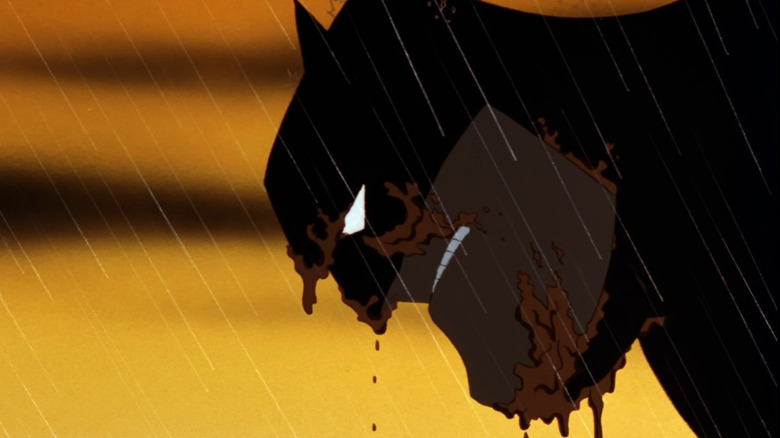
That leads into Batman's fight with the Mutant Leader (Kevin Michael Richardson) in the Gotham City junkyard. Batman wins, delivering the last brutal blow with these words: "This isn't a trash heap. It's an operating table and I'm the surgeon." Yet the episode cloaks Batman cracking the Mutant Leader's bones with a strike of lightning. While "Batman: The Animated Series" got quite dark, it was still made for children.
What went darker was a full-length animated "Batman: The Dark Knight Returns" movie, directed by Jay Oliva and released in 2012. Starring Peter Weller as Batman, the movie includes all the scenes "Legends" didn't have room for — like Batman fighting Superman (Mark Valley) or his brutal last battle with the Joker (Michael Emerson). The movie's composer Christopher Drake uses a synthetic, John Carpenter-esque score right out of "Escape From New York," similar but more sweeping to the music from "Legends."
To my knowledge, Miller hasn't publicly commented on the "Dark Knight Returns" movie, but we at /Film say it's among the best animated Batman movies.