

How X-Men: The Animated Series Paved The Way For Mighty Morphin Power Rangers
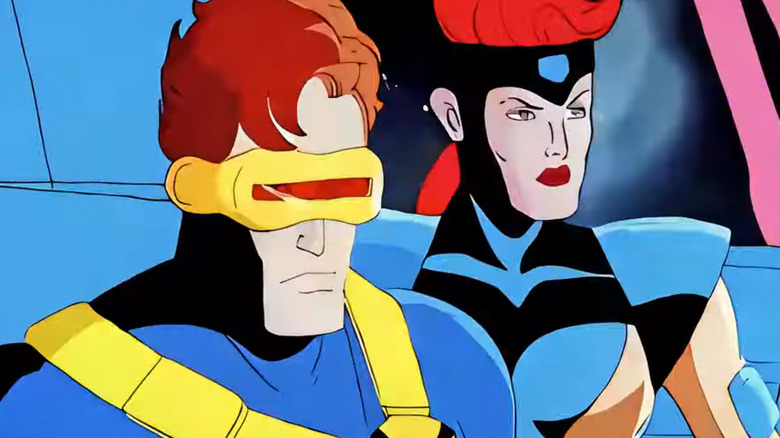
"X-Men: The Animated Series" and "Mighty Morphin Power Rangers" remain foundational for an entire generation of kids who grew up on '90s TV. But there's more than legendary status that links these two classics. Haim Saban, founder of Saban Entertainment, reportedly made his first $100 million by co-producing "X-Men: TAS" with Marvel. After that, he used the goodwill he'd built up with the Fox network to finally get "MMPR" greenlit, ultimately turning the Power Rangers into a billion-dollar franchise.
Those of us who grew up in the '90s have now reached the "they don't make 'em like they used to" phase of our lives, and it's all a bit overwhelming to be honest. Of course, every generation has experienced something similar and none of us want to be the weird uncle at family get-togethers lecturing the kids on why the '90s was the best time to be alive. Unfortunately, there is no way around it. The '90s really were a pre-internet golden age for so many, and all you need to do is take a look at the kids' shows of the era.
Sticking with just the animated superhero shows, the unimpeachable trio of "Batman: The Animated Series," "Spider-Man: The Animated Series," and "X-Men: The Animated Series" will likely never be bested — even though Disney recently tried to rekindle the magic with the straight shot of animated nostalgia that was "X-Men '97." What's more, it turns out we have "X-Men: TAS" (whose team initially knew nothing about Marvel's mutants) to thank for another beloved '90s kids' show in the form of "Mighty Morphin Power Rangers."
X-Men was the first step towards the Power Rangers' domination of mid-90s culture
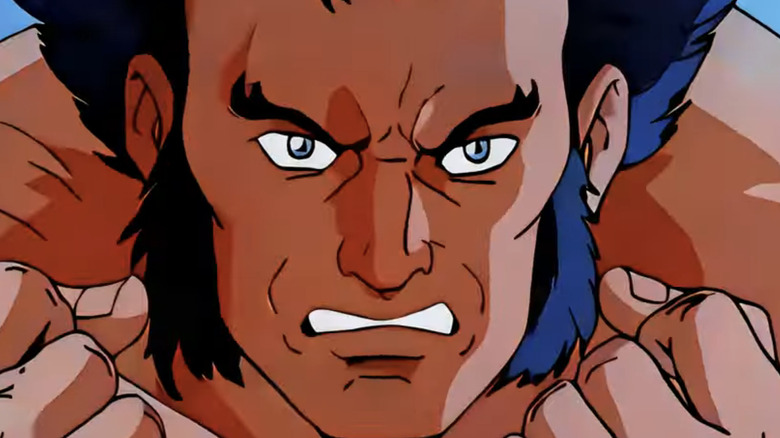
All three of the big superhero animated shows of the '90s were notable for treating their young audiences as more than capable of handling mature storylines, to the extent that Fox censors tried to prevent one "X-Men: The Animated Series" scene from airing. While "Mighty Morphin Power Rangers" didn't have anything like the mature sensibility of those animated juggernauts, however, it too made an indelible mark on our young minds.
The show was a cultural phenomenon when it arrived in 1993, just one year after both "Batman: TAS" and "X-Men: TAS" began airing. Had the latter not existed, however, we never would have experienced the thrill of watching harried parents punch each other out in the aisles of Toys R' Us for the last Megazord toy.
In an interview with Geeks for the 24th anniversary of "X-Men: TAS," showrunner Eric Lewald explained how he had multiple overlords to appease while producing the show. The Marvel and Fox bosses all had their say, while production company Graz Entertainment also weighed in with notes. Then, there was Saban Entertainment, which had partnered with Marvel to produce the show. "Saban didn't really care," said Lewald. "[...]They wanted to get the show done on time, and to be marketed. They were really good marketers. They had set a certain fee and wanted to make money on it."
Saban did make money. According to Lewald, the company was "scraping by" prior to "X-Men: TAS," which the showrunner was told ended up making Haim Saban $100 million. Not bad, but as Lewald remembered it, "Mighty Morphin Power Rangers" would prove even more successful, making Saban "his first billion," in what the showrunner called a "two-stage jump" from "X-Men" to "Power Rangers."
Power Rangers was an even bigger hit than X-Men: The Animated Series
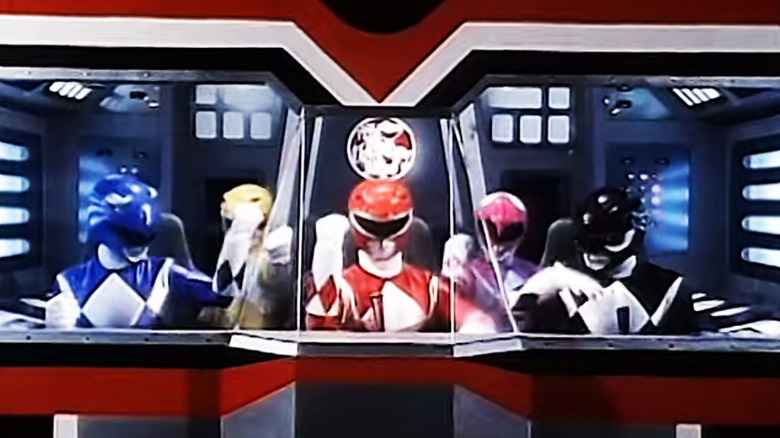
Speaking to The Hollywood Reporter, Haim Saban neglected to confirm just how much money he'd made with "X-Men: The Animated Series." He did, however, reiterate just how big a hit the show was for him and his company. "After I was able to deliver the network this hit series, my relationship with the president of Fox Children's Network, Margaret Loesch, was very good," he explained. "I basically had an open door to pitch Margaret any projects in our development pipeline."
Saban had been trying to get "Mighty Morphin Power Rangers" made for almost a decade, ever since he'd seen the original Japanese Super Sentai franchise in the early 80s. "I thought that Margaret might be the right executive with the right eye to take a gamble on this project," he recalled. "I presented her with a very rough pilot and she replied: 'Hmm, this could be interesting.'" Loesch agreed to back the series and in the summer of 1993, "Mighty Morphin Power Rangers" premiered on Fox Kids, where the X-Men had fared so well the year prior.
"All of the industry figured that nobody would ever watch some crazy, campy kid's show," said Saban, who went on to recall how "Power Rangers" became "a runaway hit from day one." While Saban didn't confirm just how lucrative the show was, a 1996 report from Video Age International (via The Free Library) claimed that "Power Rangers" grossed $1 billion in 1994 alone, simply from its licensed merchandise. Sure, "KPop Demon Hunters" might be a mega-hit that forced Netflix to produce merch, but I'll tell ya, there was nothing like the "Power Rangers" mania of the '90s.