

Before Foundation, Lee Pace Starred In An Underrated TV Series About The Tech Revolution
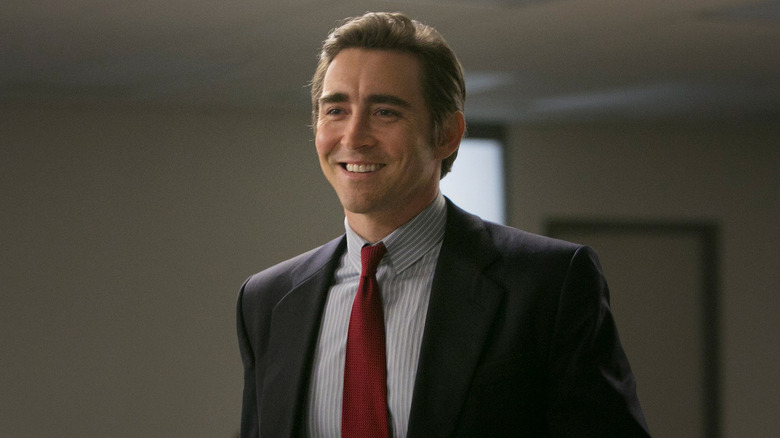
"I/O," the first episode of "Halt and Catch Fire," opens with the series' protagonist, Joe MacMillan, carelessly running over an armadillo with his Porsche. It's a markedly on-the-nose visual metaphor for Joe himself (Lee Pace, then years away from playing the Cleon clones on "Foundation"), a magnetic entrepreneur with a troubled past who aspires to help usher in the dawning computer tech revolution when the show begins in 1983 ... and who has little concern for anything (and anyone) he may crush on the way.
Joe, like the series around him, thankfully becomes more nuanced and considerate with time. As I've noted before, "Halt and Catch Fire" creators Christopher Cantwell and Christopher C. Rogers (both of whom executive produced Prime Video's canceled-too-soon "Paper Girls") clearly intended for their AMC show to fill the void left by "Breaking Bad" and soon to be vacated by "Mad Men" when it debuted in 2014. This is also why the series' first season got a fairly tepid reception; at that point, "Halt and Catch Fire" was fixated on emulating the prestige antihero TV dramas that had come before it, but without the delicate storytelling touch they had at their finest. Again, the situation unintentionally paralleled Joe's own sweaty attempts to leave behind his emotional baggage and reinvent himself as a visionary tech mogul in season 1.
Between that season's lukewarm reviews and disappointing viewership (per Vulture, "I/O" was AMC's least watched modern drama series premiere at the time), the show initially seemed doomed to be sent to the chopping block and fall into obscurity. That's probably a big part of the reason why "Halt and Catch Fire" never got its due credit as a little engine that could after that, even as it blossomed into the great series it always wanted to be.
Lee Pace thinks Halt and Catch Fire 'really earned' its success
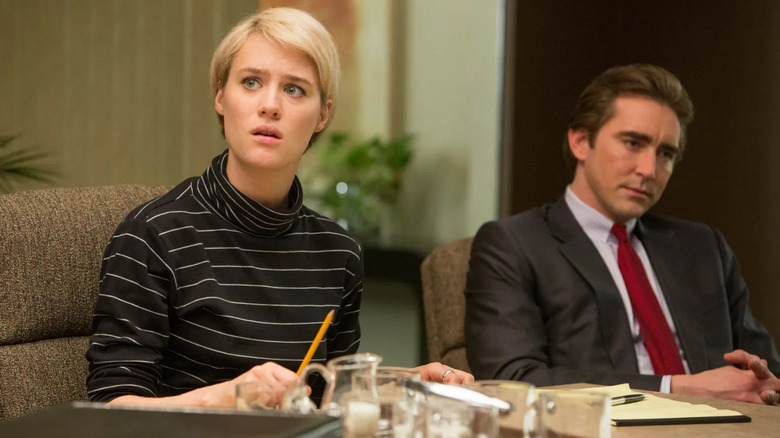
It's important to note that "Halt and Catch Fire" is about fictional people involved in the real-world personal computer revolution and the birth of the internet in the 20th century. This also means that Joe and the motley crew of programmers and engineers that come to form his family are doomed to spend their days chasing Sisyphean dreams, at least professionally. Fortunately, as the show progressed, its creators learned to treat this as a feature and not a bug (pun not intended, but still appreciated). As such, the challenges that come with "failing" and having to restart after you've ended a relationship and/or had a business go under became the series' guiding light and central theme.
Of course, this only happened because the "Halt and Catch Fire" creatives dramatically reconfigured the show starting in season 2, focusing more on its female leads and course-correcting without ignoring what went down in season 1. Luckily, their efforts weren't wasted. Everything from the series' writing to its visual symbolism grew more sophisticated, all while its actors painted their characters in deeper and richer shades. Their reward? "Halt and Catch Fire" miraculously managed to leg out to four seasons and became a critical darling, even as its viewership dwindled further.
As Lee Pace told The Hollywood Reporter in 2025, he believes AMC "figured out a way to make the finances of it work because they really believed in the show." He went on to argue that the series "really earned" its stripes, later noting, "We had to grow into what the DNA of that evolving story was, and it continued to evolve until the very last episode, really."
He's quite right. See for yourself by streaming "Halt and Catch Fire" on AMC+.