

Star Trek: Starfleet Academy Review: This Wonderful YA-Flavored Series Punches Way Above Its Weight Class
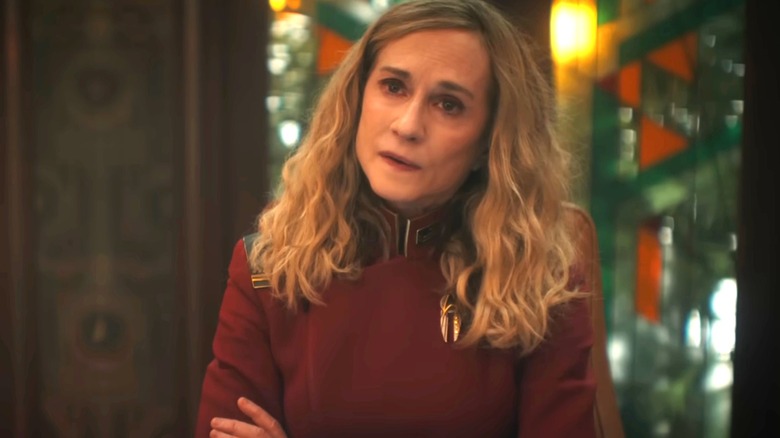
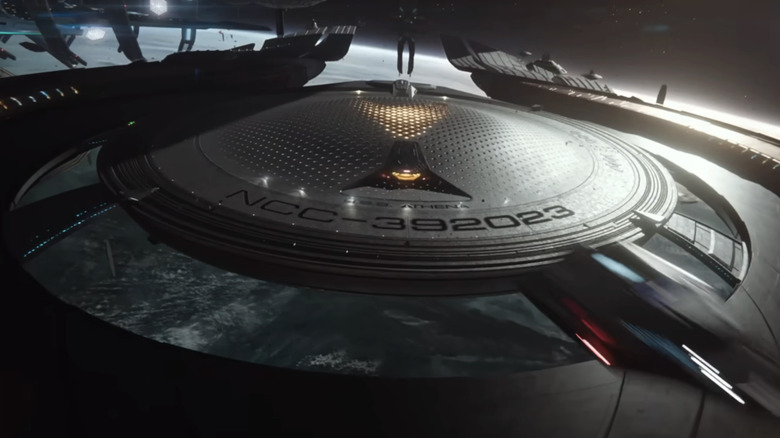
Starfleet Academy is one of the most-discussed and least-visited key locations across the entire "Star Trek" franchise. It's a place where legends are crafted, mistakes are made, and young people from across the galaxy are molded into shape, ready and able to crew a starship and boldly go and so on. It exists more as a twinkle in the eye of characters like Captain Picard than a fully pinned-down, known place with an exact identity.
In other words, it's the perfect place to set a new "Star Trek" TV series, because everyone from Mr. Spock to Harry Kim has passed through its halls. It connects virtually every major character across the franchise, while being wide open enough for all kinds of interpretation. And after decades of false starts and canceled attempts, a full-blown story set (almost) entirely within its hallowed halls has finally arrived.
"Star Trek: Starfleet Academy" is a weird show, a funky one even, in that it has to acknowledge the fact that this franchise's put-together captains, diplomats, and scientists all began as reckless, cocky, shy, weird little folks attending college for the first time. This is a "Star Trek" show where teen shenanigans frequently take center stage, but also one that reminds us that with a little luck, these kids are going to command entire fleets one day. They just need the right education.
And when it works, and it generally does, "Starfleet Academy" is a joy.
Star Trek: Starfleet Academy is a show with two levels
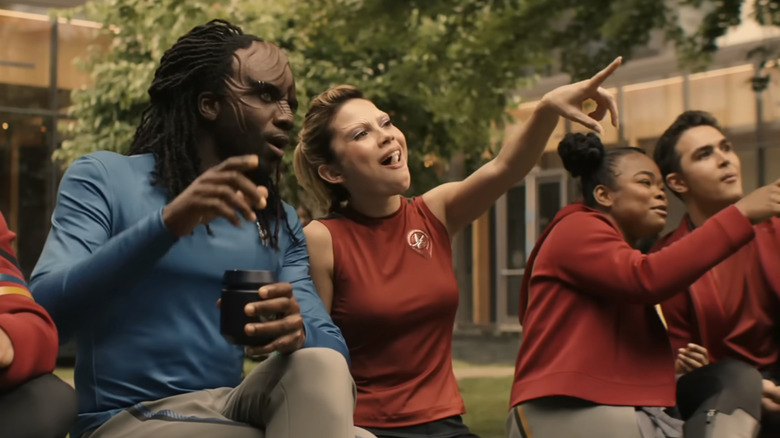
"Starfleet Academy" is a show that operates on two separate but parallel levels. Up top, we watch the school's educators and leaders as they induct the first Starfleet Academy class in over a century (fallout from the events of "Star Trek: Discovery"), and navigate a fraught, perilous galaxy and the diplomatic pitfalls that await them at every turn. Down below, we watch the school's students as they take classes, join clubs, bristle with sexual tension, and generally deal with the anxiety of being a Young Hot Human/Alien with the weight of the universe on their shoulders. The up-top stories are sweeping in scope, the student stories more small and personal. One is often the microcosm of the other, even when they don't directly cross over. While the galaxy deals with a sweeping event of grave importance, the Starfleet Academy debate club argues about it. It's a terrific structure.
This kind of setup should be familiar to anyone who has enjoyed a story built around the "magic school" Young Adult trope before, and yes, there are times when "Starfleet Academy" could be described as "Star Trek: Hogwarts." Thankfully, the school campus is a place worth the investment, a lavish piece of production design bustling with creatures and robots that can also literally lift off from its San Francisco port and take field trips to strange new worlds. In this way, the series is a college soap opera that also, well, acts like a "Star Trek" show.
Starfleet Academy's cast blends Star Trek veterans with newcomers
Any "Star Trek" show is only as good as its crew, and the "Starfleet Academy" ensemble is a healthy mixture of young talent and veteran performers. As Nahla Ake, the centuries-old chancellor of the Academy, Holly Hunter brings a brash, hippy-flavored aura to the uniform, casually dismissing protocol often enough to make James T. Kirk blush (and no Starfleet officer has ever sat in the captain's chair quite like her). She's backed up by returning "Trek" characters like Robert Picardo's holographic Doctor (still delightful) and Tig Notaro's Jett Reno (still delightful) and new characters like Gina Yashere's Lura Thok, the secretly sensitive Jem'Hadar warrior tasked with toughening the cadets up. The bench is deeper than you'd expect, and as the series proves, opportunities for fascinating guest teachers are endless.
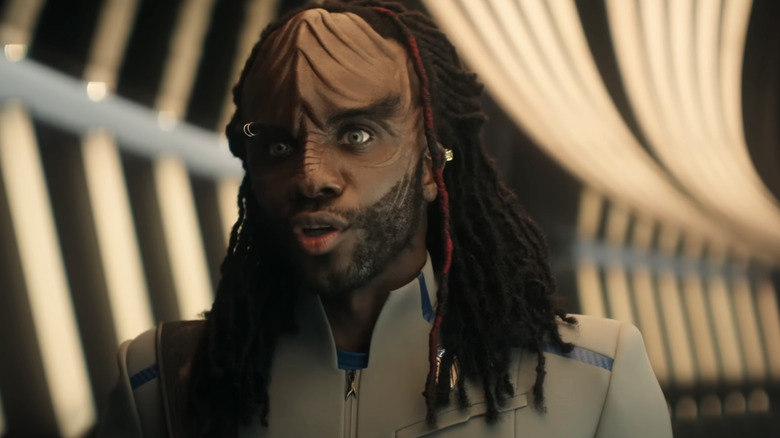
The young cast also makes a strong showing, bringing all the angst you'd expect from a series about young people living in a giant space school full of hot people. But while the roguish Caleb Mir (Sandro Rosta) is presented as the show's central protagonist, it's the slightly more esoteric characters that bring the series to life. Karim Diané's queer, pacifist Klingon Jay-Den Kraag is an immediate standout, honoring the legendary alien race's past even as the show upends everything about their culture in a surprising and satisfying way. Kerrice Brooks' Sam, a "photonic" projection representing an isolated race of alien AI, begins as comedy relief before becoming the catalyst for the show's most unexpected and moving moments.
Starfleet Academy is undeniably a show aimed at a younger audience, and it's the right choice
"Starfleet Academy" walks a fine line, trying please three separate audiences at once. It truly wants to be a great "first" "Star Trek" for young viewers, luring them in with The CW-tinged drama of the students yearning and learning in equal measure. It wants to attract the mainstream audience more familiar with the action-driven movies, delivering expensive action scenes directed with big screen gusto. And yes, it also wants to appeal to the hardcore Trekkies, exploring the current status of the Klingon Empire (a massive swing that connects with unexpected force), Betazed politics (more interesting than you'd think!), and the lingering mysteries of a certain season finale that "Trek" fans still passionately discuss (episode 5 is going to inspire some of the biggest online conversations in ages).
But this cocktail is undeniably YA-flavored, and showrunners Alex Kurtzman and Noga Landau lean into it. These kids are kids, and they make mistakes and fall in love and struggle with homework and conduct ludicrous prank wars and, in perhaps the funniest "Star Trek" sequence outside of the animated comedy series "Lower Decks," leave campus for a night of drinking and partying. While some old school "Trek" fans will turn their nose up at the hijinks, I just recall that virtually every mention of the Academy in previous shows came with a wink and smirk suggesting the chaos everyone created before they graduated. It's the right choice.
Starfleet Academy turns Discovery's lemons into lemonade
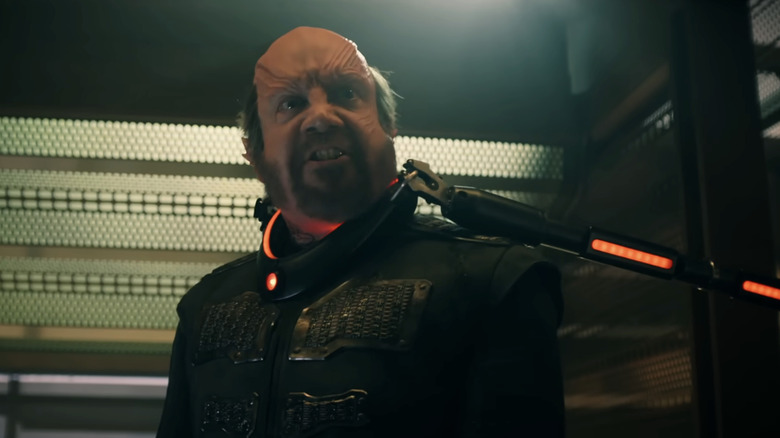
Frankly, I found myself delighted by the first six episodes of "Starfleet Academy" provided to critics. I had a blast with the ridiculous comedic swings, the intergalactic politics, the often queer romantic subplots, Paul Giamatti's off-the-wall guest performance as a disgusting space pirate, the fresh approaches to the "Trek" universe, and the frequent (and I mean frequent) Easter eggs and callbacks to past alien species and events. Did you want the "Next Generation" skirt-uniform-for-men back? Don't worry, "Starfleet Academy" has your back.
I do recommend that skeptical "Trek" fans give this one a chance, and stick with it. Yes, this series is a direct spin-off from the divisive "Star Trek: Discovery," but it takes that show's lemons and makes sweet lemonade. The show gets better as it goes on, especially in its thoughtful and joyous fourth episode and its hilarious, canon-rattling fifth entry. Controversial events like the Burn have been given a new context, acting as a metaphor for the here-and-now like the best "Trek" has always done. These kids have inherited a busted universe, one the adults couldn't fix. It's up to them now. And it's easy to root for this crew.
/Film Rating: 8 out 10
"Star Trek: Starfleet Academy" premieres on Paramount+ on January 15, 2026.