

A Chainsaw Man Character Originates From One Of Tatsuki Fujimoto's Earliest Manga
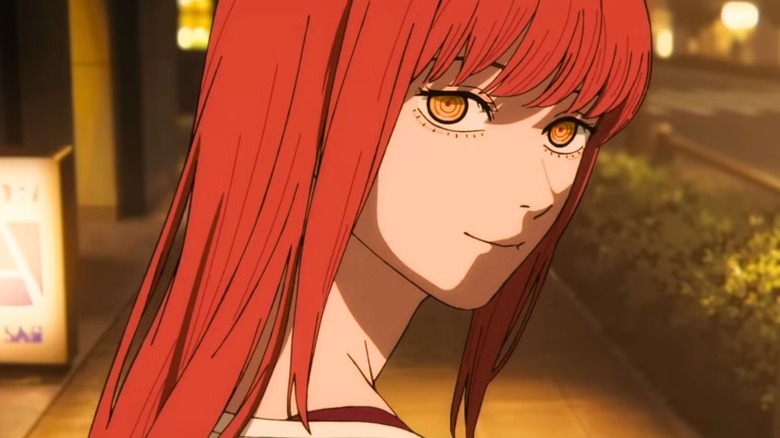
Spoilers for "Chainsaw Man" up to chapter 98 follow.
"Chainsaw Man" season 2 has been officially greenlit, but with the success of "Chainsaw Man: The Movie – Reze Arc," that's hardly surprising. Fans of the original "Chainsaw Man" manga by Tatsuki Fujimoto know there is more story to tell, and "Reze Arc" foreshadowed the season 2 endgame just like the original manga chapters did.
The lead of "Chainsaw Man" is Denji, an impoverished Japanese boy who hunts Devils for money, monsters that embody humanity's fears. After being murdered and dismembered by the Yakuza, Denji is revived with the Chainsaw Devil as his heart. Makima, a head of the Devil-hunting Public Safety division, "adopts" Denji to set him hunting Devils.
Makima is revealed to be the story's main villain; she's the Control Devil, and wants Chainsaw Man's power to reshape the world. Denji can defeat Makima and, to prevent her body from regenerating, cooks and eats her corpse. Makima promised she'd give Denji a decent meal, and she fulfills that bargain in death. When a Devil dies, though, they reincarnate.
"Chainsaw Man Part 1" ends with Denji adopting the reincarnated Control Devil, named Nayuta. She resembles a child-version of Makima, but with black hair; the hope is that with Denji as her big brother, she won't turn into the love-deprived monster Makima was. However, Nayuta isn't only familiar because she resembles Makima.
You see, "Reze Arc" wasn't the only Fujimoto anime to release this year. An anthology, "Tatsuki Fujimoto 17-26," adapts eight one-shot manga he wrote in his youth. One of those is "Nayuta of the Prophecy," about a girl with demonic horns and the potential to destroy the world. Fujimoto's ending for "Chainsaw Man Part 1" is him reusing the essence of "Nayuta."
Before Chainsaw Man, there was Nayuta of the Prophecy
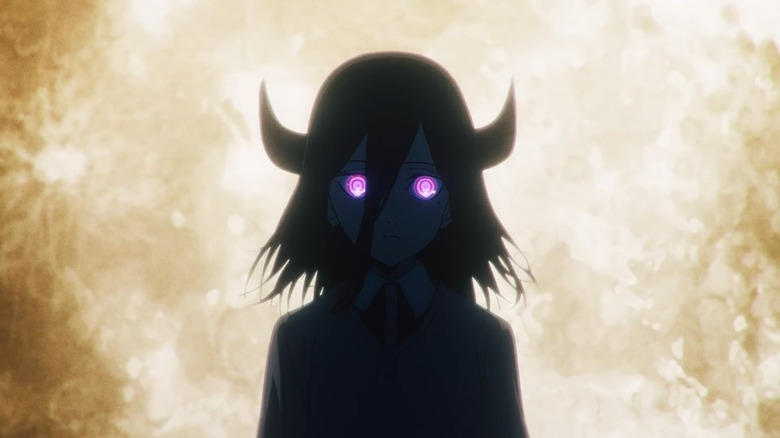
The prophecy part of the manga's title is as follows: "One day, a mage will be born with horns that pierce the mother's womb. They shall lack human heart, they shall be cruel, speak unintelligibly, and shall bring an end to all of mankind."
Nayuta, who is no older than 10 years old when the story begins, fits the bill in all major categories. Aside from her horns, she kills small animals for fun and eats their corpses raw; that "hobby" gets even worse when she learns to summon swords from nowhere. She also talks only in strings of unconnected but foreboding words, e.g., "Destruction, nightmare, graveyard." So, will she destroy the world?
Not if it's up to her big brother, Kenji. While everyone else in the world is terrified of Nayuta and demands she be killed before she can cause an apocalypse, Kenji sticks by his baby sister's side. He struggles to communicate with her and mind her destructive impulses, but his love for Nayuta outweighs any fear he feels. The story works as an allegory for living with any sort of troubled or disabled family member, who may not act "normally" and thus face rejection from the world.
The animated "Nayuta of the Prophecy," directed by Tetsuaki and animated by 100Studio, runs for about 20 minutes, an appropriate pace for adapting a 56-page manga. On the last page of that manga, Fujimoto said that he wrote the story because the editorial at manga magazine Jump SQ told him he couldn't write unique characters. "Nayuta" was his attempt to prove them wrong, and Nayuta herself "is still a favorite character of [his]." Like Fujimoto's self-referential one-shot "Look Back," "Nayuta of the Prophecy" helps explain his other manga.
How Nayuta and Chainsaw Man compare
The original Nayuta's design was split between two "Chainsaw Man" characters; her spiral eyes and ominous calm were inherited by Makima, but her horns were given to the character of Power, bonded to the Blood Devil. Despite the aesthetic influence of "Nayuta" on "Chainsaw Man," it's a more solemn story than that series tends to be. The violence in "Nayuta," particularly to the animals, is sickening and scary. "Chainsaw Man" is all over the place tonally, but that reflects Fujimoto's tight control over his manga and the breadth of his vision. He's crafted a story that can have dumb and gross-out comedy, nightmarish horror, exhilarating action, and genuine emotion depending on the chapter.
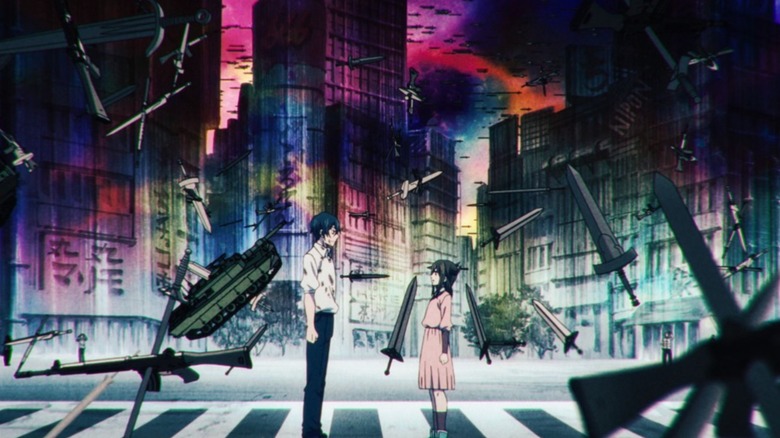
The moment in "Nayuta" that's most like "Chainsaw Man" is the climax. Nayuta has flooded the sky with huge swords, seemingly fulfilling her destiny. Then, Kenji walks up and slaps her, scolding her like the little girl she is. In the manga, this reads as more of a dark comedy beat, with a full page for emphasis and prominent onomatopoeia sound effects, while in the anime, it's more straight drama. The emotion comes out in both versions, though, when Nayuta starts crying like a little girl who messed up. The mix of cartoony slapstick and pathos is quintessential Fujimoto, which he's refined through drawing "Chainsaw Man."
Makima offers a counterfactual for Nayuta's character. Makima was raised without love by the Japanese government, and so without a Kenji-like figure, she became a monster. Conversely, the Nayuta in "Chainsaw Man" reaffirms the original story's nurture over nature theme.
"Tatsuki Fujimoto 17-26" is streaming on Prime Video.