

How Apple TV's Foundation Avoided Becoming Isaac Asimov Fan Fiction
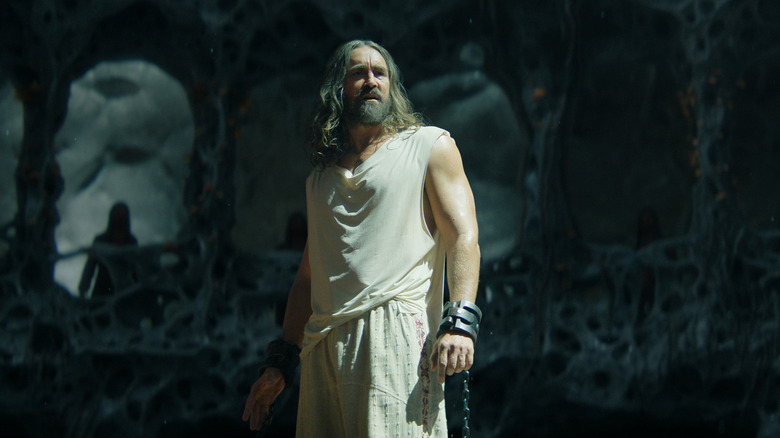
What does it mean to "adapt" a story from the printed page to the screen? It's a question that has entertained (and plagued) fan bases forever. Take Isaac Asimov's "Foundation" books, which were once considered particularly unadaptable. In fact, when co-creator David S. Goyer pitched the "Foundation" TV series to Apple TV, he succeeded in doing so by boiling down Asimov's incredibly complex and inconsistent narrative to one sentence. (He basically described it as a galactic chess game.)
Brother Day actor Lee Pace dug deeper into the issue of the show's overwhelming source material in an interview with Wired. He also explained how the show's creatives have deliberately avoided creating one-for-one fan fiction, stating:
"I really love how, on this show, we have not treated the making of the series like fan fiction, where we would be like, 'Okay, now we do the scene where this happens, and now we do the scene where this happens, and this happens, and this happens.'"
Instead, the "Foundation" cast and crew have opted to take a creative and unique approach to exploring the world Asimov built. Pace continued:
"We let the hugeness of the story that Isaac Asimov left us be on the table, and we can explore the plotlines that he wrote, plotlines that are referred to, plotlines that happen offstage, the plotlines that he discovered later in writing and realizing about the story."
Asimov's "Foundation" saga spans centuries and criss-crosses the galaxy. Characters come and go, sometimes within a few pages. For instance, Gaal Dornick (Lou Llobell) appears on only a handful of pages in the first book. Rather than force that round peg into a square hole, Goyer, Pace, and co. have used the novels to tell their own story — one that rhymes with Asimov's without mirroring it completely.
There's plenty more room for Apple TV's Foundation to run
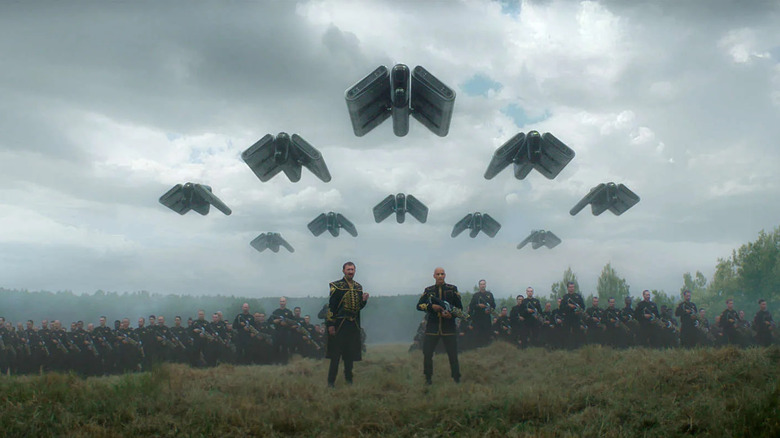
Part of what makes this unique approach to adapting "Foundation" so fascinating is that it begs the question: Where will the series ultimately go? During its first three seasons, the show established its own versions of crucial Asimovian elements: The First Foundation is thriving, the Galactic Empire is crumbling, and the genetic dynasty (which is very different from the one in the "Foundation" books) is all but over. The Second Foundation is also in the picture at this point, and the threat of the Mule has come and gone (again, with a big twist on Asimov's source material).
Looking forward, the stage is set to tell an epic story as the "Foundation" TV show races toward the culmination of Asimov's seven-part book series, and Pace knows it. Here's what he had to say about the book storylines that could potentially happen in season 4 and beyond:
"I hope we get a chance to expand the story in that way [regarding scope]. I feel like that's what we've been doing. There's a big opportunity for the story to grow, and there are things that David [Goyer] has written throughout the first three seasons that if we do get to continue, there's definitely some seeds that can grow."
That is the confidence of a man who knows the story won't be constrained by an unrelentingly strict adherence to source material that wasn't written for a screen adaptation. "Foundation" has room to run as the story expands in scale and the future of humanity is decided.
Asimov explored within the Foundation universe, too
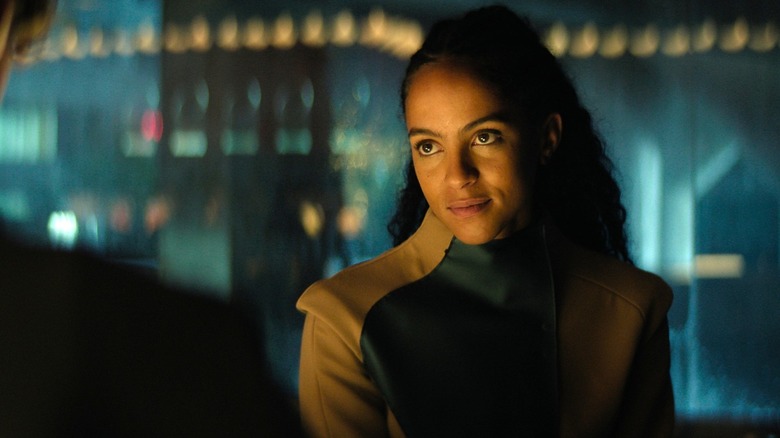
For any fans who are upset by the thought of a book-accurate adaptation pulling the show toward being "fan fiction," I hear you. As someone who has read Asimov's "Foundation" novels multiple times, it's easy to set expectations and then have them dashed as the TV adaptation evolves in different directions and takes creative liberties.
However, it's helpful to remember that Asimov himself changed the tone and pace of the story as he went along. The early "Foundation" books are very grounded and read almost like a chronology or annal of history. Their science either seems plausible or is left unexplained, while the focus is on geopolitical storytelling.
However, by the time the subsequent books came out decades later, Asimov's story had become character-driven and science-heavy. Lee Pace actually spoke to this evolution, remarking:
"[Asimov] worked on this story over so many different decades, writing the 'Foundation' books, writing them with collaborators, and finding ways to tie in other short stories and storylines that he had written in other books and series, and expanding this world of 'Foundation.'"
Indeed, Asimov developed his universe into the world that so many fans know and love with a sense of adaptation and creativity that spanned decades. At the risk of sounding cheesy, you could say that he set up a "foundation" that has empowered the minds behind the "Foundation" TV series to do the same thing as the show continues its run. As fans, it's okay to enjoy this unique take on Asimov's universe. After all, the original version is still there, unaffected by the series or any other project that seeks to partake in interpreting and expanding upon this awe-inspiring, seminal work of sci-fi.
You can stream "Foundation" on Apple TV.