

Why Isaac Asimov's Foundation Was Considered Unfilmable Before Apple TV's Hit Series
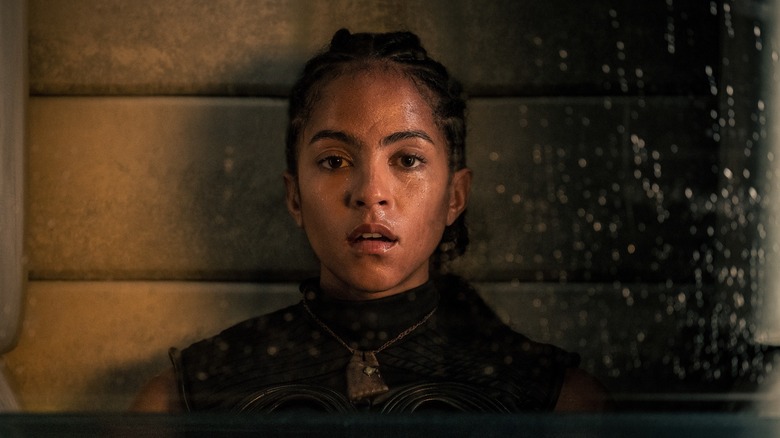
Apple TV has found success with Isaac Asimov's "Foundation" series (which is returning for season 4). But this is one of the first times anyone has managed to take the innovative author's source material and actually create something that makes sense on the screen. The reason? For decades, the source material has been considered "unadaptable" due to a galaxy-spanning world, a time-hopping narrative, and a frustratingly inconsistent cast of main characters. A decade ago, Reddit user New Trantor (a great deep cut name for any of you Asimov fans out there who have read further into the story) summarized why the story is so intimidating to convert to screen thusly:
"The story in the foundation takes place in different eras [...] Also, the story is so much of intellectual content that I highly doubt the mainstream audience would like it like 'Star Wars' or 'Star Trek.'"
Way back in 2014, The Guardian also pointed out that the books (published from the '40s to the '90s, over the first half century of the sci-fi genre) are not even consistent, a point Asimov himself admitted, too. The publication quoted the author, who gave a simple explanation:
"[The books] offer a kind of history of the future, which is, perhaps, not completely consistent, since I did not plan consistency to begin with."
With so many factors working against an adaptation, the books attained a status as an "unadaptable" project. But that doesn't mean the popular series was left alone. Multiple groups have tried to bring it to life on screen before Apple did so.
A tale of many attempts to adapt Foundation
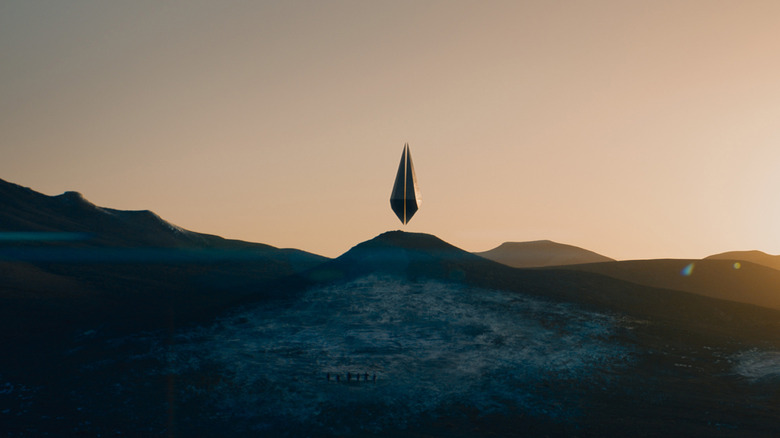
Multiple attempts to adapt the "Foundation" stalled out before Apple TV found success. The Guardian source above references one of these by HBO and Warner Bros. TV. They even brought on Jonathan Nolan (brother of the director Christopher Nolan) in the early 2010s to help write it. That year, the Nolan brothers had just finished the mind-bending masterpiece "Interstellar," and you'd think Jonathan would have had something up his sleeve. No dice.
That project was preceded by a two-time attempt by Sony Pictures back in 2009 that also went nowhere. Between inconsistencies, time jumps, and conceptual hurdles, "Foundation" apparently managed to foil even the cleverest creative minds — that is, until it ran up against the likes of David S. Goyer and the team at Apple TV.
So, why is it working now? There are many ways to answer that question. But one of the most obvious is a willingness to deviate from a blow-by-blow adaptation of the source material. Rather than try to adapt a story that can jump 50 years between chapters, Goyer created enduring and interesting characters that survive from season to season. Demerzel (Laura Birn) is a robot. Hari Seldon (Jared Harris) and Gaal Dornick (Lou Llobell) have survived via cryosleep. They just keep making new versions of the three cloned Emperor Cleons. This has established a predictable framework that has allowed the writers to create their own version of a story within Asimov's disconnected and scattered story. While this kind of blatant deviation from the source material typically draws outcries from diehard fans, in this case, it has turned the unadaptable into the adaptable, creating a fun, compelling, multi-season story within the wider world that Asimov built.