

A Surreal 2006 Sci-Fi Movie Is The Perfect Companion Piece To Christopher Nolan's Inception
This post contains spoilers for "Inception" and "Paprika."
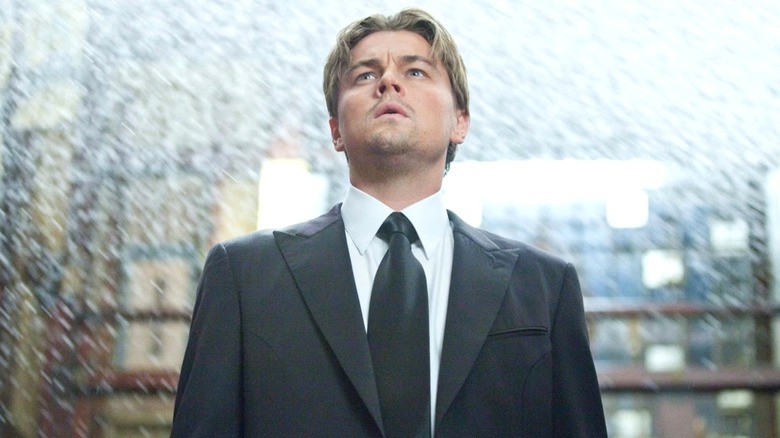
"Inception" is both intricate and entertaining. Christopher Nolan's 2010 sci-fi action makes great use of its insanely stacked cast, and takes its central dream-within-a-dream motif to dizzying heights. It's a heist movie with more than one heady twist, where professional thief Dom Cobb (Leonardo DiCaprio) is tasked with the job to incept, or implant, an idea into someone's mind. "Inception" consciously draws from genre tropes associated with dream logic and repackages it with classic Nolan-isms, but the film has a clear link to an animated movie helmed by visionary director Satoshi Kon. The film in question is the 2006 sci-fi "Paprika," which blurs the line between fantasy and reality just like Kon's astounding psychological horror, "Perfect Blue."
Kon based "Paprika" on Yasutaka Tsutsui's eponymous novel, and sets up a conflict between a mysterious dream terrorist with the ability to cause nightmares and research psychologist Atsuko Chiba. She isn't alone in her endeavor to help psychiatric patients, as she shares her mind with a detective alter-ego named Paprika, who allows her to enter the dream world. This doesn't sound like the plot of "Inception" at all, but the similarities lie in the thematic and visual nuances that Kon etches with vibrant gusto.
If we get into shot-for-shot recreations, Nolan's gravity-defying hallway fight is identical to Detective Toshimi's recurring nightmare, where he's unable to save his friend as gravity works against him. Some visual touches feel like homages (Elliot Page's Ariadne touching a mirrored surface to watch it shatter), even though Nolan hasn't named Kon as an outright inspiration. Pitting these films against each other is an exercise in futility. "Paprika" is a singular experience that enriches Nolan's film, so it makes more sense to embrace both stories and the endless possibilities they offer.
Satoshi Kon's Paprika resists straightforward interpretation
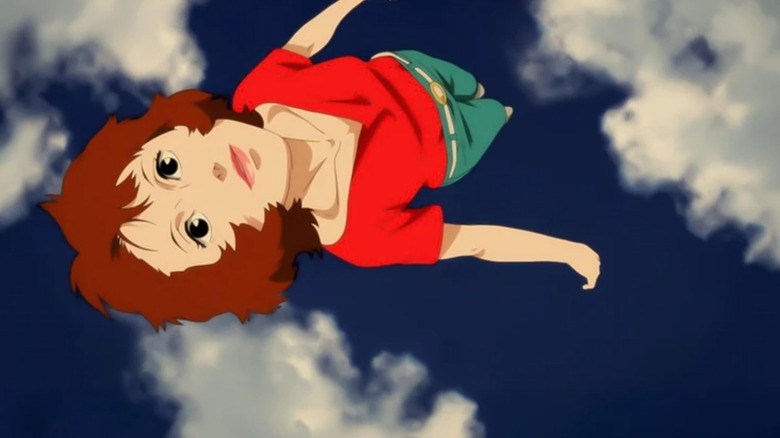
Inception fits right into the blockbuster mold despite its layered approach to its core themes. It is a film that demands constant attention, as Nolan lays down meticulous breadcrumbs for us to make sense of a relatively abstract premise. What seems confusing at first glance makes perfect sense once you reach the end of this taut narrative, and there's plenty of spectacle to sustain us when things get a bit dense. But "Paprika" presents its convoluted story through a purely surreal lens — logic takes a backseat here, as we're meant to fully immerse ourselves in Kon's complex postmodern world. If you do want to make sense of "Paprika" in the conventional sense, then Tsutsui's novel offers a more psychologically fleshed-out interpretation of Atsuko and the dream doppelganger that bursts forth from her repressed desires.
A closer look at Kon's body of work makes his deep love for abstract symbolism apparent. His "Millennium Actress" also dabbles in the reality-dream dichotomy: Here, a celebrated actor named Chiyoko relives her past through the movies she's taken part in. The film is a beautiful feat of hand-drawn animation, where desires manifest in nostalgic cityscapes, only to be shattered by the jagged edges of cold, hard reality. "Paprika" tackles the same theme with exaggerated fluidity, delving into the anxieties of a world overreliant on technology (which makes reality so unpalatable that psyches split into alter egos). When these repressed self-aspects spill over into reality, Kon creates a stunning spectacle in the form of a parade where childhood toys and knick-knacks gain sentience to march the streets.
The mind-bending nature of "Inception" is solvable, but "Paprika" defies set interpretations. Kon's work is meant to be felt, like a lingering dream you cannot completely decipher.