

The Two Best Horror Characters Of 2025 Invented New Ways To Scare Us

Don't bleach any skulls or snap any twigs — this article contains major spoilers for both "Weapons" and "28 Years Later."
2025 has been a scary year at the movies. The horror genre positively flourished with critics and at the box office, with "The Conjuring: Last Rites," "Sinners," and "Final Destination: Bloodlines" cleaning up financially and earning solid reactions from audiences — especially "Sinners," which has been universally heralded as one of the year's very best films in general. There's something else that horror movies did well this year: create innovative, terrifying characters to shock us, scare us, and teach us something.
Yeah, I know "teach us something" is super nebulous, so let me introduce the two characters who shook up the horror genre for the better this year. In one corner, we have "Aunt" Gladys Lily from Weapons, played by the unbelievable Amy Madigan (who should get an Oscar nomination for her role). In the other, we have the kindly, deeply rundown Dr. Ian Kelson from Danny Boyle's long-awaited sequel "28 Years Later," portrayed by Ralph Fiennes (who has a few Oscar nominations but honestly could get one for this film in a world where the Academy appreciated horror). If you've seen both of these films, as I have, you're probably wondering why Gladys and Kelson are even being mentioned in the same breath.
Horror movie villains can feel repetitive and one-note, but Gladys and Kelson both express something about the universes they inhabit; something that feels fresh and new. Gladys is a chaotic, deeply evil monster, and Kelson is a man trying to make sense of and survive a desperate world using sanity and kindness. (His methods are unconventional, but I'll explain, I promise.) Here's how these two radically different characters shaped horror in 2025.
Gladys from Weapons and Dr. Ian Kelson couldn't be more different
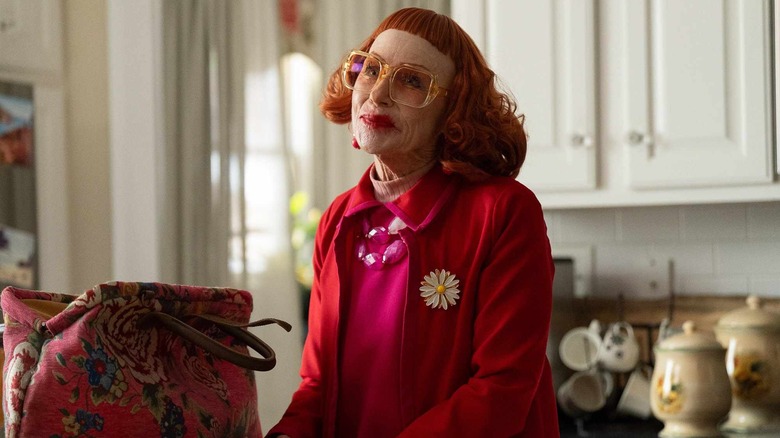
We briefly see Gladys in "Weapons" before she's properly introduced — in the corners of scenes featuring her "nephew" Alex Lily (Cary Christopher), the only boy left after his entire elementary school class disappears, and in the nightmares of Alex's teacher Justine Gandy (Julia Garner) and the father of one of Alex's classmates, Archer Graff (Josh Brolin). When we finally meet her, she seems ... nice, albeit weird! Yes, she's caked in bizarre makeup, wearing a horrendously odd wig, and talks like a little girl in an older woman's body, but at worst, she just seems eccentric. Wrong! Gladys is some sort of potentially ancient witch who uses people as energy sources by turning them into stupefied zombies that do her bidding. (The "potentially ancient" part comes in when Gladys, desperate to cover up the fact that she's already turned Alex's parents into zombies, says they have a "touch of consumption.") By the end, you're positively cheering when the 17 children Gladys kidnapped from Alex's class tear her to pieces, because she's so incredibly evil.
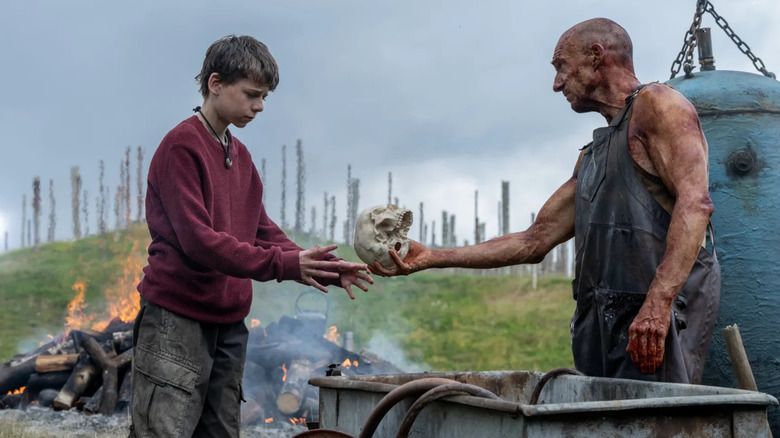
Conversely, when we first meet Dr. Ian Kelson, he looks downright insane. He's covered in grime — most of which is probably blood, based on how everything works in the zombified, post-apocalyptic world of "28 Years Later" — and rescuing our hero Spike (Alfie Williams) and his mom Isla (Jodie Comer) after the two are besieged by zombies. Yes, Kelson's ritual of bleaching skulls of the dead and creating a monument to them is weird, but as he explains the concept of "memento mori" to Spike and Isla — which literally translates to "remember you will die" — you realize he's desperately trying to find sanity and even, strangely, empathy in a broken world.
The chasm between Gladys and Dr. Ian Kelson represent two different varieties of horror
One of these characters will continue their story on screen — Dr. Ian Kelson will return in "28 Years Later: The Bone Temple" in 2026 — and Gladys might if director Zach Cregger eventually makes a prequel about her character. Just from these two films, though, Gladys and Kelson deliver new ways to frighten us.
Gladys is chaotic, grasping for absolutely any way to stay young or even, potentially, alive in the first place by using innocent humans as energy sources. Kelson, on the other hand, is imbued with purpose, both as someone who honors the dead and as someone determined to find a way to survive in a tattered and violent world. Kelson approaches with kindness and empathy; Gladys approaches by manipulating and controlling. Look at the ways they handle the young boys who somewhat unexpectedly enter their lives. Gladys uses Alex for her own means and nearly gets him killed. Kelson, upon realizing that Isla has a terminal form of cancer, helps her die with some dignity intact and is exceedingly gentle with Spike in the aftermath, giving the young boy a reason to continue surviving in the vast wasteland.
Gladys creates a world that's borderline unlivable, and Kelson inhabits a truly unlivable world in the only way he can — and both show us how easily someone can succumb to darkness (Gladys welcomes the darkness and invites her victims into it, whereas Kelson stands in stark contrast to the crueler people in his own apocalypse). These two characters are now vital parts of the horror canon, and they represent two halves of a whole. "Weapons" and "28 Years Later" aren't just phenomenal horror films, but showcases for these now iconic figures.