

How Fox Kids Defused A Baptist Minister's Complaint Over The Beetlejuice Cartoon
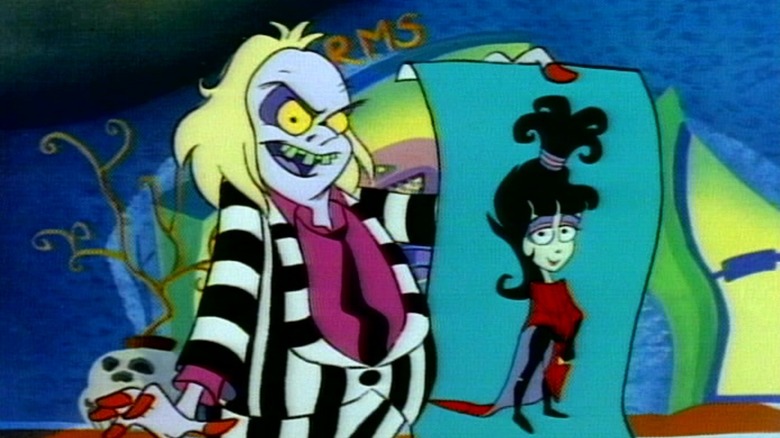
Tim Burton's "Beetlejuice" was released in theaters on March 30, 1988, and it became an unexpected hit, grossing over $84 million on its $15 million budget. It was unexpected because it was so weird and unlike any of the other hits of the day. Tim Burton was a stylist who drew inspiration from Disney, old B-movies, Edward Gorey, Charles Addams, and myriad other cartoon-twinged sources. It was unlikely that Burton should become a Hollywood darling, but he became just that.
Plans were immediately put into place to make a sequel, "Beetlejuice Goes Hawaiian," and in 1989, Burton developed his film into an animated TV series. "Beetlejuice Goes Hawaiian" never came to pass, but the "Beetlejuice" TV series proved to be quite popular. It ran for 95 episodes over four (strangely parsed out) seasons, expanding the bizarro world of Burton's film into a semi-surreal sitcom. "Beetlejuice" was set mostly in the Neitherworld, where ghosts go when they die. The Neitherworld, though, was full of monsters and shape-shifters in addition to mere usual dead people. The title character — a centuries-old trickster — was played by Stephen Ouimette, and he regularly had adventures with the mortal Goth girl Lydia (Alyson Court). Lydia was able to summon Beetlejuice from the Neitherworld by reciting his name three times.
Because "Beetlejuice" was about death, ghosts, and other demonic beings, it attracted a lot of attention from hand-wringing church groups who felt the show might be a little too Satanic for the kiddies. Indeed, back in 2024, Cracked ran an oral history of the animated "Beetlejuice" series, and Sidney Iwanter, an executive at Fox Kids, recalled having to field phone calls from upset ministers about the series. Luckily, he had a tactic for such calls: listen and respond politely.
Fox Kids listened to every complaint
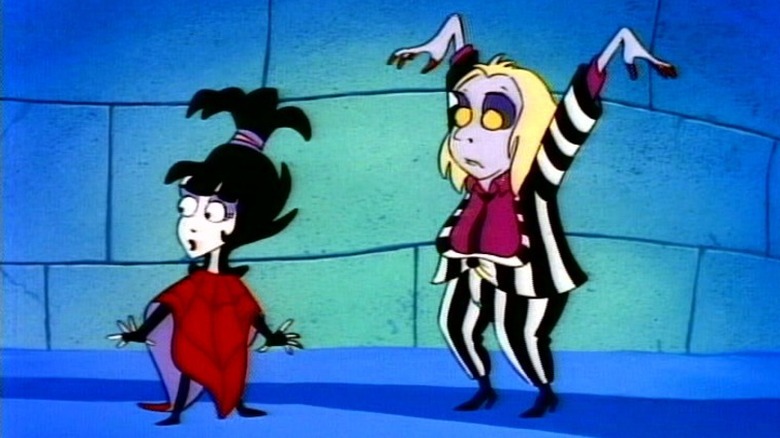
Iwanter recalled that he got a lot of calls from, in his words, "Bible-thumpers who found that show Satanic." He said that Baptist ministers in particular would write in to "Beetlejuice" to complain about its theological implications. It was, after all, quite odd. Iwanter noted that these were legit concerns, though, and that they should be listened to. Mostly, though, he listened because he knew the ministers wouldn't go away if ignored.
Iwanter would even go so far as to have long conversations about "Beetlejuice" with the aggrieved. One conversation stuck in his mind, regarding an angry letter from a Baptist minister in Texas about a scene where Beetlejuice had turned into a donkey. As he recalled:
"I called her up and spent an hour on the phone with her talking about the Bible and all the animals — all the donkeys, jackasses, and mules — associated with biblical stories. I had the Bible in front of me, and we had this in-depth conversation. At the end of it, she said, 'It's nice to know you're a God-fearing man, and I'm happy you're attached to this show.' And that was it! You never ignore people, because then it just gets worse."
Iwanter wasn't always so diplomatic, though. Indeed, a co-worker of his, Margaret Loesch, the president of Fox Kids at the time, recalled that Iwanter would often respond to angry letters by writing back equally angry letters. It seems that Iwanter would be really flippant and disrespectful in these letters. Sure, he was responding, but it was not necessarily in a constructive fashion. "He could be so sarcastic," Loesch said. "I'm surprised someone hasn't killed him." Iwanter's "respond to the complaints" philosophy, it seems, only took him so far.