

How Long Do Elves Live In The Lord Of The Rings Series?
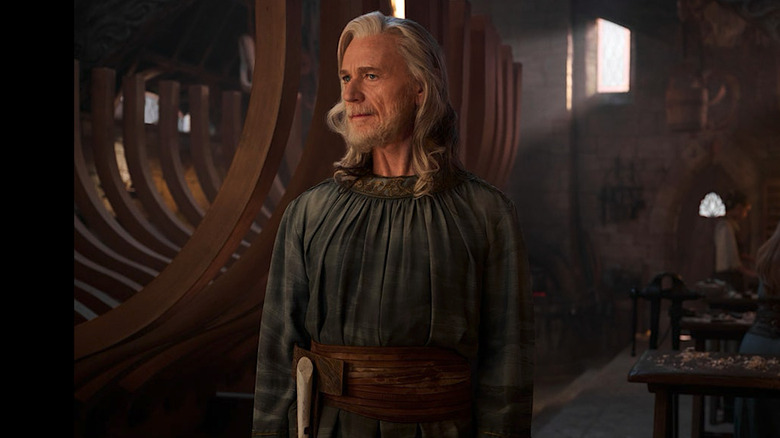
There are a lot of old beings in Middle-earth. For instance, a while back, I laid out the case for why Tom Bombadil (and not Treebeard) is the oldest creature in Middle-earth. Unlike the leader of the Ents, the enigmatic Bombadil pre-dates the timeline itself. There are plenty of other long-lived characters: Gandalf, Saruman, the Dark Lord Sauron, his original master, Morgoth, and the Creator Ilúvatar — just to name a few. These are all angelic and demonic forces, though. They're spirits who occasionally show up in incarnate bodies, like Sauron in his black armor or Gandalf and Saruman as old-man Wizards. Where do Elves fall into the mix?
While they're considered "immortal," Tolkien's Elves aren't endlessly eternal. Instead, they are immortal within the bounds of Middle-earth itself. As long as Arda (the Earth) exists, Elven souls perpetually exist and are tied to that physical creation.
While that's kind of an answer, though, it doesn't really say much about Elven life spans and life cycles. Trust me, there's a reason for that, too. It's a confusing little corner of Tolkien canon. The Oxford author himself spent decades trying to sort out how long Elves live in his world. I've spent a solid amount of time parsing through a bunch of his writings to try to find as good an answer as we can get beyond "They live for a really, really long time." Here's what I found.
Tolkien's Elves are immortal (but tethered to the world)
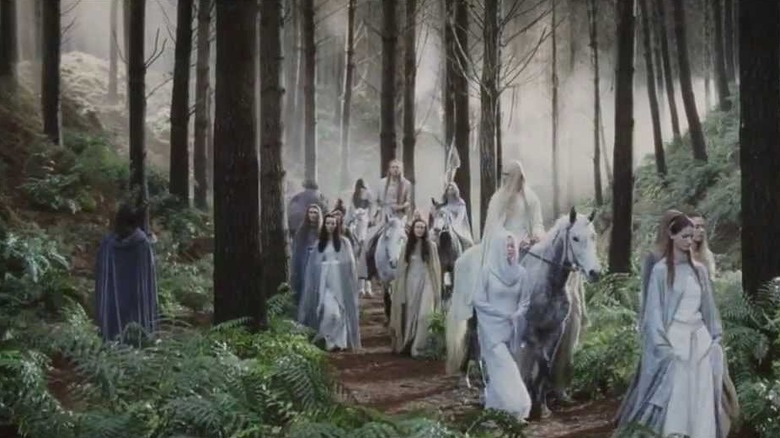
Let's start by making something clear. Elves are immortal. Yes, even Tolkien uses that word, just with a really important caveat. In a letter in 1951, he described his long-lived Elven race like this:
The 'Elves' are 'immortal', at least as far as this world goes: and hence are concerned rather with the griefs and burdens of deathlessness in time and change, than with death.
See that? He uses the word immortal, but in quotes. In another letter in 1958, he also used the term "limitless serial longevity." It isn't directly attributed to the lifecycle of Elves in that case, but Tolkien uses it to contrast true "immortality" (i.e., eternal life free from time) with the ability to infinitely extend life in a certain state (i.e., being obsessed with time).
In the letter from 1951, Tolkien circles back around to the concept of immortality, too, clarifying:
The doom of the Elves is to be immortal, to love the beauty of the world, to bring it to full flower with their gifts of delicacy and perfection, to last while it lasts, never leaving it even when 'slain', but returning.
Complicating things even further, Tolkien calls mortality "The Doom (or the Gift) of Men." This makes the unexplained phenomenon of death throughout Middle-earth history one of tension and confusion. It is a release for Men to leave the world, and simultaneously a restraint for those who don't want to do so. In the letter, Tolkien summarizes this Doom as "a grief and an envy to the immortal Elves."
The Elvish cycle of life and death
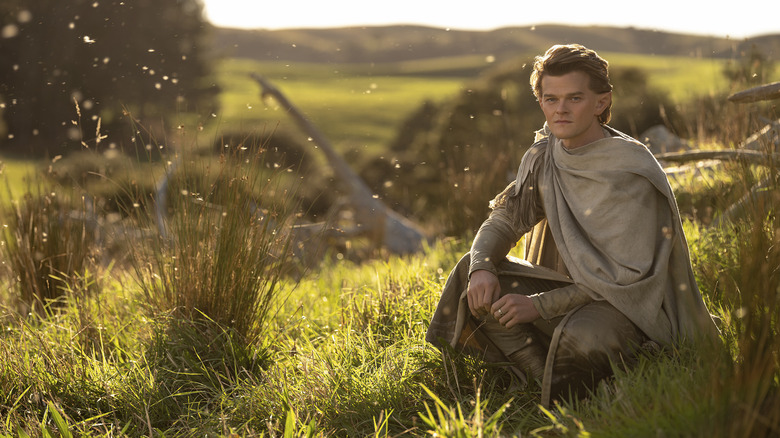
The natural follow-up question here (at least if you're as nerdy about this stuff as I am) is what happens to Elves when they die — like, when they're killed. In books like "The Silmarillion," Elves die from battles and accidents. They even pass away from grief. When that happens, well ... what happens? Tolkien explains that they don't really "die" the way we think of it. Their bodiless spirits head overseas to Valinor in the Undying Lands. (That's the area where Frodo goes at the end of "The Return of the King"). Once there, the disembodied Elven spirits stay in an enclosed area called the Halls of Mandos. There, they wait for the end of the world. From time to time, certain Elves, like the hero Glorfindel (who could show up in "The Rings of Power" soon), are given new bodies. Reincarnated, they venture forth into the wide world again, but many stay in the Halls.
Another fascinating aspect of this serial longevity of the Elven life cycle is the way they age. I broke this down in another piece earlier in the year, but in summary, Elves do go through a distinct "cycle" as they age. Tolkien wasn't clear on the details, but he gave us enough to go on to figure out that there are roughly three stages. In essence, the first stage is from birth to 100 years old, when they reach adulthood. From there, the very long cycle of adulthood begins, where they get married and have families. The third stage comes when they get really, really old (several thousand years old). At that point, some of them grow beards. Most of them get tired of their long lives and begin to fade away, too.
Examples of old Elves in Tolkien's works
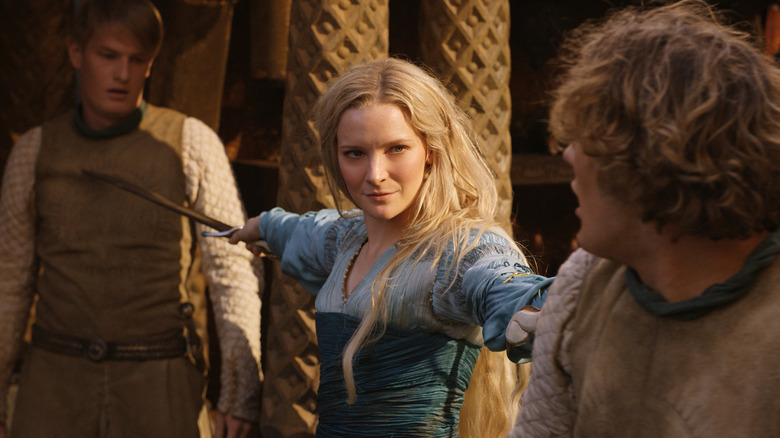
There are a few Elves that we meet in Tolkien's writings who are very old. Even in the larger Middle-earth timeline, they're there early on, and still there at the end of the story. Galadriel is one example. By the end of "The Return of the King," the Lady of Lórien is over 8,300 years old. Círdan makes even Galadriel feel young. While we don't have a precise birth date for Tolkien's famous shipwright (played by Ben Daniels in season 2 of "The Rings of Power"), he's at least 11,000 years old at the end of "The Lord of the Rings." There are other, more obscure Elves away in the West who are elderly, too.
And then there's Glorfindel. The Elf is an important part of "The Fellowship of the Ring" book story (he's replaced by Arwen in the movie). By that point in the story, though, he's already lived for thousands of years. He's also died in a duel with a Balrog, gone to the Halls of Mandos, been given a new body, and been sent back to Middle-earth to help fight Sauron. He's the iconic case study for the cyclical nature of Elven earthbound living, even when physical death is involved.
So, Elves can live for millennia and more in Middle-earth. They are born and have a life cycle. If their bodies are destroyed, their spirits stay attached to the earth, and they might even get another body at some point. But, it's important to note that they are not "immortal" in the strict sense of the word. Tolkien was careful to clarify that their immortality is a form of perpetual serial longevity that would eventually end with Arda.