

12 Best Dystopian TV Shows Of All Time, Ranked
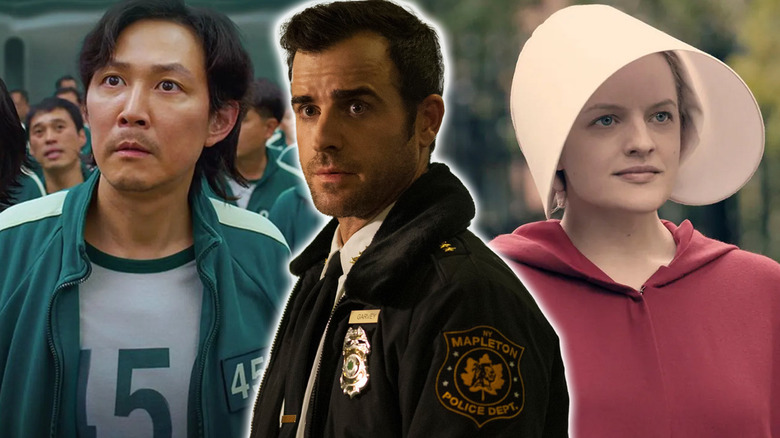
One great thing about dystopian TV shows is that they can come in all kinds of flavors. A dystopian world doesn't have to mean everything looks like "Mad Max;" it can involve zombies, plagues, or giant monsters destroying cities. The truth of the matter is that a dystopia doesn't even have to look all that different from the world we have today. People can still live in houses and go to grocery stores, but perhaps their consciousness has been split in two or they exist under an oppressive patriarchal rule.
Ultimately, the purpose of any of the best dystopian TV shows of all time is to provide commentary on the world we have today. They can show how we should be more appreciative of the social contract at play or offer a dark glimpse at how much worse society can get unless we make some major changes soon. With all that in mind, let's examine, praise, and rank the 12 greatest dystopian shows television has delivered.
12. The Last Man on Earth
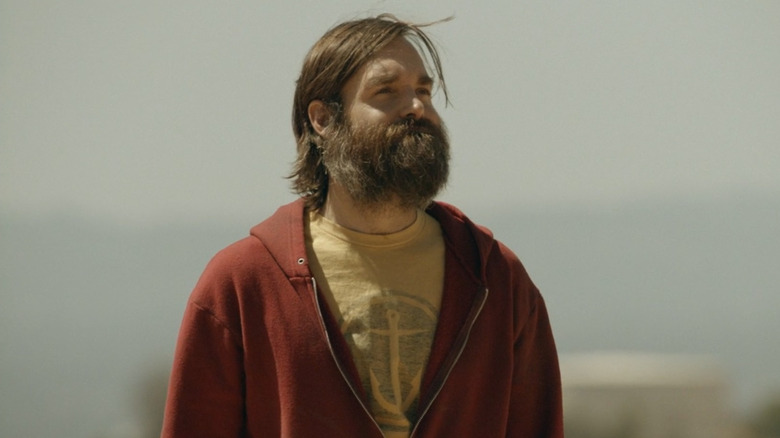
When you hear the term "dystopia," you probably don't immediately think of a laugh fest. This genre tends to be pretty dour, which makes "The Last Man on Earth" such a breath of fresh air. It manages to find humor within the apocalypse, and that's thanks to Will Forte going full sociopath playing Phil Miller.
The show's set in 2020 after a virus has wiped out most of humanity (considering the show came out in 2015, this would become eerily prescient). The pilot sees Phil mostly by himself, trying to find other survivors to no avail, but slowly and surely, more people reach out to him. This would be great if, again, Phil wasn't totally off his rocker. Despite the fact there are only a few people left alive, Phil manages to alienate most everyone who winds up within his colony except for his new wife Carol (Kristen Schaal).
"The Last Man on Earth" manages to be a few concepts at once. It's a dystopian tale of how humanity will always benefit from coming together. It's a traditional sitcom complete with a wacky love triangle subplot where Phil tries to get with Melissa (January Jones) despite being "married" to Carol. Stemming from that, it's a love story between Phil and Carol with the former probably taking more time than he needs to realize that Carol's really the only person left on Earth willing to put up with him. The only major downside to watching the series now is that it was cancelled before it got a proper conclusion. Fortunately, Forte revealed how it would all play out if they got a fifth season.
11. Squid Game
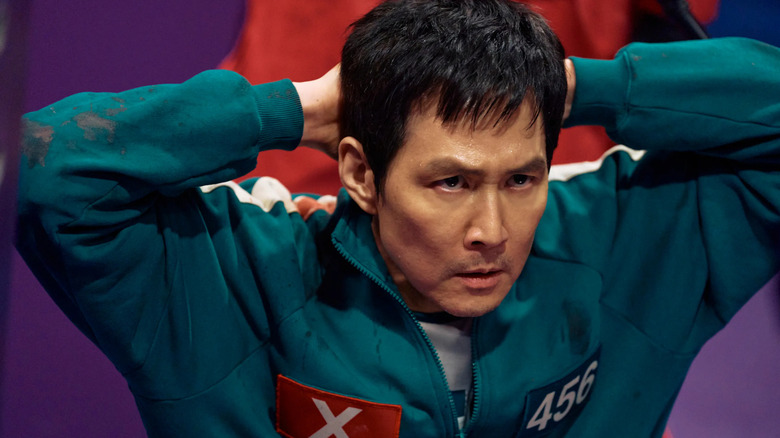
"Squid Game" follows in the rich tradition of dystopian game shows. Especially within the 21st century, it's not exactly a profound leap to make, as you can currently watch any number of reality shows where people are willing to embarrass and debase themselves for the chance of winning a lot of money. At least in those games, death isn't on the menu.
"Squid Game" became a global phenomenon with its first season depicting Seong Gi-hun (Lee Jung-jae) signing up for a tournament where he thinks all you do is play children's game with one person winning an unfathomable amount of money. He and hundreds of other competitors soon learn that losing any game results in death, but the prospect of permanently getting out of poverty is too tempting of an offer to pass up.
/Film's review of "Squid Game" season 3 called it "underwhelming," but honestly, "Squid Game" deserves a spot on this list for no other reason than the fact that it's spawned several real reality shows where the series' message went over the producers' heads. Netflix pushed forward with "Squid Game: The Challenge," which is just "Squid Game" with no fatalities. Then there's the monstrous "Beast Games," which sees people play simple games to win $5 million. It's a show that revels in human misery as hundreds of folks miss out on the opportunity to change their lives for good. "Squid Game" shows just how far people will go to improve their lives, and now, capitalism has commodified that message for pure spectator sport.
10. The Walking Dead
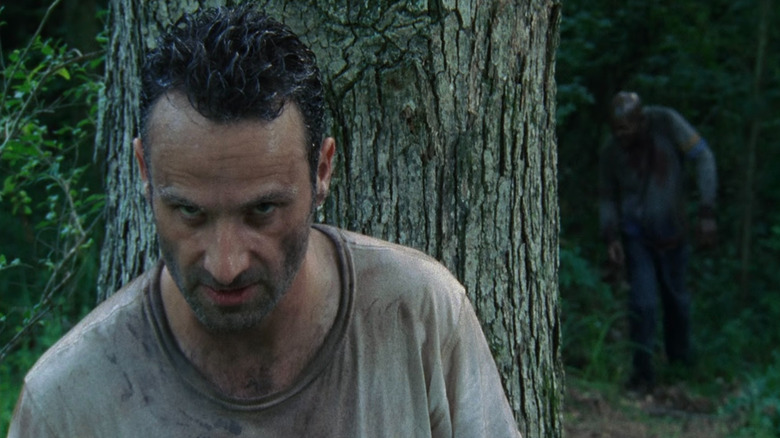
Prior to "The Walking Dead," there had been plenty of great zombie movies. The subgenre had been done to death by 2010, but it hadn't really made its way to television at that point. Audiences might have two hours to spend with certain characters to see how they could overcome the world getting overrun by mindless, flesh-eating drones, but what about multiple seasons?
"The Walking Dead" kicked the door open to explore common themes within zombie stories but within long-form storytelling. Led by Rick Grimes (Andrew Lincoln), a group of survivors try to find some semblance of peace in a chaotic world with monsters and human beings whose moral compasses have twisted them into something even more dangerous than zombies. The group evolves over the course of 11 seasons, reflecting how society itself is malleable and can change at a moment's notice.
The zombie genre has exploded on television since "The Walking Dead" came out, and that's not even including the myriad of "Walking Dead" spinoffs. "Daybreak," "Black Summer," "Z Nation," and plenty of others owe a debt to "Walking Dead" for showing how it was possible to keep a zombie story engaging one week after the next.
9. The Handmaid's Tale
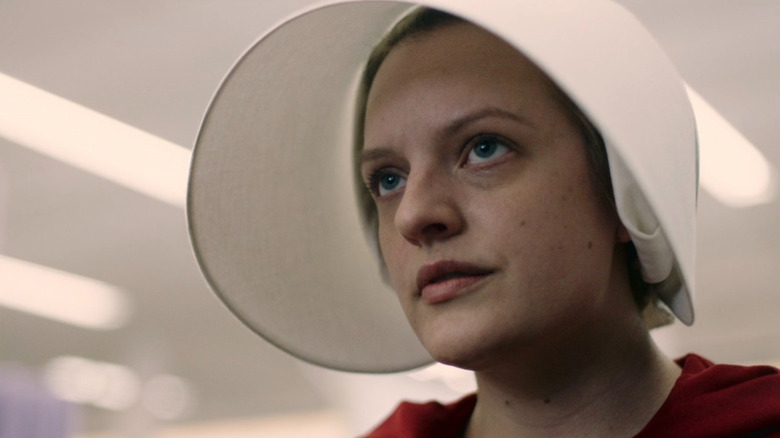
"The Handmaid's Tale" by Margaret Atwood is one of the best dystopian novels of all time, so it should come as no surprise to see its television adaptation was also a haunting, foreboding experience. The story's set in a totalitarian, theocratic version of the United States where women are subjugated, and some women, like June (Elisabeth Moss), are turned into Handmaids to be used by the ruling class to bear children.
"The Handmaid's Tale" isn't an easy watch, nor should it be. It's horrific to see a version of the U.S. where people's basic rights are stripped away, and everyone lives in a massive surveillance state. If that sounds like it hits too close to home to what we live in presently, perhaps that's the point. And perhaps that's why the iconic red outfit worn by the Handmaids has become a common fixture at protests for women who want to make it known their bodily autonomy should never be infringed upon.
As bleak as things get on "The Handmaid's Tale" (and they get pretty bleak), there's a persistent ray of hope, too. June hopes to one day be reunited with her family, and it's that belief that keeps her going. At the end of it all, this show is a reminder that even when things look hopeless, it's paramount to yearn for something greater.
8. Station Eleven
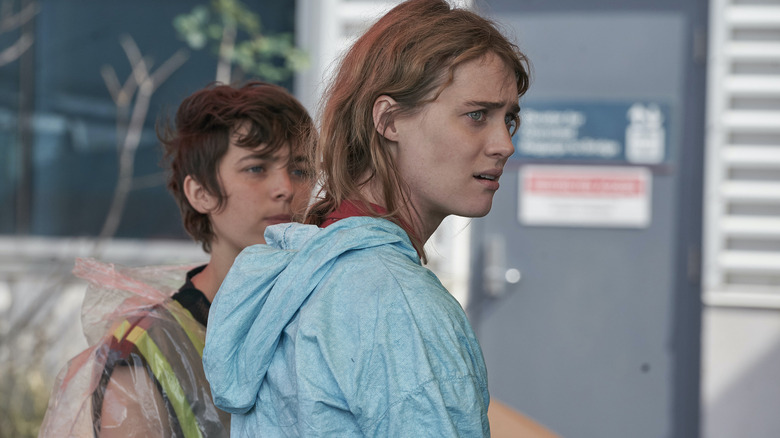
"Station Eleven" didn't need one too many seasons to effectively tell its story. The miniseries portrays a world 20 years after a virus has wiped out most of humanity. As opposed to "The Last Man on Earth" that came out a few years before COVID-19, this series premiered in 2021, so maybe it hit a little too close to home for some. But for anyone who gave it a shot (and honestly, everyone should watch it), it provides a stunning message of hope for humanity's future.
The show jumps around in time, so we see how people were before, during, and after the viral outbreak. And the main characters consist of Kirsten Raymonde (Mackenzie Davis) and her traveling band of theatrical performers. It's a different kind of protagonist from what we usually see in dystopian TV shows, namely an artist.
Normally, people are concerned about building shelter or finding water in dystopian works. But art should be considered an essential part of the human experiences as much as anything else. There may only be 1% of the human population left, but even those folks still deserve a diversion from their lives every now and then. Don't worry; there's still plenty of action in this show, too, as a violent cult enters the mix to upend people's peace.
7. Battlestar Galactica (2004)
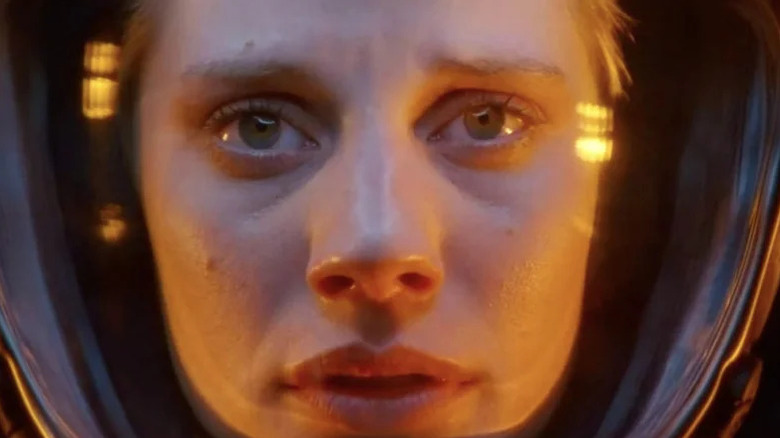
The original 1978 iteration of "Battlestar Galactica" exists as the gritty counterpart to the utopian society depicted in sci-fi shows like "Star Trek." Sadly, the original version of "Battlestar" was one of many great shows cancelled after one great season even though it had a plethora of outstanding ideas. Luckily, it got a chance to expound on those themes when it was revived in 2004, and that's the show that became of the best dystopian series ever made.
Humanity has gotten to the point where it can traverse the stars, but most humans have been wiped out from our own creations, the Cylons. The show dived headfirst into political drama and intrigue, and the series earned praise for its complex characters. It's rare for a situation to be presented in black and white. As tends to be the case with many political situations in the real world, there's hardly ever an easy answer, and characters have to persevere with whatever choice results in the least damage in the moment.
Katee Sackhoff was a standout on the series as Kara "Starbuck" Thrace. She's a stellar pilot, offering a bit of a rebellious streak but knowing when to command authority when the time arises.
6. Black Mirror
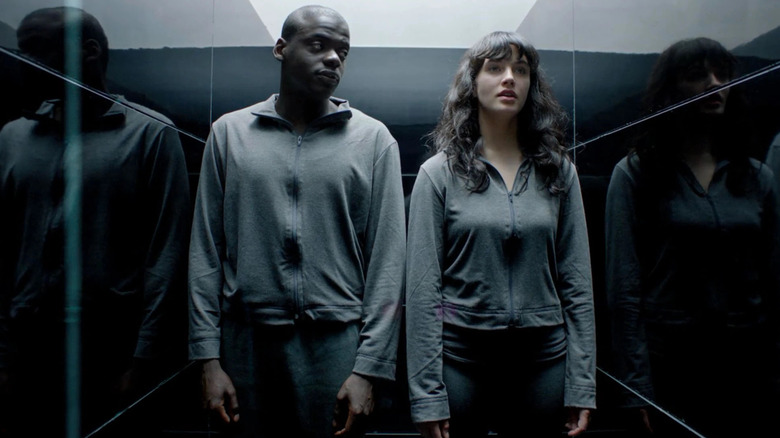
As an anthology series, "Black Mirror" isn't confined to telling just one type of story. Each episode presents a unique world and set of characters fighting against some type of oppressive system. Naturally, some episodes are better than others, and you can only watch the best "Black Mirror" installments if you want. But you definitely shouldn't ignore it.
"Nosedive" shows a world where people have to pretend to be nice all the time or risk losing their social ranking via an app. "Fifteen Million Merits" shows Bing (Daniel Kaluuya) realizing that any type of resistance against a techno-fascist regime will simply lead to the resistance movement being absorbed by said regime. "Be Right Back," which is about a widow bringing her husband back via artificial intelligence, is dangerously prescient in how people in the real world have begun using AI to simulate the personalities of their deceased loved ones and talk to them.
Pardon the pun, but "Black Mirror" holds up a mirror to our real world. It exaggerates and showcases technology we might not have yet, but it comments on the real way we interact with tech now. More than likely, not every episode will resonate with you, but there's bound to be something that makes you reconsider how reliant you are on your phone.
5. Attack on Titan
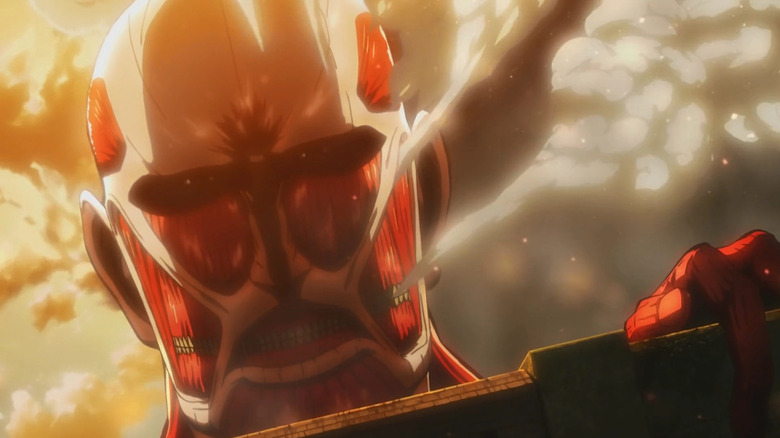
Monsters go hand-in-hand with dystopias, whether they're zombies or fungal creatures. But "Attack on Titan" might have one of the most harrowing creatures humanity has to overcome in the form of Titans. The world involves humanity needing to hide behind walls within their cities to protect themselves from these creatures, but early on, one breaks the barrier and kills Eren Yeager's (Yuki Kaji/Bryce Papenbrook) mother. Eren then takes it upon himself to join the Survey Corps, which battles the Titans and aims to eliminate all of them.
For anyone unfamiliar with the source material, it would be easy enough to assume it's a simple "hero takes down the monsters" story, but as the show goes on, you learn about the rich history and hidden truths within the "Attack on Titan" universe. It also makes viewers question where their allegiances lie, especially as they pertain to Eren. He may be a straightforward hero with an understandable motivation early on, but the show eventually makes you question whether you agree with his choices or if he's gone full heel.
"Attack on Titan" is a fantastic anime. Even if you don't normally watch a ton of shows in that realm, this series will win you over.
4. Samurai Jack
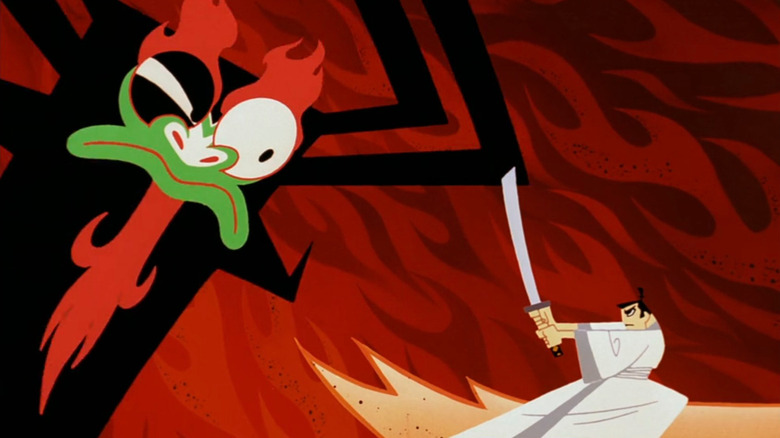
Dystopian TV shows tend not to be child-friendly. It comes with the territory of discussing themes surrounding fascism and societal decay, but "Samurai Jack" breaks the mold. A samurai, Jack (Phil LaMarr), from the distant past tries to defeat a shape-shifting demon known as Aku (Mako), who flings him into the far future where many live under Aku's oppressive rule. It's up to Jack to find a way back to the past to stop Aku from inflicting destruction upon the planet.
There's a lot that happens in "Samurai Jack" that thankfully can't happen in our world. Of all the problems facing society, a shape-shifting demon probably isn't among them. But the cartoon shows Jack on a solitary journey through various landscape, often helping people and creatures along the way. Even in a dystopia, the most important thing any of us can do is continue to be there for one another and lend a helping hand when possible.
Themes aside, "Samurai Jack" is simply stunning to look at. And watching it as a kid, you kind of felt like you were getting away with something because there was ample violence (albeit the kind mostly directed toward robots).
3. Severance
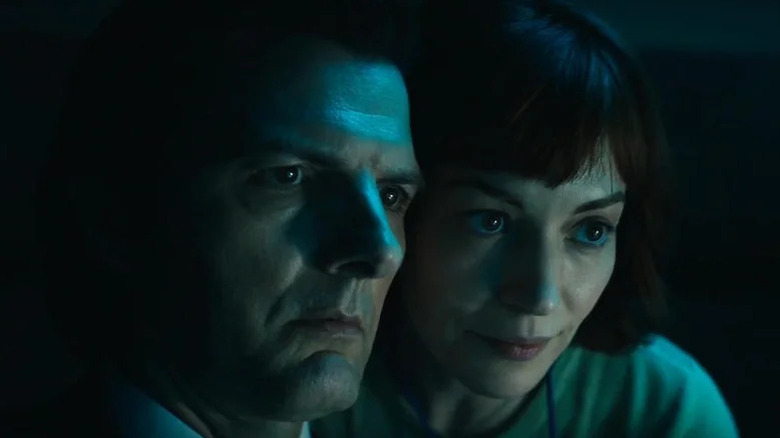
"Severance" is a great example of how dystopian doesn't inherently mean all that different from the world we have now. On the surface, it's a show about a boring office job, but the catch is that in this world, certain works can undergo a "severance" procedure which separates the two sides of their life — one for at home and one for work. Mark S. (Adam Scott) has absolutely no memories of Mark Scout's outside life, including the fact his wife died. He's unburdened by such things, but that also means his entire existence revolves around putting numbers in bins.
There are no monsters in "Severance" (outside of corporate greed). There's no struggle to survive as Mark and everyone else easily have their basic needs met. But the show presents a dystopian version of how people can become so disconnected to their work. Corporations would undoubtedly love to have people who work for them all the time and don't raise a fuss, as they can be easily placated by parties every now and then. It's a commentary on dehumanization
There are still a ton of mysteries and unanswered questions within "Severance," and the show continually gets more horrifying with each new revelation. Many people spend eight hours (if not more) a day working, and "Severance" should make audiences question how exactly they perceive this sizable chunk of time.
2. Andor
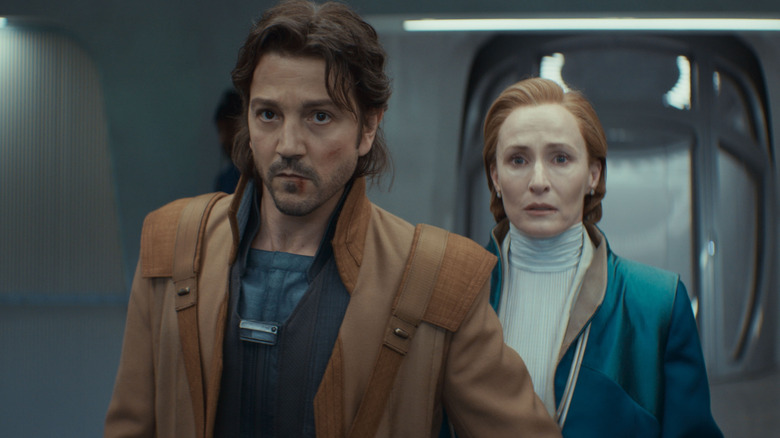
Most people probably don't think of "Star Wars" in this way, but most of the franchise could be considered dystopian. Much of it takes place in the aftermath of Emperor Palpatine (Ian McDiarmid) assuming totalitarian rule over the galaxy. The Jedi have been scattered, and most planets live in fear of the almighty power of the Stormtroopers and any Sith under Imperial rule. Of course, it's all under the guise of fantasy and fights with laser swords, so it's easy to overlook any typical tenets of the dystopian genre. Unless you watch what's easily the best "Star Wars" spinoff series yet, "Andor."
There are no lightsabers in "Andor." The hero isn't an all-powerful space wizard but instead a pretty regular guy, Cassian Andor (Diego Luna). Over the years, he realizes that overthrowing the Empire is something everyone needs to play a role in. In the movies, it's easy enough to view the Empire as generic bad guys. But "Andor" draws far more transparent parallels to real-world fascist regimes.
"Andor" has much more on its mind than just cool battles although there are plenty of those in here, for sure. And it's all the more tragic considering we know exactly what happens to Cassian in "Rogue One: A Star Wars Story." "Andor" takes a side character and fleshes him out. It takes more than just a farm boy with good aim to take down an oppressive regime. It requires the force and will of everyone who opposes dictators.
1. The Leftovers
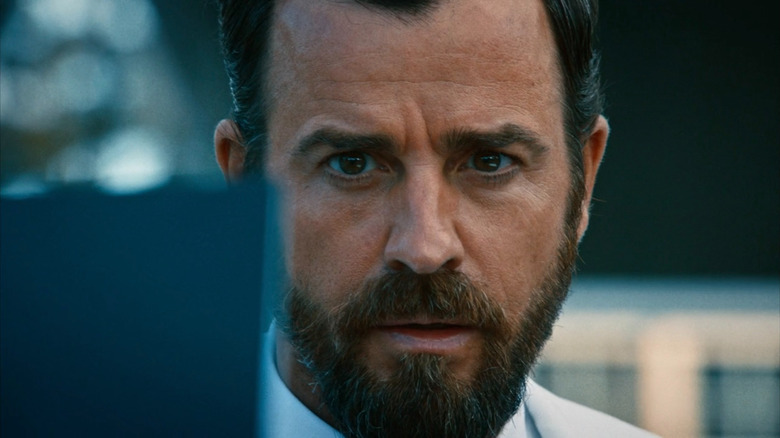
"The Leftovers" takes the top spot as the best dystopian TV show because it feels so unique compared to everything else within this field. A lot of shows use a dystopian landscape as an excuse for epic action sequences, but "The Leftovers" keeps things grounded.
For starters, it has one of the lowest casualty rates of any dystopian series. The events of the show kick off three years after 2% of the world's population vanishes without a trace. It's a far cry from the 99.9% in most pandemic or zombie stories. But there's still the central mystery of what exactly happened to those people, and the millions of friends and family members who just aren't here anymore. The world tries to pick up the pieces, which is predominantly filtered through the lens of police chief Kevin Garvey (Justin Theroux), who tries to maintain some normalcy despite the fact that his wife, Laurie (Amy Brenneman), has joined a cult that materialized post-Sudden Departure to fill in the blanks for those seeking answers.
"The Leftovers" isn't just about how society reacts to mass tragedy. It's about how everyone on a personal level responds to devastating circumstances and grief in different ways. It's interested in both the macro and micro. And not for nothing, but "The Leftovers" absolutely nailed its finale, making it a rare show that's satisfying from beginning to end.