

What Is The Original 1956 Godzilla: King Of The Monsters? The Kaiju Classic, Explained
We may receive a commission on purchases made from links.
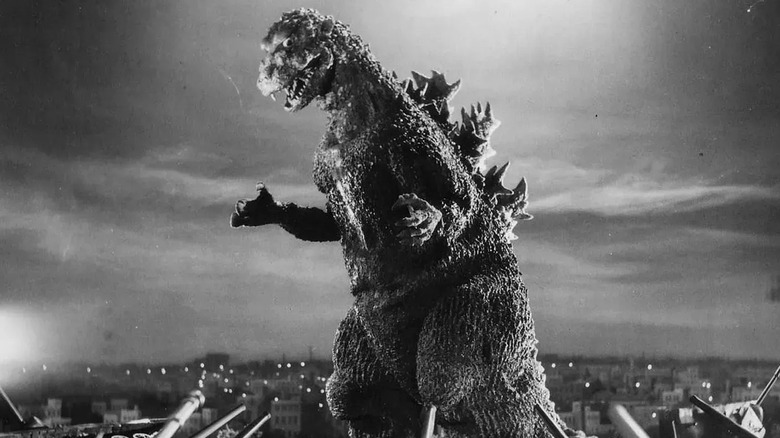
Few movies can claim to be as influential as 1954's unimpeachable monster classic "Godzilla," aka "Gojira." Directed by the great Ishirō Honda, it gave birth to a franchise that has been running for more than 70 years and, thanks to recent hits like "Godzilla Minus One," is arguably stronger than it's ever been. Godzilla has rightfully been dubbed the King of the Monsters, a name that first appeared in 1956's "Godzilla, King of the Monsters!"
The movie in question was the first exposure anyone in the U.S. ever had to Godzilla. It was an Americanized version of the original "Godzilla," but this goes far beyond a simple Japanese import with English subtitles. Rather, a company by the name of Jewell Enterprises Inc. and a team of producers secured the rights to the movie from Japanese producer Toho, opting to radically change it for Western audiences. It is, in many ways, a completely different film.
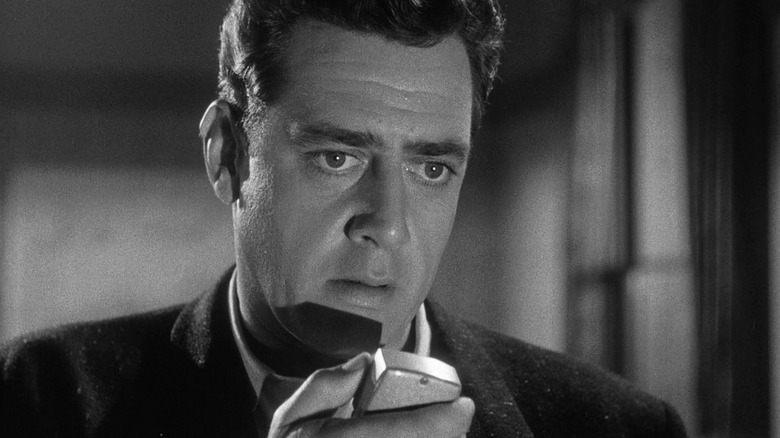
"King of the Monsters" centers on Steve Martin, an American reporter (played by Raymond Burr of "Perry Mason" fame) who is investigating a series of mysterious disasters off the coast of Japan. He then bears witness to a giant monster attacking post-war Tokyo, documenting his findings along the way.
Director Terry O. Morse was enlisted to film new scenes featuring Burr, using body doubles and clever editing tricks to assemble this new version. The 1954 "Godzilla" clocks in at 1 hour and 36 minutes. Only 60 of those minutes were used, with another 20 added by Morse and the producers. The result is a breezy 80-minute monster movie that almost plays like an alternate view of the events from Honda's film through a U.S. reporter's eyes.
Godzilla, King of the Monsters! makes significant changes to Godzilla (1954)
Honda's movie was almost entirely unavailable in the U.S. until the early 2000s. That's why it was such a big deal when Criterion released "Godzilla" on Blu-ray in 2012, which included an uncut, remastered version of "King of the Monsters" as well. For many fans of the so-called King of the Monsters, this was how they came to know him, for better or worse.
Burr's addition made it so that Americans didn't need subtitles to understand the film. His character Steve uses an acquaintance to translate Japanese so that many scenes wouldn't require dubbing, though voiceover is still employed and some dubbing was done. The film's tight runtime made it easy to book as part of a double feature, as well as making it airable on TV.
It was all very clever, but it also arguably watered down the original movie's message. "Godzilla" literally brought Japanese audiences to tears in 1954. It was a powerful metaphor for the use of nuclear bombs on the country in World War II. The U.S> version certainly appears to tone down the anti-nuke sentiments of the original film, even if that wasn't the intention. In the book "Apocalypse Then!" by Mike Bogue, producer Richard Kay explained:
"We weren't interested in politics, believe me. We only wanted to make a movie that would sell. At that time, the American public wouldn't have gone for a movie with an all-Japanese cast. [...] We didn't really change the story. We just gave it an American point of view."
"King of the Monsters" does away with some scenes specifically referring to Nagasaki, H-bombs, and fish filled with radiation, but it maintains that nuclear testing is what created Godzilla in the first place. It was a different time.
Godzilla, King of the Monsters! was created specifically for American audiences
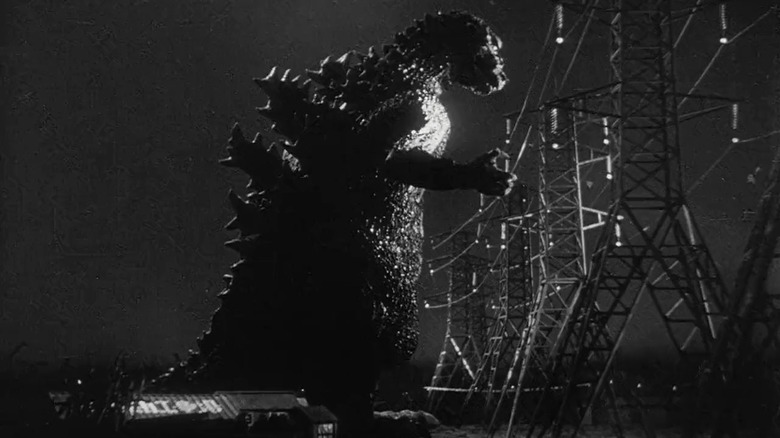
It would've been difficult for American audiences to accept such sentiment only a decade removed from WWII. Not to mention, international films were rarely hits in the U.S. at this time. "King of the Monsters" was made with Western audiences of the day in mind. It worked exceedingly well, with this version of the movie becoming a hit not just in the U.S. but also in many other countries around the world.
"Godzilla" (1954) is still regarded as one of the best movies in the franchise. "King of the Monsters," on the other hand, has a complicated reputation. Be that as it may, many viewers didn't even know they were seeing an edited version of the film. It's merely what helped introduce them to Godzilla.
"TV's great 'Million Dollar Movie' ran the 1956 'Godzilla, King of the Monsters,' five times each day, six days in one week. If a B-52 crash-landed on the dead-end street, only our parents would have noticed," Larry Robinson wrote for the Poughkeepsie Journal in 2017. "What we didn't know, back then, was we were seeing a 'bowdlerized' version."
Robinson also noted, "I still prefer the 1956 'Godzilla, King of the Monsters' the same way I revere Merian Cooper's 1933 'King Kong.' Those movies had an innocence today's bigger budgeted copies lack."
In the here and now, "King of the Monsters" is a fascinating relic of yesteryear. For whatever toning down and American-izing it did, the movie also helped make Godzilla popular around the world. It's perhaps not a stretch to say that the franchise might not exist as it does now without the film. Fortunately, both versions of "Godzilla" are readily available now.