

Jodie Foster Guest-Starred In A 1970s Supernatural Horror Series That Was Canceled After One Season
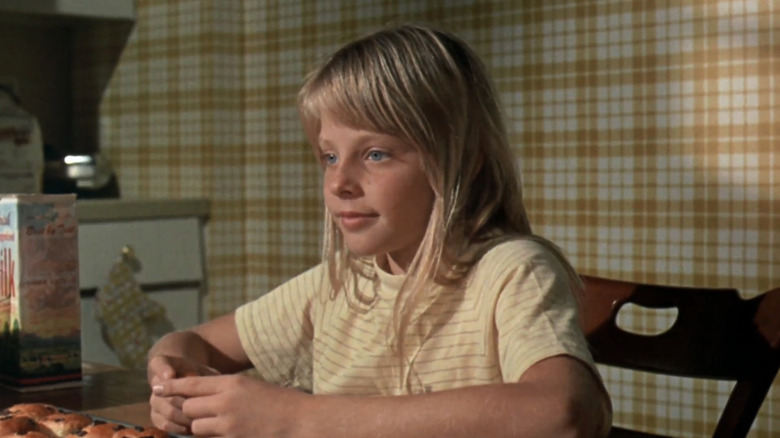
In the 1970s, William Castle debuted his short-lived horror anthology series "Ghost Story," which was renamed to "Circle of Fear" halfway through the first season. The director, who had become known for his promotional gimmicks in the '50s and '60s, was now attempting to repeat the success of shows like "The Twilight Zone" with a compendium of creepy tales that, sadly, didn't last long. But like most swiftly canceled shows, "Ghost Story" is a fascinating snapshot of forgotten TV history — one that also happened to feature a young Jodie Foster as a girl with telepathic powers.
Castle, who had previously given those who saw his horror B-movies the option of taking out a $1,000 life insurance policy against "Death by Fright," brought his horror sensibility to the small screen with "Ghost Story" in 1972. He ultimately executive-produced 22 episodes of the show (plus its pilot), which told supernatural tales of ghosts, vampires, witches, and even a grandpa voodoo practitioner.
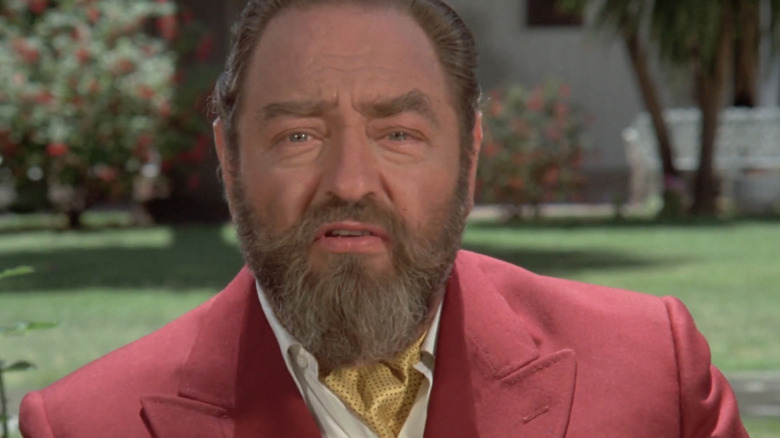
When it first aired, the show was hosted by the effortlessly urbane Sebastian Cabot, who played Winston Essex. For some reason, Essex was the proprietor of an old hotel named Mansfield House, which was, in fact, San Diego's iconic Hotel del Coronado (where, more than a decade prior, Marilyn Monroe, Tony Curtis, and Jack Lemmon had gathered for one of the best screwball comedies of all time, "Some Like it Hot"). It was through this Victorian beach resort that Cabot would drift during the episode's Rod Serling-esque introductory monologues. Half-way through, however, Cabot was turfed out and the series was retooled and reintroduced as "Circle of Fear." Sadly, none of that worked, and the show was pulled from the air in 1973.
Ghost Story was hit-or-miss but had some great episodes
With "Ghost Story" Vincent Cabot's monologues provided suitably creepy openings while simultaneously giving the show a format familiar to fans of "The Twilight Zone," "Night Gallery," or "Alfred Hitchcock Presents." Its stories were more supernatural in nature, however, and included the tale of a ghost who tries to force a young woman out of her house, a vampire college professor, and a girl whose deceased twin sister beckons to her from beyond the grave.
While not every installment matched the quality of the more well-known horror anthology series that came before, many were quite good. Episode 17, "Time of Terror," for example, was based on sci-fi writer Elizabeth Walter's short story "Traveling Companion" and featured Patricia Neal as Ellen, a woman who awakens in a hotel room only to find her husband, Harry, has disappeared. The effective slow-burn mystery anchored by a great performance from Neal was a standout, but the show also featured several other stars and up-and-comers, including Janet Leigh, Martin Sheen, and Jodie Foster, whose own episode might just be the best of the bunch.
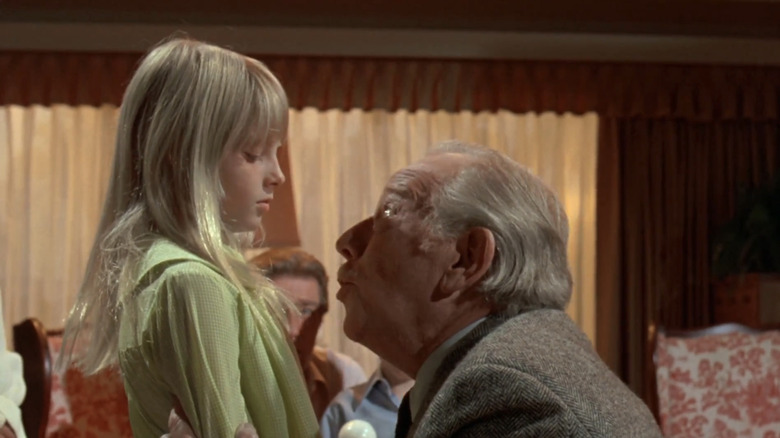
"House of Evil" aired November 10, 1972, and featured Foster as Judy, a deaf, nonverbal girl who discovers she has telepathic powers after her grandfather (Melvyn Douglas) comes to visit. The seemingly kindly old gent brings a doll house as a gift for Judy, which happens to be an exact replica of the house in which she lives with her family. Immediately, there are some "Hereditary" vibes afoot, but things get worse when grandpa reveals himself to be a vengeance-obsessed practitioner of dark magic, who mentors Judy in his sinister ways via telepathy as a way to get revenge against her family for some past injustice.
Jodie Foster's standout episode of Ghost Story didn't save the series
Robert Bloch, the original author of "Psycho" and prolific writer of spooky fiction, wrote the teleplay for "House of Evil" after having written two episodes of the similar "Night Gallery" the year prior. His "Ghost Story" episode was the only one to feature a young girl using cookies as voodoo dolls, however, and while that might sound a tad silly, somehow the show made it work. Much of that was down to Melvyn Douglas and Jodie Foster's performances, but Daryl Duke's studied direction is really what allows "House of Evil" to be so effective. It's hardly terrifying, but the episode is undeniably creepy, and Duke, who'd also directed an episode of "Night Gallery," clearly knew what he was doing — especially in the telepathy scenes where Douglas' eerily calming voice plays over discordant keys.
Interestingly enough, the episode was also shot using the "Bewitched" house facade and set decorations. It was quite common for productions to borrow props and sets from one another at the time, and "Ghost Story" is a prime example. During one of Sebastian Cabot's monologue scenes, the show also featured a devil statue that later showed up in "The Addams Family."
Sadly, much like Roald Dahl, who similarly tried and failed to repeat the success of "The Twilight Zone" in the '60s, "Ghost Story" couldn't find an audience. By mid-season, its ratings had dipped, and NBC tried to rekindle interest by changing the title to "Circle of Fear" and toning down the supernatural stuff. It also gave Cabot the boot, which didn't work. "Ghost Story"/"Circle of Fear" was canceled after episode 22 on March 30, 1973. Today, you can find the whole show over on YouTube or on one of several Blu-ray/DVD editions.