

10 Best Movies Like Guillermo Del Toro's Frankenstein
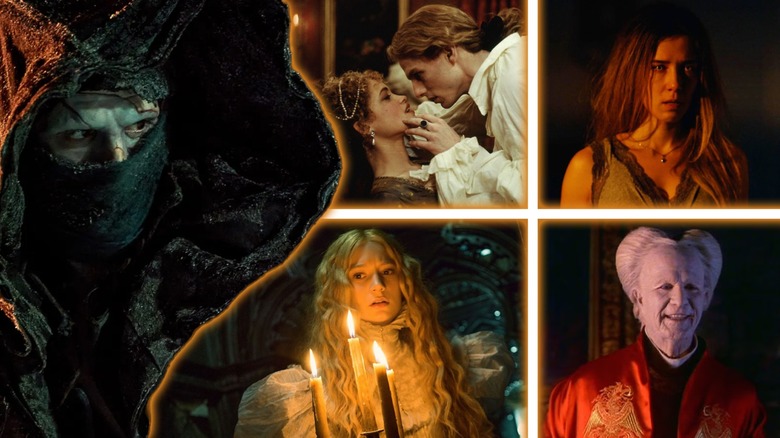
Some marriages between director and project feel like they must have been orchestrated by the guardian deities of cinema themselves, and such was the case of Guillermo del Toro helming a new "Frankenstein" movie. Scripted solo by del Toro as a direct adaptation of Mary Shelley's world-changing 1818 novel "Frankenstein; or, The Modern Prometheus," the 2025 "Frankenstein" movie immediately became one of the year's most talked-about films after hitting Netflix in early November.
Like most "Frankenstein" adaptations, this one tells the story of Victor Frankenstein (Oscar Isaac), a mad scientist who succeeds in stitching together a creature from disparate human body parts and then jolting it to life via electric current. But del Toro also changes the book in major, fascinating ways. The kicker is that Victor endeavors to raise the Creature (Jacob Elordi) like a father, yet he can't help repeating the harsh and traumatizing upbringing that his own father gave him — a setup that allows del Toro to plunge even further than usual into his pet themes of prejudice, misjudged innocence, familial trauma, and kindness coming up brutally against the societal omnipresence of evil.
What's more, del Toro gets to explore all that within an expressly Gothic milieu, relishing every opportunity for painstakingly-designed somberness, mood, and violence. And it seems safe to say that his gusto has awakened a craving for more Gothic cinema among the moviegoing public. To help with that, we've compiled a list of some great watches if you love the luxuriant sets and outsized emotions of "Frankenstein."
Here are the 10 best movies like Guillermo del Toro's "Frankenstein" to watch next.
Nosferatu (2024)
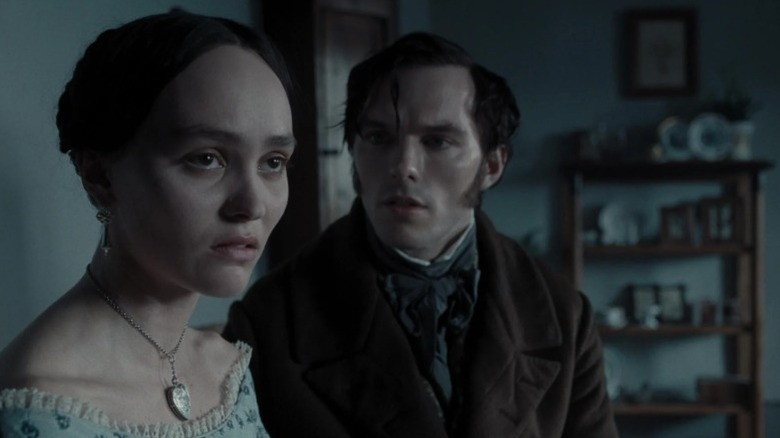
The latest Hollywood adaptation of "Frankenstein" could be said to be a continuation of a mainstream Gothic horror revival to which 2024's "Nosferatu" similarly belonged. Like Guillermo del Toro's "Frankenstein," this "Nosferatu" finds a beloved 21st-century auteur — in this case Robert Eggers — re-animating a classic of early horror cinema with deeply-considered ideas and powerful directorial choices.
Much like del Toro, Eggers doesn't hide his own love for the pure dollhouse pleasure of updating canonical Gothic film with modern-day resources, lavishing both beauty and harrowing grandeur on every visual element of his remake, from the sets to the costumes to the shadow-drenched cinematography. But, also like del Toro, his interest reaches beyond geeky cosmetic reproduction. His "Nosferatu" is one that makes a point of pursuing the story's psychosexual themes to their final consequences, actively interrogating what it is about said story that makes it centennially enduring.
In this version, the focus is entirely directed towards Ellen Hutter, the underestimated hero of the original "Nosferatu." This time, Ellen (Lily-Rose Depp) gets a whole movie's worth of emotional exploration to lay the groundwork for her climatic interaction with the titular vampire, who is given a brash, counterintuitive interpretation by a prosthetics-caked Bill Skarsgård. Nearly psychological-realist in its emphasis, "Nosferatu" asks what it could mean for a relatively normal 19th-century German couple like Ellen and Thomas Hutter (Nicholas Hoult) to come face-to-face with a disruptive force of supernatural proportions; the answers to which Eggers ultimately arrives (and doesn't arrive) are positively unforgettable.
Crimson Peak
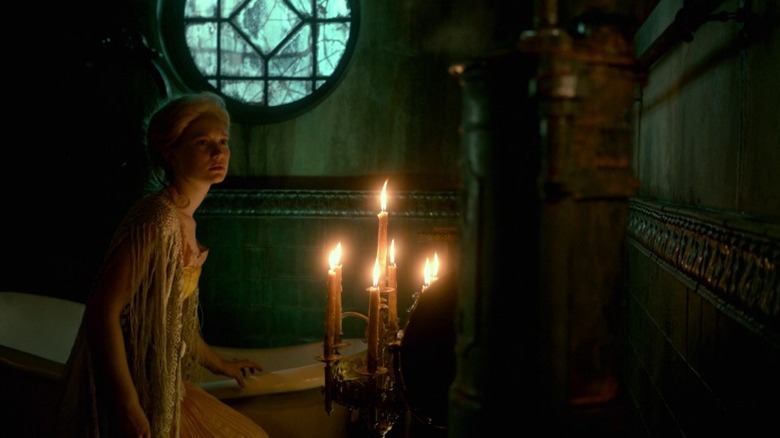
If you're a fan of "Frankenstein," the rest of Guillermo del Toro's filmography makes for a pretty natural recommendation: He's one of our most idiosyncratic and incorrigible working auteurs, and there's a good chance you'll find something to draw you into most if not all of his other films. But 2015's underrated "Crimson Peak" is of particular interest to fans of del Toro's latest Gothic confection.
If the entirety of the Mexican writer-director's oeuvre has flaunted its Gothic inflections from the start, "Crimson Peak" is the film in which del Toro really gets down to brass tacks and makes a proper, full-fledged homage to the genre — one so devoted and uncompromising as to have ultimately become a box office tragedy. People went to it in multiplexes in 2015 expecting the big-budget ghost horror romp promised by the marketing, but "Crimson Peak" is really more of a Gothic romance where, much like in "Frankenstein," the fear and the gruesomeness are primarily tonal furnishing placed tastefully around an emotionally stirring story.
That story, an original one penned by del Toro and Matthew Robbins, tells of Edith Cushing (Mia Wasikowska), a budding American novelist who marries English baronet Sir Thomas Sharpe (Tom Hiddleston) and moves with him and his sister Lucille (Jessica Chastain) to their family's estate in Cumberland. As she gets used to her new home, a lush mansion sinking in real time into a red clay mine, Edith faces ghosts, dark secrets, and deliciously heightened melodramatic twists.
Bram Stoker's Dracula
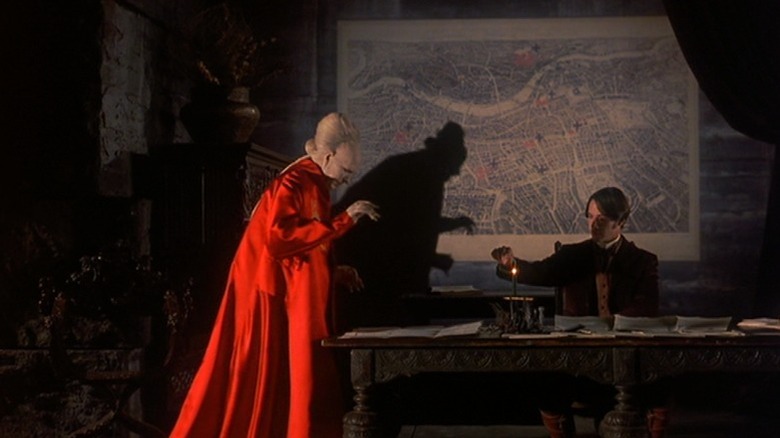
The father of all "revered auteur tackling classic horror" exercises in modern Hollywood is Francis Ford Coppola's "Bram Stoker's Dracula." Released during Coppola's crepuscular '90s period and immediately hailed as his most interesting and vital film in years, "Bram Stoker's Dracula" is relatively faithful to the letter of Stoker's 1897 novel as far as "Dracula" adaptations go, which in itself is reason enough for fans of classic horror literature to give it a stab.
But what really makes "Bram Stoker's Dracula" a bloody, Gothic delight, and in particular a must-watch for fans of the 2025 "Frankenstein," is that it represents an unparalleled marshalling of resources towards a filmmaker's passion. In a way, it's a precursor to Coppola's much-derided and oft-defended "Megalopolis" — if not (at all) in narrative or tone, then at least in the way it finds Coppola using his industry stature and resources to realize a bold, maximalist, spectacle-minded vision that lays bare, above all, his love for the power of cinema.
Gary Oldman stars as the Count, while around him are Winona Ryder as Mina Harker, Keanu Reeves as Jonathan, Tom Waits as Renfield, and Anthony Hopkins as Professor Van Helsing — a cast of fascinating if irregularly successful performances who never once let up on Coppola's dictum to go big. Buoying their commitment to the morbid, bloody eroticism of Stoker's tale is a breathtaking all-around achievement in visual design, including legendary analog special effects and the magnum opus of iconic costume designer Eiko Ishioka.
Interview with the Vampire
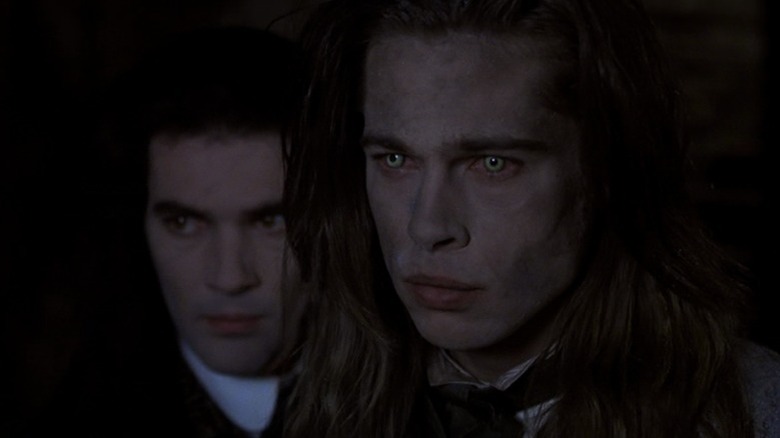
Speaking of classic vampire novel adaptations that lit up American cinema in the '90s, Neil Jordan's take on Anne Rice's "Interview with the Vampire" remains a stirring, highly entertaining film to watch today, even if the ongoing AMC television series has somewhat eclipsed it in the public eye. If you enjoyed the frayed relationships and messed-up familial dynamics of Guillermo del Toro's "Frankenstein," or the sheer gusto with which its superstar players surrender to the heightened drama, then there's a good chance you will enjoy what Jordan does with Rice's seminal novel of dysfunctional gay vampire love.
Scripted by Rice herself, this 1994 adaptation brilliantly cast Tom Cruise as Lestat de Lioncourt and less-than-brilliantly cast Brad Pitt (arguably the film's only unconvincing element) as Louis de Pointe du Lac, two vampires who have been living for centuries as on-again-off-again companions ever since the flamboyant and impulsive Lestat turned the brooding and emotive Louis in the late 18th century. Although the movie tones down the explicitness — and above all the carnality — of their relationship, it still very much drives home its own standing as a queer story, especially as it looks back on Louis and Lestat's efforts to be dads to Claudia (played stunningly by Kirsten Dunst), an 11-year-old girl who gets turned by them and matures into an adult while still inhabiting the body of a child. It's an epic, twisty, existential story of outsized emotions, made viscerally concrete by the force of the horror elements.
Pan's Labyrinth
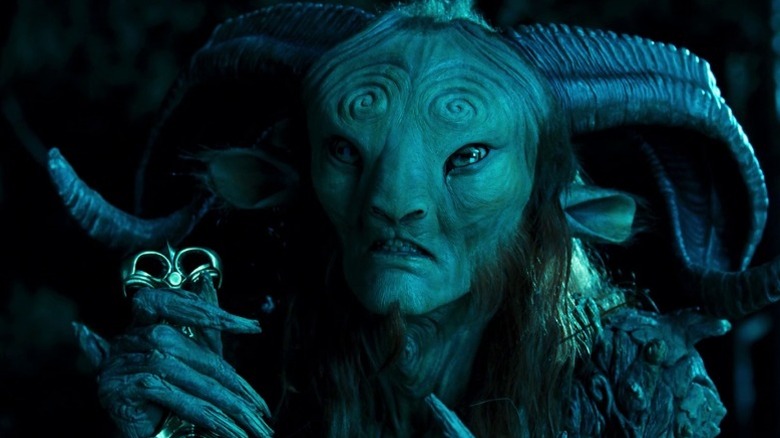
Still Guillermo del Toro's masterpiece nearly two decades on, "Pan's Labyrinth" is a perfect alignment of all his greatest strengths as an artist: the visual lushness, the sheer imaginative vitality, the respect for fantasy as a realm of serious dramatic possibility, the thorough political consideration of his themes and their implications, the unflagging sincerity and emotional openness steeped in a clear-eyed sobriety to the world's horrors. It offers a dark fairytale so indelible and perfect that it feels like something that should exist in folk legend, rather than the whole-cloth invention of a single writer-director.
And yet, sure enough, "Pan's Labyrinth" boasts an original screenplay by del Toro himself. In that sense, much like "Crimson Peak," it's a fascinating glimpse into the way del Toro's process as a director changes when he's handling a brainchild of his own, compared to a work of adaptation like "Frankenstein." In either movie, he's equally passionate about bringing his ideas to fruition — but "Pan's Labyrinth," with its rich, elegant metaphor for fascist complacence and the necessity of defiance, feels like stepping further and further into the deepest recesses of its creator's mind.
Being that it's a mind capable of creating a film this beautiful, terrifying, and primally powerful, that incursion proves enormously thrilling. Plus, this is a movie that shares more than a little thematic ground with "Frankenstein," right down to its evocation of the extent to which a parental authority can inflict tyranny on the children subjected to their whims.
Good Manners

Brazilian filmmakers Juliana Rojas and Marco Dutra have made a habit of exploring delicate emotions and touchy political topics through bombastic genre convention — and 2017's "Good Manners" locales them as Latin American twisted fairytale spinners in the same tradition as Guillermo del Toro. For those who enjoyed "Frankenstein," "Good Manners" offers a similarly compelling look at the process of raising a nominally "monstrous" child in a genuinely monstrous world, the way that process impacts parent and child in different ways, and what that all says about familial bonds.
It's hard to wade into specifics of the parent-child relationship in question without hitting upon spoilers — this is very much a movie you want to go into knowing as little as possible. But the gist of the plot, at least as initially presented, is that São Paulo resident Clara (Isabél Zuaa) applies for a live-in housekeeper-slash-future-nanny job in the apartment of lonely countryside transplant Ana (Marjorie Estiano), who is several months into what might be described as a very unusual pregnancy. Navigating the lifestyle eccentricities of her new boss and eventually becoming her lover in a highly uneasy dynamic, Clara comes to realize that she's gotten herself into a highly dangerous situation. If this description suggests a straightforward domestic thriller, just know that "Good Manners" is nothing of the sort. Rotating through horror, romance, comedy, and even musical stylings, Rojas and Dutra create one of the most singular and unclassifiable fantasy films that we've had in years if not decades.
The Wolfman (2010)
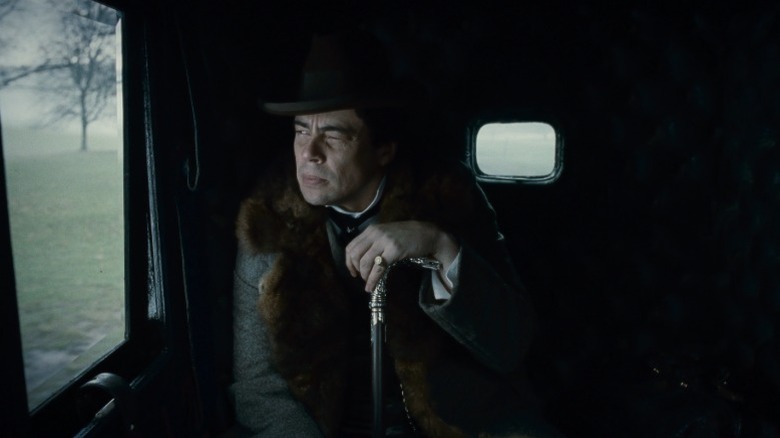
As previously mentioned, Hollywood cinema is currently going through something of a Gothic horror revival, with more and more big-budget, buzzy, highly successful films proving that there's a viable market for straightforward takes on the genre. Bu back when Joe Johnston came out with "The Wolfman" in 2010, this was not really the case. Horror-wise, it was a time when the stock of found footage horror, torture porn, and other "gritty" and "realistic" subgenres was on the rise, and a mainstream American blockbuster about werewolves felt almost out of place in that cultural context. Indeed, "The Wolfman" flopped rather spectacularly.
Be that as it may, it's a solid, stylish, suitably spooky film, and very much a precursor to the unapologetic lavishness of "Frankenstein." A remake of the 1941 Universal horror flick "The Wolf Man," Johnston's film stars Benicio del Toro as Lawrence Talbot, a man who returns from the United States to his native England following the death of his brother Ben (Simon Merrells). While investigating what happened, Lawrence winds up being attacked by Ben's killer, who turns out to be (you guessed it) a werewolf.
With moody somberness, dazzlingly massive sets, and Oscar-winning makeup work, the movie then follows Lawrence's excruciating process of transformation into the titular wolfman. At times, it feels like the last gasp of a kind of human-scale monster-based horror cinema that would all but disappear from Hollywood for years, until the ongoing wave of renewed interest in the Gothic finally, thankfully revived it.
The Elephant Man
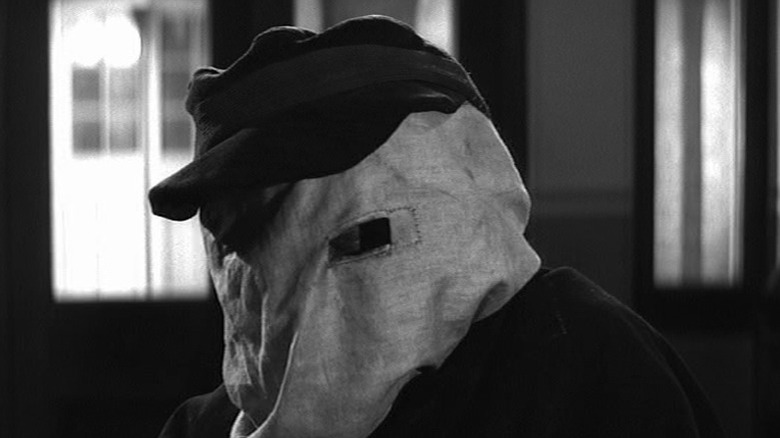
David Lynch's "The Elephant Man" differs from other movies on this list in that it's a biographicial drama set (ostensibly) in the real world with no (explicit) elements of fantasy. But it's nonetheless a vital item in the syllabus of definitional movies about radical solidarity with those deemed abject creatures by society. That the only "crime" of John Merrick (John Hurt) is to be someone people are displeased to look at, no matter how persuasively he puts forth his intelligence and kind-heartedness, only makes this particular portrait of arbitrary monster-ification all the more poignant.
Lynch takes cues from Gothic literature and Gothic cinema alike in his fictionalized telling of the life of Joseph Merrick, a Victorian-era Englishman whose significant physical deformities made him a pariah but didn't stop him from pursuing a fulfilling, creatively rich life to the best of his possibilities. Lynch initially shrouds his John Merrick in the darkness and oblique mystery of a Universal monster, goading the audience to feel the trepidation with which Merrick's society viewed him. But this expedient quickly turns out to be a ruse, as it emerges that Lynch sees his protagonist with nothing but respect and admiration (even if his penchant for surrealism errs on sensationalizing Merrick a smidge too much). One of the very best movies of the 1980s, it's a deeply sad yet life-affirming portrait of a vibrant life unjustly lived in the shadows — a tonal and thematic companion to "Frankenstein" in a vastly different genre register.
Splice
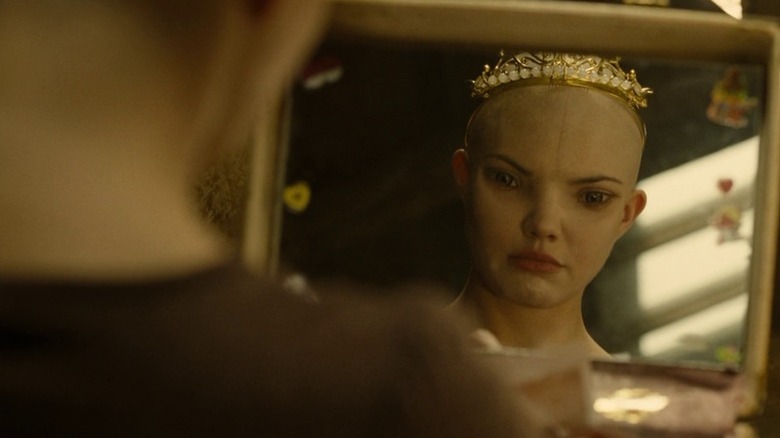
Before offering his own directorial take on "Frankenstein," Guillermo del Toro helped give it a highly messed-up 21st-century update by executive producing Vincenzo Natali's "Splice." An original sci-fi horror flick with a distinctly late-2000s bluish sheen and a veritable arsenal of gleefully unconscionable decisions, "Splice" will certainly not be a movie to everyone's taste, and accordingly bombed at the box office. But it definitely deserves mention as a kindred project to del Toro's "Frankenstein."
Sarah Polley and Adrien Brody star as Elsa Kast and Clive Nicoli, two genetic engineers and romantic partners who carry out a clandestine human-animal hybridization experiment. The experiment ultimately creates Dren (Delphine Chanéac), an anthropomorphic female creature who grows at a much more rapid pace than a human child. But, as Dren reveals herself to have a taste for flesh and a slew of unexpected biological features, Elsa and Clive (aptly named after actors Elsa Lanchester and Colin Clive from the original "Frankenstein" films) find themselves unsure of what to do with their new genetically engineered half-human surrogate daughter.
From there on out, "Splice" probes depths of taboo, moral murkiness, and squeamish biological speculation that make it a genuinely stunning and frequently nauseating watch (including, it should be warned, a gruesome and willfully disturbing depiction of sexual violence near the end). It's the kind of movie you're likely to either loathe entirely or fall in love with, and it's easy to understand why del Toro, bless his heart, would fall into the latter camp.
The Cabinet of Dr. Caligari
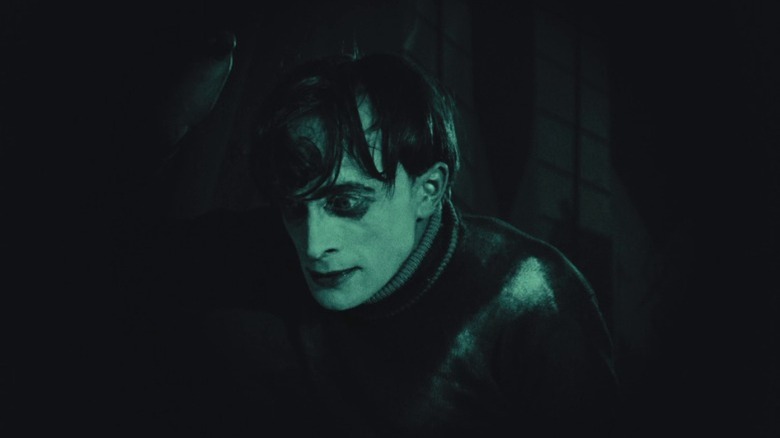
Before Guillermo del Toro's "Frankenstein," before James Whale's "Frankenstein," and before any other example of a horror movie as we currently understand them, really, there was "The Cabinet of Dr. Caligari." The 1920 Robert Wiene film that epitomized German Expressionism, invented framing devices and twist endings, predicted the rise of Nazism a decade before the fact, and inspired goth style was also, by most criteria, the inaugural scary flick. While its influence looms large over pretty much all of cinema, it casts a particularly strong shadow on all iterations of "Frankenstein," especially del Toro's.
The film's original script by Carl Mayer and Hans Janowitz tells of the titular carnival entertainer (Werner Krauss), who hypnotizes the star of his number, hapless somnambulist Cesare (Conrad Veidt), into committing murder on his behalf. Filled with the highly stylized sets and lighting choices that were typical of German Expressionism, "The Cabinet of Dr. Caligari" is still one of the horror movies with the best cinematography, more than a century of conscious and unconscious imitators later.
But the core of its enduring impact is the way it clashes Caligari's murderous amorality with Cesare's childlike innocence, yielding a gut-wrenching, psychologically charged tragedy that lies at the base of genre cinema's formation. Naturally, "Caligari" is a visible influence on the entire filmography of del Toro, echoing through his approach to framing, production design, and storytelling, which makes "Frankenstein'"s own story of ruthless creator and misunderstood creature a kind of full-circle moment.