

Stephen King And George R.R. Martin Both Wrote Part Of This Special Marvel X-Men Comic
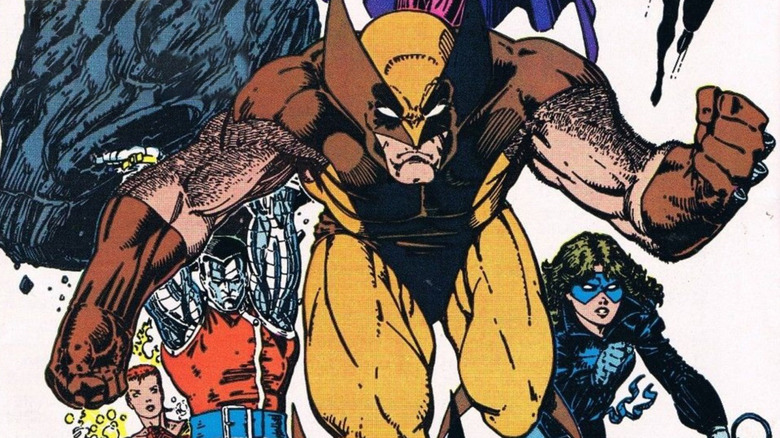
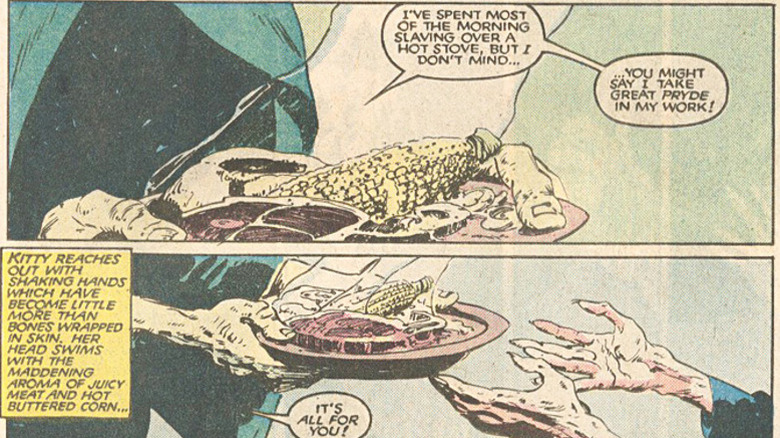
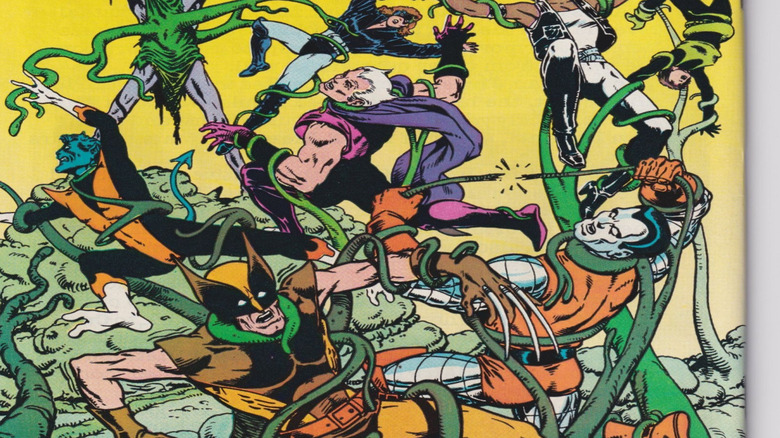
In the 1985 comic book "Heroes for Hope Starring the X-Men," the title mutants find the X-Mansion has been mysteriously whisked away to a distant desert. While trapped out in the barren wasteland, each X-Man begins individually encountering a Grim-Reaper-like demon who psychically torments them with visions of their worst fear. Shadowcat fears starving to death. Wolverine fears becoming too animalistic. Colossus fears being bullied by his teammates. The demon is simply called Hungry, and it wears a green hood, extending eerie tendrils from its midsection. Hungry revels in human misery, and is happy to give the X-Men nightmares.
By the end of the one-shot book, the X-Men have tracked Hungry to its lair to fight and defeat it. Then, to make sure that their quest against hunger isn't just metaphorical, the X-Men also gather up great deals of food and distribute it to impoverished and starving areas of Africa. The book was published as a charity project, with many talented authors and artists contributing to the "Heroes for Hope" for free in order to raise money for famine-fighting charities in Ethiopia.
Each one of the book's nightmare sequences was written and drawn by a different creative team, and some very high-profile authors — many of them from outside the comics industry — worked on it. Stephen King, for instance, wrote three of the book's 48 pages, covering the Shadowcat sequence. Harlan Ellison contributed as well. A pre-"Song of Fire and Ice" George R.R. Martin penned a few words. The book ended up raising $50,000 for the American Friends Service Committee.
There was a minor scandal with those $50,000, though, which we'll get into below.
The X-Men fought hunger -- literally -- in Heroes for Hope
In the intro for "Heroes for Hope," Marvel Comics editor-in-chief, Jim Shooter, explained the genesis of the project. It seems that longtime Marvel writer (and creator of Thanos) Jim Starlin and artist Berni Wrightson suggested to Shooter that their company put out a benefit comic to fight famine in Africa. It had been reported in the news for a few years that hunger had viciously struck Ethiopia, leaving anywhere from 300,000 to 1.2 million people dead. American charities mobilized to raise money for the region, although not always in the most graceful way. Pop stars gathered to record benefit singles like "Do They Know It's Christmas?" and "We Are the World." The songs are assertively terrible, but they did manage to raise money for Ethiopians.
Jim Shooter wanted to jump on the bandwagon, and was receptive to Starlin's and Wrightson's idea. It was they who suggested the comic be a "jam," with many artists and writers contributing. In Shooter's words, it "would enable us to bring a small army of outstanding talents together on the project, making it a real event. I thought it was a great idea." The three of them began pitching the idea to all the artists and authors they could, and ultimate attracted dozens of people to work on the book. The idea was that 100% of the book's proceeds would go to Oxfam, a conglomerate of international charities organized to fight poverty.
The project, however, didn't go off without a hitch. The book was assembled and published, but it immediately stirredcontroversy. Jim Shooter later wrote in his personal blog that Oxfam refused to accept the proceeds from the book ... because they hated it so much.
Oxfam refused to take the money earned by Heroes for Hope
Shooter goes into great detail on his 'blog about the ins and outs of "Heroes for Hope." He knew it was a significant project, but admitted that he butted heads with Pam Rutt, Marvel Comics' PR director at the time. Rutt, he said, wasn't much of a comics reader, and wasn't very good at selling "Heroes for Hope" to Oxfam. Indeed, Oxfam heard that a "comic book" was going to support their cause, and they were taken aback saying that there was coming comedic about famine.
When Shooter sent the first mock-up of "Heroes for Hope" to Oxfam, "they wanted nothing to do with it. Flat rejection." He continued:
"Furthermore, they said that the book was unbelievably offensive and that we, the people of Marvel Comics, were racist, sexist and reprehensible. [...] Their response was that, while under no circumstances would they have anything to do with our project or with us, they would send an executive to meet with us and explain the many horrific, repugnant, disgusting elements that made our 'comic book' anathema."
In the very painful meeting that followed, an Oxfam representative explained that their depiction of Storm was sexist, that the comic had racist imagery (it didn't), and that it would destroy Marvel Comics if it was published. The pop star Janet Jackson also supported Oxfam, and the Oxfam rep thought that Marvel had ripped off Jackson to make the "Heroes for Hope" logo. As it so happens, Marvel employed an artist that was also named Janet Jackson, but the Oxfam rep couldn't seem to understand they were two different people.
When Oxfam pulled out, Marvel gave the money to the American Friends Service Committee instead. They were glad to have the donation.