

The Sitcom That Made Billy Crystal A Household Name Was Boycotted By The Catholic Church
We may receive a commission on purchases made from links.
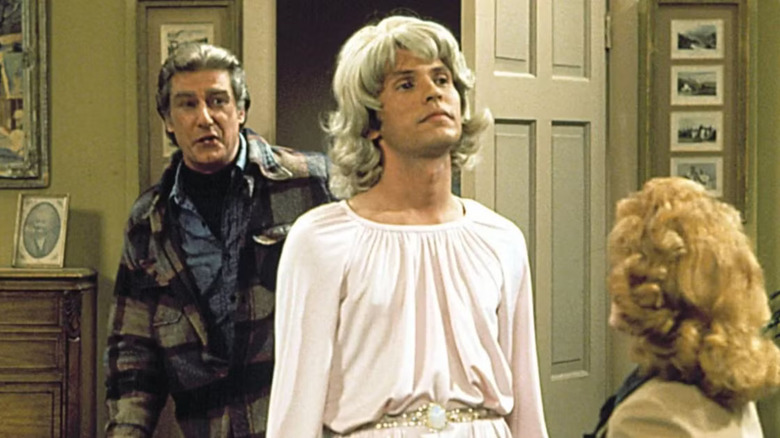
Susan Harris' 1977 sitcom "Soap" was, as the title implies, constructed as a straight satire of daytime soap operas. It featured melodramatic acting, corny music, wildly over-the-top-stories, and a long-running serialization format where one episode ran directly into the next. It had the usual soap opera plots involving love affairs, murder, amnesia, and crime, but it also hilariously involved Satanic cults, alien abduction, and a full-blown Communist revolution. The series starred many up-and-coming (and established) comedy stars, most notably a young Billy Crystal, who played the character of Jodie Dallas. At the time, Crystal wasn't well known, as he was still rising through the standup comedy scene and his association with the then-nascent "Saturday Night Live." "Soap" brought the comedian into the public eye.
Jodie, it should be noted, was a figure of some controversy. The character was openly gay, which was still uncommon on network television back in 1977. He had a few affairs with women, but he repeatedly asserted throughout the series that he was and always would be a gay man. Jodie was the son of Mary Campbell (Cathryn Damon), one of the main characters of "Soap," and his stepfather was the feckless Burt (Richard Mulligan). Jodie was accepted and rejected in turn by the people around him.
The presence of a queer character on "Soap" attracted the ire of bigoted religious organizations, which spearheaded vicious letter-writing campaigns to address the show's open acceptance of queerness. The same organizations also objected to the show's raunchy sexual humor in general, and "Soap" attracted a miniature media firestorm as a result. The objections were detailed by author Steven Capsuto in his book "Alternate Channels: Queer Images on 20th-Century TV."
Soap's Jodie Dallas was one of the first openly gay characters on TV
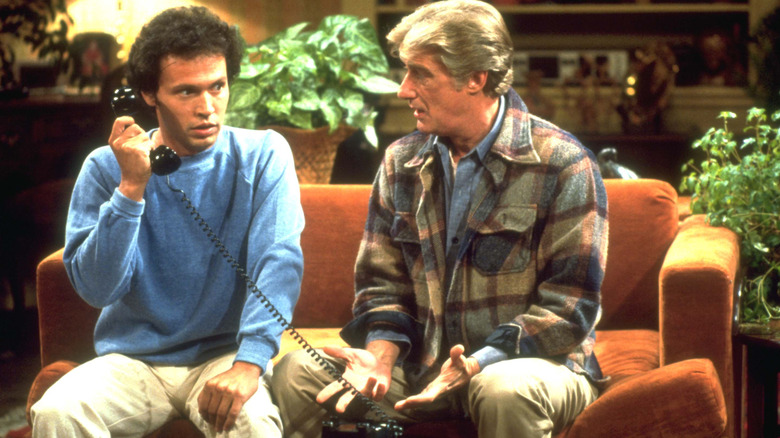
It should be noted that Jodie wasn't just protested by organized bigots, but by queer audiences as well. The character was played by a straight actor and was clearly written by straight people. Jodie's queerness and gender identity were free-floating. At the start of the series, he was dating a presumed-straight football played named Dennis (Bob Seagren), and they planned to get married. It was still illegal for men to marry other men at the time, so Jodie had planned to undergo gender-affirming surgery to make the marriage legal. Other scenes saw Jodie trying on his mom's dresses. Was Jodie really supposed to be a transgender woman?
Also, as mentioned, Jodie had affairs with women. Was he bisexual? Perhaps not, in either case. "Soap" came at a time when all forms of queerness tended to be conflated in the media. Gay men were frequently also depicted as cross-dressers, trans, or secretly bisexual. Queerness was an amalgam on "Soap," and many queer groups felt that Jodie was very bad representation indeed. It didn't help that Jodie's brother, Danny (Ted Wass), consistently denied his queerness, saying that Jodie was just joking around.
But it was the National Federation of Decency — a hand-wringing blob of bigoted squares — that caused the biggest stink. Run by a minister named Donald Wildmon, the NFD caught wind that "Soap" would be featuring a queer character before the series even began airing. The letter-writing campaign involved several other notable right-wing church groups, including the United States Catholic Conference and the United Methodist Church. ABC was soon inundated with thousands of angry letters.
The makers of Soap ignored the bigots and assured the LGBT community
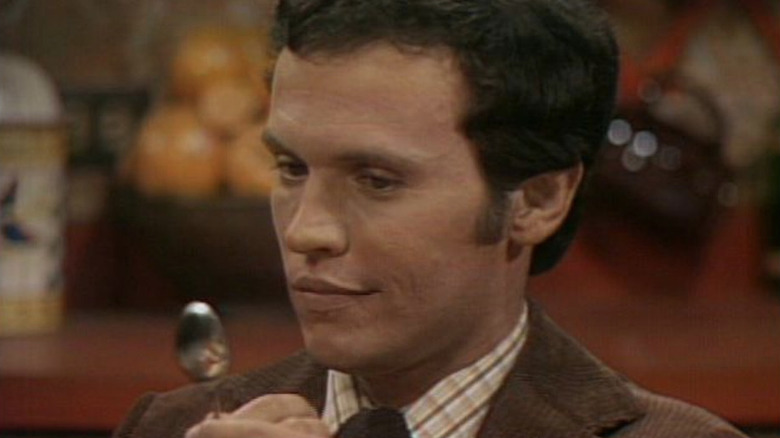
ABC wisely ignored the angry church groups that were writing in, likely feeling that bigots were just busybodies with nothing better to do. The network did, however, pay heed to some of the objections raised by the queer community. A man named Newton Dieter, who was head of a gay media task force, was said to have spoken closely to ABC about some of the less sensitive portrayals of gay men on "Soap." The storyline involving Jodie seeking gender-affirming surgery was dropped in short order. In addition, ABC met with several queer rights groups to assure them that Jodie would be developed as a real character and not just be a bundle of comedic queer stereotypes.
Frustratingly, though, Jodie and his boyfriend Dennis were, by the mandate of Standards & Practices, not allowed to kiss, get into bed, or even physically touch one another. Two steps forward, one step back.
Jodie remained a regular on "Soap," which ran 85 episodes over four seasons. The show went off the air in April 1981, groundbreaking for its queer representation but also beloved for its sharp lampooning of soap operas. "Soap" may not play as well to modern audiences, as what was one revolutionary will seem quaint in the 2020s. Also, soap operas don't possess the same kind of cultural cache they once did (see also: the reaction to Tim Burton's 2012 "Dark Shadows" movie), leaving its satire a little baffling. One has to have a deep knowledge of pop media of the 1970s to really appreciate what "Soap" was trying to do.