

Roger Ebert Named This Panned Nicolas Cage Thriller One Of The Best Sci-Fi Action Movies Ever
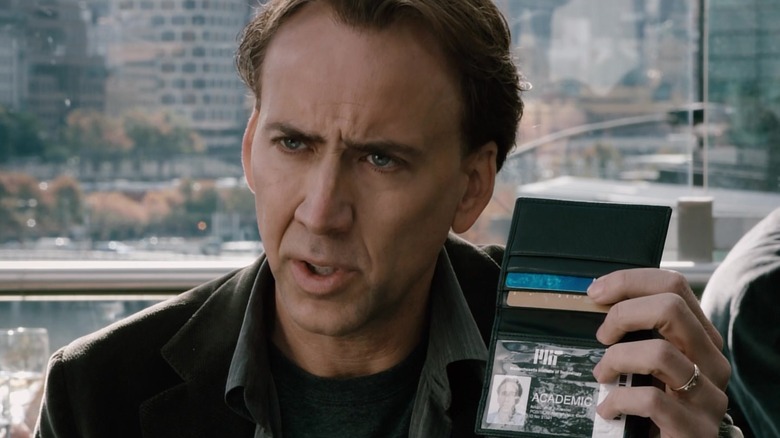
Most critics hated Alex Proyas' 2009 film "Knowing," and I haven't heard much mention of it in the years since its release. At the same time, it was something of a box office hit, and it even had Roger Ebert in its corner. Awarding the film four stars (out of four), Ebert called it "one of the best science fiction movies I've ever seen." Ebert was famously a sci-fi aficionado who often gave perfect ratings to unexpected examples of the genre, so his review is high praise indeed.
Looking over the premise, one might be able to intuit why so many critics rejected "Knowing." It's an ambitious and somewhat gonzo sci-fi thriller about John Koestler (Nicolas Cage), an astrophysics professor who finds a 50-year-old string of numbers that, when interpreted correctly, seemingly point to future disasters and cataclysms. Koestler tries to prevent said cataclysms, but he's unsuccessful. In other words, he bears the weight of knowing about the future, yet he's powerless to prevent it.
This is especially depressing when Koestler finds that the numbers predict the end of the world. But then, there's a twist leading to an ending that will likely catch most folks off-guard. I won't spoil what happens, but the movie's final shot is not one you would be able to predict.
As for Ebert, "Knowing" was philosophical catnip. "The plot," he wrote, "involves the most fundamental of all philosophical debates: Is the universe deterministic or random?" Heady stuff.
Roger Ebert was impressed with the themes of Knowing
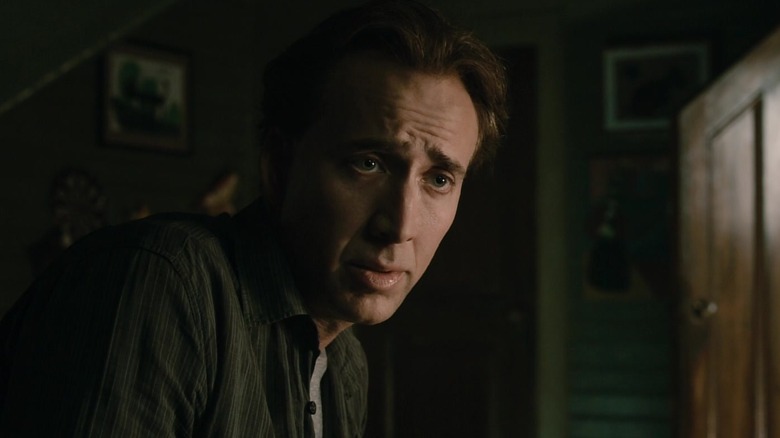
To offer a few more story details: The prophetic numbers in "Knowing" were written on a sheet of paper in 1959 by a young girl named Lucinda (Lara Robinson), and the paper was then buried at her elementary school, tucked into a time capsule. Eventually, in 2009, the capsule is dug up, and the prophetic papers find their way into the hands of Caleb (Chandler Canterbury), John Koestler's nine-year-old son.
When John looks at them, he finds that the numbers represent global coordinates, dates ... and death tolls. He lines up multiple lines of Lucinda's "code" with real-life disasters like 9/11 and Hurricane Katrina. And then additional disasters begin happening in line with the code, including a harrowing and predetermined plane crash.
John also finds that the papers are incomplete, discovering later that Lucinda's final numbers are scratched into the interior of a cabinet at Caleb's school. The final predicted death toll on the page reads "EE," which John takes to mean "everyone else." Shudder.
Roger Ebert, as mentioned, was impressed with the themes of "Knowing," writing that, "For Koestler, [the code] leads to a rejection of what he has always believed, to his acceptance of the paranormal." He added:
"With expert and confident storytelling, [director Alex] Proyas strings together events that keep tension at a high pitch all through the film. Even a few quiet, human moments have something coiling beneath. Pluck this movie, and it vibrates. Even something we've seen countless times, like a car pursuit, works here because of the meaning of the pursuit, and the high stakes."
What did other critics think of Knowing?
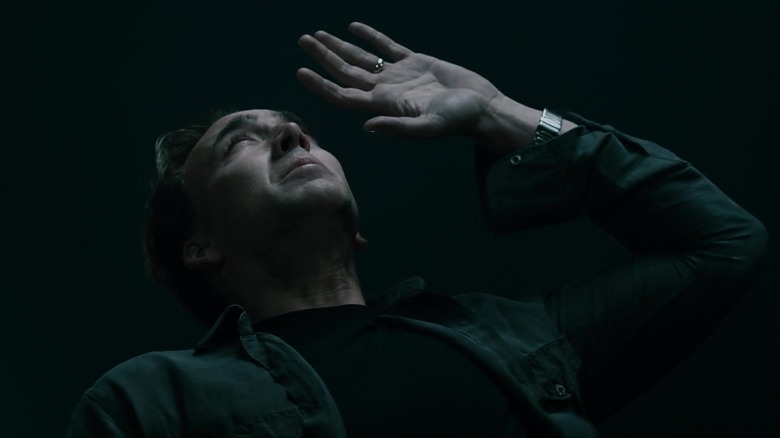
More than anything, Roger Ebert felt that "Knowing" was thought-provoking. The film, after all, is a sci-fi thriller about the philosophy of predetermination, which is no small thing. As Ebert put it:
"You may have guessed from the TV ads that something very bad is unfolding for planet Earth, and you may ask, not unreasonably, how these two nice parents and their lovable kids can possibly have any effect on it. Ah, but that would be in a random universe, and 'Knowing' argues that the universe is deterministic. Or does it? Your papers will be due before class on Monday."
As mentioned, though, other critics really disliked "Knowing." Anthony Quinn, writing for The Independent, argued that "Alex Proyas directs with maximum portentousness, and [Nicolas] Cage pulls many angst-ridden expressions as he realizes doom might be at hand." Quinn added that the special effects were unconvincing and "the big shock-and-awe finale is a throwback to the days of 'Deep Impact," (which, as one can guess from context, is meant to be a negative thing).
Basically, most critics felt "Knowing" was implausible, silly, and smacked of unearned portentousness. It was only a viewer like Ebert who loved the portent and the philosophical underpinnings therein.
Personally, I'm more on Ebert's side. "Knowing" has a few wild images in its climax, but I admire its hugeness. If one is going to tell a sci-fi story, why not fold in enormous themes of predetermination, Biblical prophecy, and the ultimate fate of humankind? There's no reason why sci-fi movies can't juggle big-picture questions, following their premises to logical extremes. "Knowing" does that, and it's fair to say it has a lot on its mind.